AI-Based Medical Diagnostics Guide: Methods, Imaging, Data Analysis, Benefits and Challenges
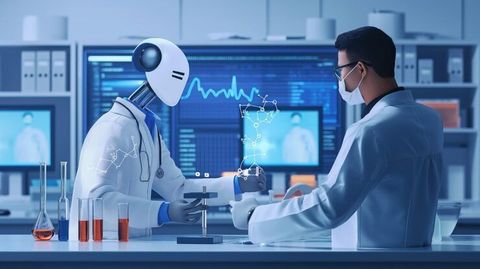
Artificial intelligence-based medical diagnostics refers to the use of computer algorithms to examine health information and help identify patterns associated with diseases or other medical conditions. These systems can work with medical images, laboratory measurements, electronic health records, physiological signals, and other forms of health data.
The idea comes from the broader development of computer-assisted diagnosis, which has been used in medicine for decades. Earlier systems generally followed predefined rules, while modern artificial intelligence can learn patterns from large collections of data. Machine learning and deep learning have therefore become important methods in AI-based medical diagnostics.
Medical imaging is one of the most visible applications. An AI system may examine an X-ray, CT scan, MRI image, ultrasound image, or other diagnostic image and identify areas that may require closer review. The output is generally intended to support clinical interpretation rather than replace the role of a qualified healthcare professional.
AI-based medical diagnostics also involves data analysis. Algorithms can examine many variables at once, identify relationships within datasets, and organize information that may be difficult to review manually. The quality of the result depends on factors such as data quality, algorithm design, validation, clinical setting, and the population represented in the training data.
Importance
Supporting medical image interpretation
Medical imaging produces large amounts of information that must be interpreted carefully. AI tools can help identify patterns in images and highlight areas that may deserve additional attention.
For example, an imaging algorithm may analyze a scan for specific visual characteristics associated with a particular condition. A clinician can then consider the algorithm's output alongside the patient's history, physical examination, laboratory results, and other relevant information.
Helping with data analysis
Healthcare information can come from many sources. AI systems may process structured laboratory results, vital signs, medical images, clinical notes, and other records to identify relationships or patterns.
The potential benefits include organizing complex information, supporting clinical workflows, and helping healthcare teams review large datasets. However, an algorithmic result is not automatically a medical diagnosis. Human review and clinical context remain important.
Addressing practical healthcare challenges
AI-based diagnostics is being studied in settings where healthcare professionals must manage large numbers of images or records. It is also relevant to areas where specialist expertise may not be available at the same time or place.
Important challenges remain. These include inaccurate outputs, incomplete data, biased training datasets, privacy concerns, cybersecurity risks, limited transparency, and differences between healthcare environments. An AI model that performs well in one population or hospital may not produce the same results elsewhere.
Methods
Machine learning
Machine learning uses algorithms that identify patterns from existing data. During development, models can be trained using datasets in which relevant findings have been identified or classified.
A model can then be evaluated with separate data to determine how well it performs. Common measurements include sensitivity, specificity, accuracy, and area under the receiver operating characteristic curve, although the appropriate measurement depends on the diagnostic task.
Deep learning
Deep learning uses multi-layer neural networks to identify complex patterns. It has become particularly important for medical imaging because images contain large numbers of visual features.
A deep learning model may analyze pixels or other image representations and produce a classification, probability estimate, segmentation, or highlighted region. The clinical meaning of the result depends on how the model was developed and validated.
Natural language processing
Natural language processing allows computers to analyze written information. In healthcare, it can be used to examine clinical notes, reports, or other text-based records.
For diagnostic work, natural language processing may help organize information or identify relevant terms and relationships. It should not be assumed that a language model understands a patient's situation in the same way as a trained clinician.
Multimodal AI
Multimodal systems can work with more than one type of input, such as text and images. This area has received increased attention as AI systems have become capable of processing different data formats.
The World Health Organization has highlighted both the potential and risks of large multimodal models in healthcare, including concerns about inaccurate, incomplete, or biased outputs.
Medical Imaging and Data Analysis
Common imaging applications
AI research and clinical applications cover several types of medical imaging. Examples include:
- X-ray image analysis
- CT image analysis
- MRI image analysis
- Ultrasound image analysis
- Digital pathology image analysis
- Retinal and other specialized imaging
The role of AI varies by application. Some systems classify images, some identify or outline regions, and others help prioritize images for review. The intended use should be clearly defined because a research model and a regulated medical device may have different requirements.
How data analysis works
An AI diagnostic system generally follows several stages. Health data is collected, prepared, and checked for quality before being used to train or evaluate a model. The model then processes new information and produces an output based on patterns learned during development.
| Stage | Typical activity | Main consideration |
|---|---|---|
| Data collection | Images, records, measurements or signals are gathered | Data quality |
| Data preparation | Information is cleaned and organized | Consistency |
| Model training | Algorithms learn patterns | Representative data |
| Validation | Performance is tested on separate data | Reliability |
| Clinical evaluation | Performance is studied in relevant settings | Clinical usefulness |
| Monitoring | Results are reviewed after deployment | Safety and changes over time |
This process is important because a model can appear accurate during development but perform differently when exposed to new equipment, populations, clinical practices, or data formats.
Benefits and Challenges
Potential benefits
AI-based medical diagnostics may provide several practical benefits when appropriately developed and evaluated. These can include faster analysis of large datasets, assistance with image interpretation, improved organization of information, and support for research.
AI can also help identify patterns that may be difficult to recognize consistently across very large datasets. In some settings, this may support earlier review of potentially important findings.
These benefits do not mean that AI should independently determine a patient's diagnosis. Medical decisions involve information that may not be available to an algorithm, including symptoms, medical history, examination findings, and patient preferences.
Important challenges
Several limitations need to be considered:
- Data quality: Incorrect, incomplete, or inconsistent data can affect results.
- Bias: If training data does not adequately represent different populations, performance may vary between groups.
- Explainability: Some complex models provide limited information about why a particular output was produced.
- Privacy: Medical records and images contain sensitive personal information.
- Cybersecurity: Digital diagnostic systems can create additional security considerations.
- Clinical validation: Performance in a laboratory setting may not reflect performance in everyday clinical environments.
- Human oversight: Healthcare professionals need appropriate ways to review, question, and interpret AI outputs.
The WHO has emphasized that responsible AI in health requires attention to safety, equity, governance, privacy, and appropriate oversight.
Recent Updates
AI-based medical diagnostics has continued to develop between 2024 and 2026. One important trend has been greater attention to governance and evaluation alongside technical progress.
The WHO published guidance on artificial intelligence for health in 2024 and later issued guidance on large multimodal models. The organization has emphasized that health AI should be developed and used with appropriate governance, ethical safeguards, transparency, and attention to patient rights.
In 2026, WHO also published guidance concerning ethics review and oversight for AI-related health research. It addresses areas such as AI-based health data research, research involving AI tools, and research evaluating AI technologies.
India has also been developing its regulatory framework for medical device software. The Central Drugs Standard Control Organisation lists a Guidance Document on Medical Device Software under the Medical Devices Rules, 2017, released in 2026. This reflects continued regulatory attention to software used for medical purposes.
Another trend is greater attention to health data governance. Digital health systems increasingly use structured records and consent-based data exchange, making privacy, security, interoperability, and responsible data use important parts of AI development.
Laws or Policies
Medical device regulation in India
In India, medical devices are regulated under the Drugs and Cosmetics Act, 1940 and the Medical Devices Rules, 2017. CDSCO states that the definition of a medical device can include software when it is intended for specified medical purposes such as diagnosis, monitoring, or treatment.
The regulatory pathway can depend on the intended purpose and classification of a particular product. Software intended for a medical purpose may therefore require regulatory consideration different from ordinary consumer software.
CDSCO has also published guidance and technical material relating to medical device software and in-vitro diagnostic devices. These materials are relevant when assessing how particular software or diagnostic technologies fit within India's medical device framework.
Personal data protection
India's Digital Personal Data Protection Act, 2023 establishes a legal framework for processing digital personal data and recognizing individuals' rights concerning their personal data.
The Digital Personal Data Protection Rules, 2025 were notified in November 2025, with different provisions taking effect according to a phased timeline. The rules include requirements concerning notices, consent management, security measures, and other aspects of personal data processing.
For AI-based medical diagnostics, these developments are relevant because health information can contain sensitive personal details. Organizations handling such information need to consider applicable privacy, security, consent, and data-governance requirements.
Digital health infrastructure
The Ayushman Bharat Digital Mission provides an infrastructure for digital health records and interoperable health information. Government material describes privacy by design and consent-based data exchange as important principles of the system.
These policies matter to AI because diagnostic algorithms depend on health data. Secure and appropriately governed data can support research and digital health applications while reducing unnecessary exposure of personal information.
Tools and Resources
Government and health resources
Several public resources can help readers understand AI-based medical diagnostics and digital health:
- CDSCO: Regulatory information concerning medical devices, medical device software, and in-vitro diagnostics.
- ICMR: Medical research guidance and information relevant to clinical research and healthcare technology.
- Ayushman Bharat Digital Mission: Information about India's digital health ecosystem, health records, interoperability, and related policies.
- WHO: International guidance on artificial intelligence, health data, ethics, governance, and responsible AI.
- Digital Personal Data Protection resources: Government information about India's framework for digital personal data.
These resources can help readers distinguish between general AI tools, research systems, and technologies intended for regulated medical use.
FAQs
What is AI-based medical diagnostics?
AI-based medical diagnostics uses algorithms to analyze health information and identify patterns that may be relevant to diagnosis. Depending on the system, the input may include medical images, laboratory data, physiological measurements, or clinical text.
How is AI used in medical imaging?
AI can analyze X-rays, CT scans, MRI images, ultrasound images, and other medical images. Depending on its intended purpose, an algorithm may classify an image, identify a region of interest, or assist with image interpretation.
Can AI-based medical diagnostics replace doctors?
AI is generally designed to support clinical work rather than independently replace healthcare professionals. Diagnostic decisions require clinical context, professional judgment, patient history, and consideration of information that may not be available to an algorithm.
What are the main challenges of AI medical diagnostics?
Major challenges include data quality, bias, privacy, cybersecurity, limited explainability, validation, and changes in performance when a system is used with different populations or clinical environments.
How is medical diagnostic data protected in India?
India has laws and digital health policies concerning personal data, medical devices, and digital health infrastructure. The Digital Personal Data Protection Act and its 2025 rules form part of the country's broader framework for digital personal data protection, while CDSCO regulates relevant medical devices and software.
Conclusion
AI-based medical diagnostics combines artificial intelligence with medical images, clinical information, and health data analysis to support diagnostic work. Its development has expanded from traditional machine learning toward deep learning and multimodal systems, while concerns about validation, privacy, bias, and accountability remain important. In India, medical device software and digital personal data are increasingly addressed through regulatory and policy frameworks. AI can support healthcare professionals, but its outputs need to be interpreted within appropriate clinical and regulatory contexts.