Air Quality Monitors Explained: Types, Sensors, Measurements, Features and Applications
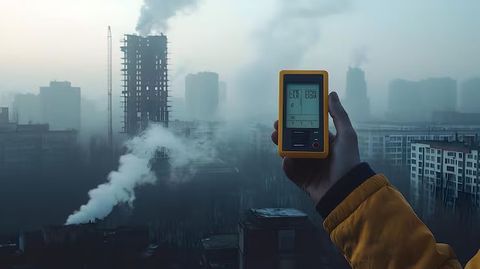
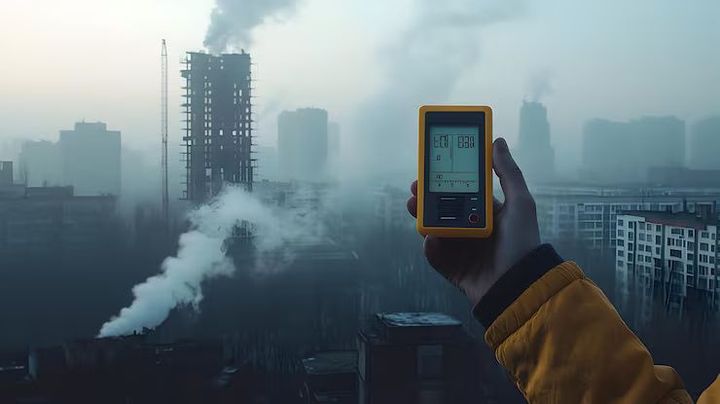
Air quality monitors are devices designed to measure pollutants and environmental conditions in indoor or outdoor air. They can measure substances such as particulate matter, carbon monoxide, nitrogen dioxide, ozone, and sulfur dioxide, depending on the monitor and its sensors. Air quality monitoring helps people, researchers, organizations, and public authorities understand changes in pollution levels and identify patterns that may require further investigation.
What Are Air Quality Monitors?
An air quality monitor is an instrument that collects information about the air surrounding it. Some monitors are designed for homes, offices, schools, and other indoor spaces, while larger systems are used for outdoor environmental monitoring.
Air quality monitors work by drawing air into a sensing system or exposing sensors to surrounding air. The sensors respond to particular particles or gases, and the device processes those signals into measurements that can be displayed on a screen, mobile application, website, or monitoring platform.
The development of air quality monitoring has been closely connected with the need to understand pollution from transportation, industries, construction, energy production, agriculture, household activities, and natural sources. In India, the Central Pollution Control Board (CPCB) has operated national air monitoring programs for decades to track air quality and support pollution management.
What Do Air Quality Monitors Measure?
Different monitors measure different pollutants. Common measurements include:
- PM2.5: Fine particles with a diameter of 2.5 micrometres or smaller.
- PM10: Particles with a diameter of 10 micrometres or smaller.
- Carbon monoxide (CO): A gas produced by incomplete combustion.
- Nitrogen dioxide (NO2): A gas associated with combustion processes, including vehicle emissions.
- Sulfur dioxide (SO2): A gas associated with certain industrial and combustion activities.
- Ozone (O3): A reactive gas that can form in the atmosphere through chemical reactions involving other pollutants.
- Volatile organic compounds (VOCs): A broad group of gases released from various materials and processes.
Not every air quality monitor measures all of these pollutants. A device may focus mainly on particulate matter, while a larger monitoring station may measure several gases and meteorological conditions.
Common Types of Air Quality Monitors
Air quality monitors can be grouped according to their purpose and measurement technology. Reference-grade monitoring systems are designed for regulated environmental measurements and use established analytical methods. Continuous ambient air quality monitoring stations can collect data regularly and transmit measurements for further analysis.
Portable monitors are smaller and can be moved between locations. Indoor monitors are generally designed for rooms and buildings, while outdoor monitors are constructed for environmental conditions. Low-cost sensor systems can increase monitoring coverage, but their measurements can be affected by environmental conditions and therefore require appropriate interpretation and, where applicable, calibration.
Importance
Why Air Quality Monitoring Matters
Air pollution can vary substantially between locations and over time. Traffic, weather, construction activity, industrial operations, seasonal conditions, and other sources can influence pollutant concentrations.
Air quality monitors provide measurements that help make these changes visible. Continuous monitoring can show whether pollution levels rise during particular hours, seasons, or activities. The information can also support scientific studies, environmental planning, public information systems, and pollution-control programs.
WHO notes that consistent, high-quality air quality monitoring is important for understanding pollution and its effects, while wider monitoring networks can help fill gaps in areas where conventional monitoring is limited.
Who Uses Air Quality Monitors?
Air quality monitoring has applications across several settings:
- Households can use indoor measurements to understand changes in particulate matter and other monitored pollutants.
- Schools and workplaces can use measurements as part of environmental assessments.
- Researchers can collect data for studies of pollution patterns and population exposure.
- Environmental authorities use monitoring networks to assess ambient air conditions.
- Industrial facilities may use monitoring systems as part of environmental management and regulatory requirements.
- Urban planners and local authorities can use monitoring data when studying pollution patterns and potential sources.
The meaning of a measurement depends on the location, sensor type, sampling method, averaging period, and surrounding conditions. A single reading should therefore be understood within its measurement context.
Understanding Measurements
Air quality monitors commonly report concentrations using units such as micrograms per cubic metre (µg/m³) or parts per million (ppm), depending on the pollutant and instrument.
The Air Quality Index, or AQI, is different from a direct pollutant concentration. An index combines measurements according to a defined calculation method and presents air conditions using categories that are easier for the public to interpret.
| Measurement | What it represents | Common unit |
|---|---|---|
| PM2.5 | Fine particulate matter | µg/m³ |
| PM10 | Coarse particulate matter | µg/m³ |
| CO | Carbon monoxide concentration | mg/m³ or ppm |
| NO2 | Nitrogen dioxide concentration | µg/m³ |
| SO2 | Sulfur dioxide concentration | µg/m³ |
| O3 | Ozone concentration | µg/m³ |
| Relative humidity | Moisture in the air | % |
| Temperature | Air temperature | °C |
Recent Updates
Growth of Sensor-Based Monitoring
From 2024 through 2026, air quality monitoring has continued moving toward wider networks, continuous measurements, digital data systems, and sensor-based technologies. WHO has highlighted low-cost sensors and other newer technologies as ways to expand monitoring into locations that may have limited conventional monitoring coverage. At the same time, it emphasizes the need for appropriate protocols and interpretation of sensor data.
Another development has been the continued expansion of public air quality databases. WHO released an updated global ambient air quality database in 2026 containing ground-level measurements for PM2.5, PM10, and nitrogen dioxide from thousands of human settlements.
More Attention to Data Quality
Modern monitoring is increasingly concerned not only with collecting more measurements but also with understanding how reliable those measurements are. Sensor placement, calibration, humidity, temperature, maintenance, instrument design, and data processing can all influence results.
Reference-grade instruments and appropriately managed monitoring stations remain important for regulatory and scientific applications. Sensor networks can complement established monitoring approaches when their limitations and measurement characteristics are properly understood.
Digital Access to Air Quality Information
Air quality information is also becoming more accessible through websites, dashboards, databases, and connected monitoring systems. In India, CPCB publishes air quality information through its air-quality management resources, while the PRANA platform provides information related to implementation of the National Clean Air Programme and city-level air quality management activities.
Laws or Policies
Air Quality Regulation in India
In India, air pollution management is supported by the Air (Prevention and Control of Pollution) Act, 1981. The CPCB has responsibilities that include collecting and publishing air pollution information, supporting monitoring programs, and helping implement air quality management measures. State Pollution Control Boards also have responsibilities related to prevention and control of air pollution.
India's National Ambient Air Quality Standards, commonly referred to as NAAQS, establish national standards for ambient air quality. CPCB documents describe a combination of manual, physical, chemical, and continuous measurement approaches for monitoring notified ambient air quality parameters.
National Monitoring Programs
The National Air Monitoring Programme provides a framework for measuring ambient air quality across locations in India. Continuous Ambient Air Quality Monitoring Stations can measure multiple pollutants and meteorological parameters, with data transmitted to central systems for analysis and public information.
The National Clean Air Programme, or NCAP, provides another policy framework for improving air quality in identified cities. Government information states that its particulate-matter reduction target was revised to up to 40% reduction in PM10 levels or achievement of national ambient air quality standards by 2025–26.
These regulatory monitoring systems are different from personal indoor air quality monitors. A household sensor can provide useful environmental information, but its readings should not automatically be treated as equivalent to measurements from a regulatory monitoring station.
Tools and Resources
CPCB Air Quality Resources
The Central Pollution Control Board provides public air quality information, National Air Quality Index resources, real-time air quality data, monitoring information, and technical documents. These resources can help readers understand how official air quality measurements are collected and reported in India.
PRANA
PRANA is the Portal for Regulation of Air Pollution in Non-Attainment Cities. It supports monitoring of the National Clean Air Programme and provides information about city air action plans, air quality data, and related activities.
WHO Air Quality Resources
The WHO Global Air Quality Guidelines provide health-based guideline levels for PM2.5, PM10, ozone, nitrogen dioxide, sulfur dioxide, and carbon monoxide. WHO also maintains air quality databases that compile measurements from countries and cities around the world.
Monitoring Records and Data Sheets
For people conducting repeated measurements, a simple data sheet can record the date, time, location, pollutant measurement, temperature, humidity, and relevant environmental conditions. Keeping these details together can make it easier to understand patterns and compare readings from different periods.
FAQs
What are air quality monitors used for?
Air quality monitors are used to measure specific pollutants and environmental conditions in indoor or outdoor air. Their applications include environmental monitoring, research, building assessments, public information, and pollution studies.
How do air quality monitor sensors work?
Air quality monitor sensors use different physical or chemical principles depending on the pollutant. Particle sensors commonly estimate particulate concentrations by analyzing how particles interact with light, while gas sensors may use electrochemical, optical, metal-oxide, or other sensing methods.
What is the difference between PM2.5 and PM10 measurements?
PM2.5 refers to particles that are 2.5 micrometres or smaller, while PM10 refers to particles that are 10 micrometres or smaller. Because PM2.5 is a subset of PM10 by particle size, both measurements provide different information about particulate pollution.
Are low-cost air quality monitors accurate?
Their performance varies by sensor technology, pollutant, environmental conditions, calibration, placement, and data processing. WHO notes that low-cost sensors can expand monitoring coverage, but appropriate protocols and interpretation are important when using their measurements.
What is the Air Quality Index?
The Air Quality Index is a standardized way of communicating air quality conditions using pollutant measurements and defined calculation methods. It is intended to make air quality information easier for the public to understand than presenting several pollutant concentrations separately.
Conclusion
Air quality monitors measure specific pollutants and environmental conditions using different sensor and monitoring technologies. They range from portable and indoor devices to continuous ambient monitoring stations used in environmental programs. Understanding the difference between pollutant concentrations, sensor readings, and AQI values is important when interpreting air quality information. Current monitoring trends increasingly combine established measurement systems with sensor networks, digital platforms, and larger public databases.