Air System Explained: Types, Components, Working Principles, Applications and Key Considerations
An air system is an arrangement of equipment and components designed to move, control, filter, heat, cool, or otherwise manage air for a particular purpose. Air systems are used in buildings, factories, laboratories, vehicles, agricultural facilities, and many other environments where controlled airflow is needed.
The concept comes from the basic need to move air from one location to another while controlling properties such as temperature, pressure, humidity, cleanliness, and flow rate. Modern systems combine mechanical equipment with sensors, controls, ducts, filters, valves, and monitoring devices to achieve specific operating conditions.
Air systems can range from simple ventilation arrangements to complex industrial installations. A residential ventilation unit, a commercial heating and cooling system, and a factory compressed-air installation all involve air movement, but their components and operating principles can be very different.
Basic Types of Air Systems
Air systems can be grouped according to their purpose and operating method. Common categories include ventilation systems, heating and cooling systems, compressed-air systems, pneumatic systems, and air filtration systems.
Ventilation systems move outdoor and indoor air to support air exchange. Heating, ventilation, and air-conditioning systems regulate indoor environmental conditions. Compressed-air systems increase air pressure for equipment and industrial processes, while pneumatic systems use pressurized air to create mechanical movement.
Importance
Air systems play an important role in maintaining suitable environmental conditions and supporting industrial processes. In buildings, controlled airflow can help manage temperature, humidity, odors, and indoor air quality. In manufacturing environments, compressed air and pneumatic systems can operate machinery, actuators, valves, and automated equipment.
Poorly designed airflow can create uneven temperatures, excessive pressure losses, contamination, noise, or unnecessary energy consumption. Understanding the basic structure of an air system helps users recognize how individual components work together and what factors can affect performance.
Air Systems in Everyday Environments
People encounter air systems in many common settings. Residential buildings may use exhaust fans, ventilation equipment, air conditioners, or heat pumps. Commercial buildings can use larger air-handling units and duct networks to distribute conditioned air.
Industrial facilities may require several types of air systems at the same time. For example, a manufacturing plant can use ventilation for general air movement, filtration for particulate control, and compressed air for pneumatic machinery.
Main Components
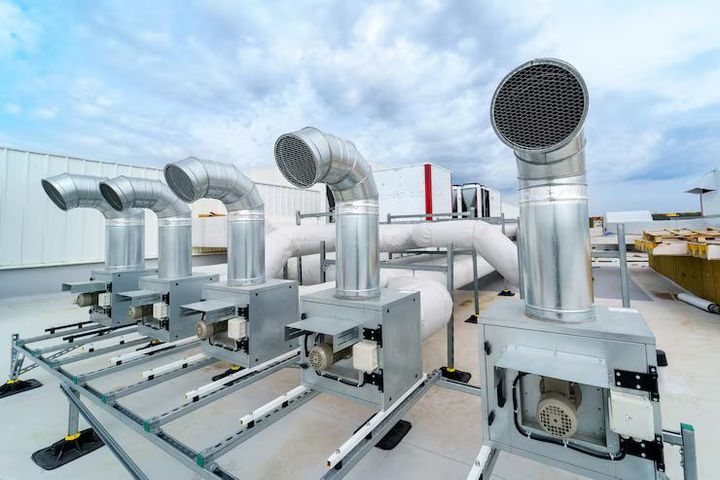
The components depend on the type of system, but many air systems contain several common elements:
- Fans or blowers to move air.
- Filters to remove selected particles or contaminants.
- Ducts or pipes to transport air.
- Dampers and valves to regulate airflow.
- Sensors to measure temperature, pressure, humidity, or flow.
- Controllers to adjust equipment according to operating conditions.
- Compressors in systems that require pressurized air.
- Receivers or storage tanks for compressed-air applications.
- Heat exchangers or coils for heating and cooling.
- Exhaust equipment for removing unwanted air.
Each component has a specific role, and the overall operation depends on how these parts are selected, arranged, and controlled.
Recent Updates
Smarter Air Management
From 2024 through 2026, air-system development has continued to emphasize automation, monitoring, and energy management. Sensors and digital controllers can collect information about airflow, temperature, pressure, humidity, and equipment operation.
Connected monitoring can help operators identify changes in operating conditions. In larger facilities, collected information may be integrated into building-management or industrial-control platforms for centralized observation.
Energy Efficiency
Energy consumption remains an important consideration for air systems because fans, blowers, compressors, heating equipment, and cooling equipment can require substantial electrical power.
Variable-speed drives are increasingly used in applications where airflow or pressure requirements change. Instead of operating continuously at one speed, compatible equipment can adjust its output according to system demand.
Compressed-air installations are also receiving attention because leaks, excessive pressure, inappropriate equipment selection, and poorly managed demand can increase energy use.
Improved Filtration and Air Quality Monitoring
Air filtration technology continues to develop for buildings and industrial environments. Different filters are designed to capture different types and sizes of particles, while specialized filtration may be used for particular industrial conditions.
Air-quality monitoring equipment can measure selected parameters and provide information about changing indoor conditions. The appropriate measurements depend on the building, process, and applicable requirements.
Automation and Predictive Monitoring
Modern air systems can combine sensors with control software to monitor equipment conditions. Data such as pressure changes, temperature patterns, operating hours, and airflow can help identify unusual conditions.
These technologies do not eliminate the need for physical inspection. Instead, they provide additional information that can support maintenance planning and system monitoring.
Laws or Policies
In India, air systems can be affected by different standards, building requirements, environmental rules, workplace-safety provisions, and equipment regulations. The applicable requirements depend on whether the system is installed in a residence, commercial building, industrial facility, healthcare environment, or another setting.
Building and Ventilation Requirements
Building projects in India may need to follow requirements relating to ventilation, indoor environmental conditions, electrical installations, fire safety, and mechanical equipment. The applicable provisions can depend on the building type and local authority requirements.
The National Building Code of India provides guidance covering building-related areas, including ventilation and mechanical systems. Local authorities may also apply additional requirements during planning, construction, or occupancy.
Industrial Air Systems
Industrial installations can have additional requirements relating to worker safety, pressure equipment, emissions, and environmental management. Compressed-air systems may involve pressure vessels and associated safety considerations.
Factories and industrial workplaces are also subject to occupational safety requirements. Equipment should be operated according to applicable regulations, manufacturer instructions, and site-specific safety procedures.
Environmental Considerations
Some air systems interact directly with environmental controls. Industrial facilities may need to manage emissions, dust, fumes, or other airborne materials according to applicable environmental requirements.
Requirements can vary according to the industry and location. Businesses should therefore verify applicable rules with the relevant government authority or qualified professional before designing or modifying a regulated installation.
Tools and Resources
Several tools can help users understand, monitor, and plan air systems.
Airflow Calculators
Airflow calculators can estimate the volume of air required for a particular space or application. Common inputs include room dimensions, occupancy, air-change requirements, and equipment characteristics.
For industrial systems, calculations may also consider pressure requirements, pipe dimensions, flow demand, and simultaneous equipment operation.
Pressure and Flow Instruments
Pressure gauges, differential-pressure meters, anemometers, and flow meters can provide information about system operation. These instruments can help identify conditions such as pressure differences across filters or variations in airflow.
Measurement equipment should be selected according to the expected operating range and the characteristics of the air system.
Monitoring Software
Building-management and industrial-monitoring platforms can collect information from connected sensors and controllers. Depending on the installation, users may monitor temperature, humidity, pressure, airflow, operating hours, and equipment status.
Maintenance Checklists
A maintenance checklist can help organize routine inspection activities. Typical items may include:
- Inspecting filters and recording replacement intervals.
- Checking ducts, pipes, and connections for visible damage.
- Examining belts, fans, and rotating components.
- Checking pressure readings against normal operating ranges.
- Inspecting compressed-air connections for leakage.
- Reviewing sensor readings and alarm records.
- Keeping records of inspections and component changes.
The exact maintenance schedule should follow equipment instructions and applicable technical requirements.
System Design Documents
Technical drawings, equipment manuals, airflow diagrams, pressure specifications, and maintenance records can help explain how an air system is configured. Keeping these documents organized can make troubleshooting and future modifications easier.
FAQs
What is an air system?
An air system is a group of components used to move, control, condition, filter, or pressurize air. The exact design depends on whether the system is intended for ventilation, climate control, industrial processing, or pneumatic equipment.
What are the main components of an air system?
Common components include fans or compressors, filters, ducts or pipes, valves, dampers, sensors, controllers, and storage equipment. Heating and cooling applications may also include coils or heat exchangers.
How does an air system work?
An air system generally moves air through a defined pathway while controlling one or more properties such as pressure, temperature, humidity, cleanliness, or flow. Sensors and control devices can adjust operation according to system requirements.
Where are air systems used?
Air systems are used in homes, offices, hospitals, factories, warehouses, laboratories, agricultural facilities, transportation equipment, and many other environments. Their functions range from ventilation and temperature control to pneumatic machine operation.
What should be considered when planning an air system?
Important considerations include required airflow, pressure, temperature, humidity, filtration, equipment capacity, energy use, noise, available space, maintenance requirements, safety, and applicable regulations. The specific requirements depend on the intended application.
Conclusion
Air systems use equipment such as fans, compressors, filters, ducts, valves, sensors, and controllers to manage the movement and condition of air. They support ventilation, climate control, industrial processes, pneumatic machinery, and air-quality management across many environments. Developments from 2024 through 2026 have placed greater attention on monitoring, automation, filtration, and energy management. In India, applicable building, workplace, environmental, and equipment requirements depend on the type and location of the installation.