Autonomous Delivery Drones Explained: Types, Components, Navigation, Uses and Safety Considerations
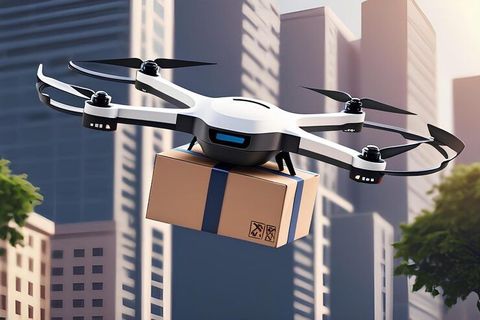
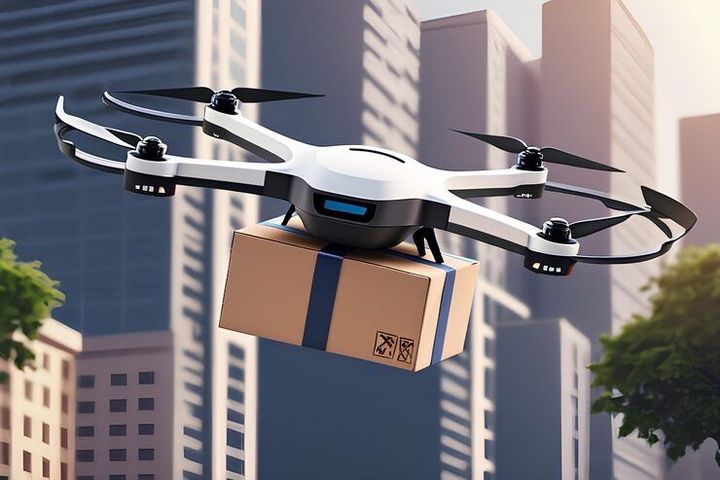
Autonomous delivery drones are unmanned aircraft designed to move packages or other payloads with limited direct control during flight. They combine flight hardware, sensors, navigation software, communication systems, and automated decision-making to travel between planned points. The idea developed from unmanned aircraft research and advances in navigation, cameras, computing, and batteries.
Traditional deliveries often depend on roads and vehicles. Drones introduce an aerial route that can be useful when roads are congested, terrain is difficult, or a short point-to-point journey is being studied. Autonomous operation does not necessarily mean that a human is absent from the system; depending on the rules and design, people may monitor flights, intervene during emergencies, or manage several aircraft from a remote location.
What makes a drone autonomous?
An automated drone can follow pre-programmed instructions while allowing a pilot to intervene. An autonomous drone is designed to manage flight decisions without direct pilot control during normal operation. India’s Drone Rules distinguish these concepts, making the difference important when discussing regulation and safety.
A delivery drone generally has a flight plan, a destination, a payload compartment or attachment, and procedures for abnormal situations. Depending on its design, it may use navigation data, cameras, radar, or other sensors to understand its surroundings and maintain a planned route.
Importance
Autonomous delivery drones matter because transportation is not equally easy in every location. Congested urban roads, remote communities, islands, mountainous regions, and areas affected by temporary road disruption can create different transportation challenges. An aircraft that travels directly through the air may follow a different route from a road vehicle.
Drone delivery can also be studied for time-sensitive items. In India, AIIMS Bhubaneswar reported a 2024 drone flight carrying a blood unit over about 60 kilometres, demonstrating how unmanned aircraft can be considered for medical logistics. The example involved a specific institutional program and should not be treated as evidence that every drone can perform similar missions.
Several groups are affected by the development of this technology:
- Residents may encounter drones operating above or near communities.
- Businesses and logistics planners may examine new transportation methods.
- Aviation authorities must manage airspace, safety, and compliance.
- Local governments may consider noise, privacy, and public-space issues.
- Emergency and healthcare organizations may examine aerial transport for selected situations.
The technology also introduces challenges. Battery endurance limits flight time, weather can affect operations, communication links can fail, and sensors may have difficulty with unexpected obstacles. Safe operations therefore depend on aircraft design, operating procedures, airspace controls, maintenance, and human oversight.
Recent Updates
From 2024 through 2026, India’s drone ecosystem has continued to develop through pilot projects, research, regulation, and practical deployments. The Department of Posts began a proof-of-concept mail route in Arunachal Pradesh in 2024. The project used drones between two post offices separated by mountainous terrain and reported a shorter transmission time than the road-based route.
Healthcare has also been an area of experimentation. AIIMS Bhubaneswar reported a drone-based blood transport operation in 2024, showing how aerial logistics can be examined for selected medical requirements. Such projects remain dependent on the aircraft, route, payload, weather, permissions, and operating environment.
In 2026, the Government of India reported that the national drone ecosystem included more than 38,500 registered drones, nearly 39,890 DGCA-certified remote pilots, and 244 approved training organizations as of February. These figures cover the broader drone ecosystem rather than autonomous delivery drones alone.
Another development is research into autonomous drone technology. A 2026 government release described PUSHPAK, a national mission involving academic and technical institutions to develop indigenous technologies for an autonomous drone ecosystem. Separately, IIT Madras and an industry partner reported intra-city drone delivery trials in Bengaluru in 2026, using an aerial route between Electronic City Phase II and an area near Bengaluru International Airport. The reported trial used autonomous flight-termination and return-to-home functions, along with anti-collision lighting.
These developments indicate a gradual move from demonstrations toward controlled real-world trials. They do not mean autonomous drone delivery is unrestricted across India; permissions and technical conditions still matter.
Common development areas
Current work commonly focuses on:
- Longer and more predictable flight endurance.
- Improved obstacle detection and route planning.
- Better communication between aircraft and ground systems.
- Safer package handling and release mechanisms.
- Airspace coordination and digital flight monitoring.
- More reliable operation in changing weather conditions.
Laws or Policies
In India, drone operations are primarily shaped by the Drone Rules, 2021 and later amendments. The Directorate General of Civil Aviation, or DGCA, is the main civil aviation regulator for drone operations. The rules classify drones by weight and establish requirements related to registration, operation, remote pilots, and airspace.
India uses an airspace map that identifies areas where drone operations are permitted, restricted, or prohibited under specified conditions. Green zones generally permit operations within defined altitude limits, while yellow and red zones involve additional restrictions or permissions. Operators need to check the applicable airspace status before a flight.
The regulatory framework also distinguishes automatic and autonomous drone operations. This distinction is important because an aircraft that follows programmed instructions but allows human intervention is not identical to an aircraft designed to operate without direct pilot intervention.
Digital systems are also part of the regulatory environment. The government has used Digital Sky for drone-related airspace and operational functions, while regulatory functions such as registration and certification have been migrated toward the eGCA platform. Current procedures should be checked through official DGCA channels because aviation requirements can change.
Key regulatory areas
| Area | What it covers |
|---|---|
| Drone classification | Weight-based categories and operating requirements |
| Airspace | Green, yellow, and red zones |
| Registration | Identification and regulatory records for applicable aircraft |
| Remote pilot requirements | Training or certification requirements where applicable |
| Type certification | Technical approval for applicable drone models |
| Flight permissions | Conditions that may apply to particular operations |
| Safety procedures | Measures related to operation, equipment, and emergency situations |
Autonomous delivery also raises questions about privacy, property access, noise, public safety, and responsibility during unexpected situations. Requirements can depend on location, aircraft category, mission, and operating conditions.
Tools and Resources
People researching autonomous delivery drones can use several types of resources to understand the technology and rules.
The DGCA website is useful for current regulatory information, notices, drone-related guidance, and aviation requirements. The Digital Sky platform provides information related to drone airspace and operational processes, while eGCA is used for several regulatory functions.
Mapping and navigation tools can help explain how routes are planned. Typical systems combine satellite positioning with digital maps, onboard sensors, and software that identifies route constraints. Simulation platforms can also be used to study flight paths, obstacle avoidance, battery use, and emergency scenarios without conducting a physical flight.
Useful research resources include:
- DGCA drone regulations and guidance documents.
- Digital Sky airspace information.
- eGCA regulatory information.
- Drone manufacturer technical manuals and operating documentation.
- Aviation safety publications and research papers.
- Academic studies covering autonomous navigation and unmanned aircraft systems.
When evaluating information, readers should distinguish between a technology demonstration, a controlled trial, and routine commercial operation. A successful test under specific conditions does not establish that the same aircraft can operate safely under every weather, terrain, payload, or airspace condition.
FAQs
What are autonomous delivery drones?
Autonomous delivery drones are unmanned aircraft that can navigate a planned route and manage normal flight operations with limited or no direct pilot control. They use combinations of navigation software, sensors, communication links, and flight-control systems.
How do autonomous delivery drones navigate?
They can combine satellite positioning, digital maps, inertial sensors, cameras, radar, and other technologies. Software uses this information to follow a route, monitor the aircraft’s position, detect selected obstacles, and respond to programmed conditions.
Are autonomous delivery drones legal in India?
Drone operations in India are regulated under the Drone Rules, 2021 and related requirements. Whether a particular autonomous delivery flight is permitted depends on the aircraft, airspace, operation, and applicable approvals or conditions.
What are the main safety considerations for delivery drones?
Important considerations include battery condition, weather, obstacle detection, communication links, airspace restrictions, emergency procedures, payload security, and safe landing or return procedures. Human oversight may also be required depending on the operation.
What can autonomous delivery drones carry?
Payloads depend on aircraft design, weight limits, packaging, route conditions, and applicable rules. Demonstrated uses have included mail and selected medical items, while other payload categories may require different aircraft and operating arrangements.
Conclusion
Autonomous delivery drones combine unmanned aircraft, navigation systems, sensors, communications, and automated flight software to move payloads along planned routes. Their development in India includes research, controlled trials, healthcare logistics, postal experiments, and broader regulatory development. Safety depends on aircraft capabilities, operating conditions, airspace rules, emergency procedures, and appropriate human oversight. The technology remains an evolving part of the wider unmanned aviation ecosystem.