Electric Vehicle Guide: Motors, Batteries, Charging Systems, Driving Range and Maintenance
Electric vehicles (EVs) use electricity rather than an internal-combustion engine as their primary source of propulsion. An electric vehicle guide usually covers the main components that make this possible, including electric motors, battery packs, charging systems, regenerative braking, driving range, and maintenance. EV technology has developed from early experimental vehicles into a major part of modern transportation, with passenger cars, two-wheelers, buses, delivery vehicles, and commercial vehicles now using electric power.
How Electric Vehicles Work
An electric vehicle stores electrical energy in a rechargeable battery pack. When the driver presses the accelerator, electrical energy is delivered to one or more electric motors, which convert that energy into rotational movement at the wheels.
Unlike a conventional vehicle, an EV generally does not need a fuel-burning engine, exhaust system, or conventional multi-speed transmission. Its basic powertrain can contain fewer mechanical components, although the vehicle still includes brakes, suspension, steering, cooling equipment, electronics, and other systems.
The main components include:
- Battery pack: Stores electrical energy and is measured mainly in kilowatt-hours (kWh).
- Electric motor: Converts electrical energy into mechanical movement.
- Inverter: Controls electrical power flowing between the battery and motor.
- On-board charger: Converts electricity from an AC charging source into the form required by the battery.
- Charging port: Connects the vehicle to an external charging system.
- Thermal management system: Helps regulate temperatures for the battery, motor, and electronic components.
- Regenerative braking system: Recovers some kinetic energy during deceleration and sends electrical energy back toward the battery.
Types of Electric Motors
Electric vehicles can use different motor designs. Permanent-magnet synchronous motors and induction motors are two common approaches, while other motor configurations are also used in particular vehicle designs.
Motor performance depends on factors such as power rating, torque characteristics, efficiency, vehicle weight, software controls, and operating conditions. Electric motors can produce strong torque from low rotational speeds, which affects how an EV responds when accelerating.
Understanding EV Batteries
The battery is one of the central components of an electric vehicle. Battery capacity is commonly expressed in kWh, while charging power is usually expressed in kilowatts (kW).
A larger battery can provide more stored energy, but driving range also depends on vehicle weight, aerodynamics, speed, temperature, road conditions, driving style, and use of heating or air conditioning.
Lithium-ion battery technology is widely used in modern EVs. Different battery chemistries have different characteristics involving energy density, durability, thermal behavior, charging performance, and material composition.
Importance
Why EV Technology Matters
Electric vehicles are relevant to individuals, businesses, transport operators, manufacturers, and governments because transportation has traditionally depended heavily on petroleum-based fuels. EVs provide another method of powering road transportation through electricity.
For everyday drivers, the major practical considerations include driving range, charging availability, charging time, battery condition, vehicle efficiency, and maintenance requirements. These factors can affect how an EV fits into commuting, long-distance travel, or commercial transportation.
Driving Range and Everyday Use
Driving range refers to the distance a vehicle can travel using available battery energy. Published range figures are measured under defined testing conditions and may differ from actual driving results.
The following factors can influence real-world range:
- Vehicle speed and acceleration patterns
- Outside temperature
- Heating and air-conditioning use
- Traffic conditions
- Road gradients
- Vehicle load
- Tyre pressure
- Battery condition
- Use of regenerative braking
- Highway versus city driving
Because of these variables, two journeys of the same distance can use different amounts of battery energy.
Charging Systems
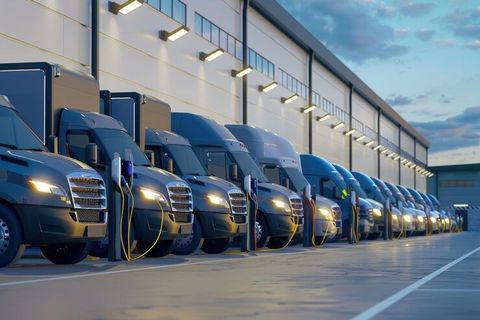
EV charging generally falls into three broad categories. AC charging is commonly used at homes, workplaces, and other locations where a vehicle can remain connected for several hours. DC fast charging supplies direct current through dedicated equipment and can replenish a substantial amount of battery energy in a shorter period.
Charging time depends on the vehicle's battery capacity, state of charge, charging equipment, temperature, and the maximum charging rate supported by the vehicle.
| Charging Type | Typical Use | Main Characteristic |
|---|---|---|
| AC charging | Home, workplace, overnight charging | Usually suited to longer parking periods |
| DC fast charging | Highways and public locations | Higher charging power |
| Portable or emergency charging | Limited situations | Useful where dedicated infrastructure is unavailable |
The charging system and vehicle must use compatible connectors and communication protocols. Public charging infrastructure is therefore an important part of the wider EV ecosystem.
Recent Updates
Developments From 2024–2026
India's electric mobility landscape has continued to develop through government programs, charging infrastructure expansion, manufacturing policies, and changes in vehicle technology.
The PM Electric Drive Revolution in Innovative Vehicle Enhancement (PM E-DRIVE) scheme was introduced in 2024 to support electric mobility, charging infrastructure, and the EV manufacturing ecosystem. The original scheme covered a two-year period, and the government later extended the overall scheme framework toward March 2028. The PM E-DRIVE portal also records subsequent amendments affecting different vehicle categories.
Charging infrastructure has also received regulatory attention. India's 2024 EV charging guidelines established a consolidated framework covering private, semi-public, and public charging locations, along with electricity utilities and relevant government agencies.
The charging framework addresses areas such as electricity connections, charging-station deployment, electricity tariffs, public locations, and grid requirements. Residential EV owners can also use existing electricity connections for charging, subject to applicable electricity rules.
Battery and Vehicle Technology
Recent EV development has increasingly focused on battery efficiency, thermal management, charging speed, energy recovery, software controls, and electronic systems. Manufacturers are also working with different battery chemistries and cell formats to balance energy capacity, durability, weight, and manufacturing requirements.
The expansion of electric two-wheelers, three-wheelers, buses, passenger vehicles, and commercial vehicles means that EV technology is no longer limited to a single type of transportation.
Laws or Policies
PM E-DRIVE
The PM E-DRIVE scheme is one of India's major current policy frameworks for electric mobility. It includes support for selected electric two-wheelers, three-wheelers, ambulances, trucks, buses, charging infrastructure, and testing-agency upgrades. The scheme has an overall allocation of ₹10,900 crore under the framework described by the Ministry of Heavy Industries.
The scheme's eligibility conditions and incentive structures vary according to vehicle category. Therefore, eligibility should be checked against the latest government notification rather than assumed from an older EV policy.
EV Charging Infrastructure Guidelines
The Ministry of Power's 2024 charging guidelines apply to charging infrastructure in private parking spaces, offices, educational institutions, hospitals, housing societies, public locations, highways, and other specified areas. The guidelines are intended to create a more consistent framework for charging infrastructure and electricity connections.
The guidelines also address electricity supply arrangements and charging-station tariffs. Their implementation can involve central agencies, state authorities, distribution companies, charging operators, and local requirements.
Vehicle Registration and Compliance
Electric vehicles must comply with India's applicable motor-vehicle regulations, technical standards, registration requirements, and safety provisions. Requirements can differ according to vehicle category, battery configuration, intended use, and other technical characteristics.
Government schemes can also change over time. Readers should therefore check current Ministry of Heavy Industries, Ministry of Power, and transport-authority information when researching specific eligibility or regulatory requirements.
Tools and Resources
EV Range Calculators
An EV range calculator can help estimate energy consumption over a journey. Useful inputs can include distance, average speed, temperature, vehicle efficiency, passenger load, and battery capacity.
These calculations are estimates rather than exact predictions because road and weather conditions can change during a journey.
Charging and Navigation Platforms
EV drivers can use navigation applications and charging-network platforms to locate charging points, review connector information, and plan journeys. Availability information can change, so displayed charging information should be treated as a current reference rather than a permanent condition.
Government Resources
The following resources can help readers research Indian EV policies and infrastructure:
- Ministry of Heavy Industries — information on PM E-DRIVE and EV-related programs.
- Ministry of Power — electricity and EV charging infrastructure guidelines.
- VAHAN public dashboard — vehicle registration information and transportation data.
- State transport departments — registration and regional vehicle requirements.
- Electricity distribution companies — information about EV charging connections and applicable tariffs.
The Ministry of Heavy Industries maintains the PM E-DRIVE portal and publishes scheme notifications and amendments.
FAQs
What is an electric vehicle?
An electric vehicle uses electrical energy stored in a battery to power an electric motor. It may use one or more motors depending on its design.
How do EV batteries affect driving range?
Battery capacity influences the amount of electrical energy available, but driving range also depends on speed, temperature, traffic, vehicle weight, road conditions, battery condition, and climate-control use.
How long does EV charging take?
Charging time depends on the battery size, remaining battery level, charging equipment, vehicle charging limit, and temperature. AC charging generally takes longer than high-power DC charging.
What are the main EV maintenance requirements?
EV maintenance can include tyre checks, brake inspection, suspension checks, cooling-system checks, software updates, electrical-system inspection, and battery-system monitoring. Regenerative braking can reduce the use of friction brakes in some driving conditions, but the braking system still requires inspection.
What EV policies apply in India?
India has several policies and regulations related to electric mobility. PM E-DRIVE supports selected vehicle categories and charging infrastructure, while the Ministry of Power's 2024 guidelines establish requirements and frameworks for EV charging infrastructure.
Conclusion
Electric vehicles combine rechargeable battery systems, electric motors, power electronics, charging equipment, and software to provide electrically powered transportation. Driving range depends on more than battery capacity and can change with speed, temperature, road conditions, vehicle load, and climate-control use. India's EV ecosystem has continued to develop through vehicle technology, charging infrastructure, and government policies such as PM E-DRIVE. Understanding these systems helps readers interpret EV specifications, charging requirements, range information, and routine maintenance considerations.