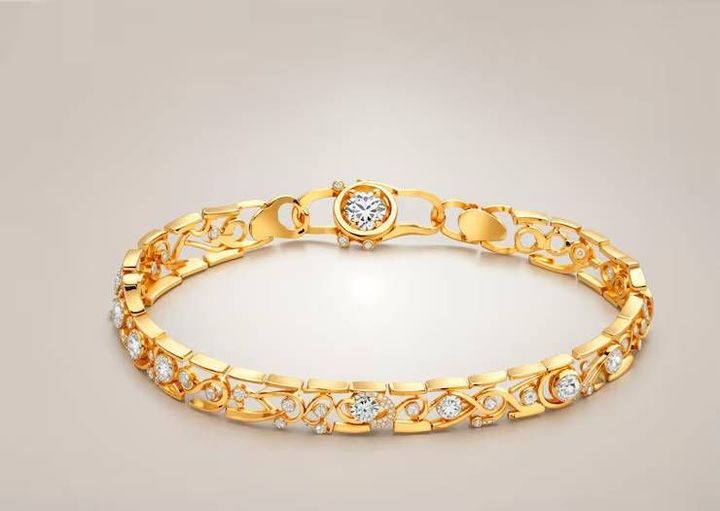
Gold Bracelet Knowledge: Styles, Gold Purity, Construction Methods and Design Features
Gold bracelets are wearable ornaments made primarily from gold or gold-based alloys. They have appeared in many cultures for centuries, with early examples associated with personal adornment, ceremonial traditions, social identity, and craftsmanship. Over time, bracelet designs developed from simple bands into linked chains, rigid bangles, cuffs, articulated forms, and pieces containing decorative elements.
Gold Bracelet Knowledge involves understanding several connected areas, including bracelet styles, gold purity, construction methods, joining techniques, surface finishes, clasps, and design features. A bracelet can contain different proportions of gold depending on its karat or fineness marking, while its shape and construction influence its appearance, flexibility, weight, and everyday characteristics.
Modern gold bracelets are commonly produced by combining traditional metalworking with precision manufacturing. Designers and craftspeople may use casting, forming, stamping, forging, soldering, laser techniques, and polishing depending on the structure of the bracelet. Understanding these processes makes it easier for general readers to interpret descriptions and markings without needing specialist knowledge.
Importance
Gold bracelets matter because they combine material properties with design and craftsmanship. The same gold purity can appear in very different forms, from a rigid bangle to a flexible chain bracelet, and each construction has different physical characteristics.
Gold purity is particularly important because pure gold is relatively soft. Jewellery makers commonly combine gold with other metals to create alloys with different levels of hardness, color, and working characteristics. The proportion of gold is expressed through karat or fineness measurements.
Understanding Gold Purity
Karat indicates the proportion of gold out of 24 parts, while fineness expresses the amount of gold per 1,000 parts of alloy. For example, 22-karat gold corresponds to approximately 916 parts gold per 1,000 parts, commonly represented as 916 fineness.
| Karat | Approximate Gold Content | Common Fineness |
|---|---|---|
| 14K | 58.3% | 585 |
| 18K | 75.0% | 750 |
| 20K | 83.3% | 833 |
| 22K | 91.6% | 916 |
| 23K | 95.8% | 958 |
| 24K | 99.9% or higher depending on standard | 999 or above |
The actual alloy composition can vary according to the applicable standard. Other metals may be added to influence hardness, color, workability, or other physical properties.
Recognizing Different Styles
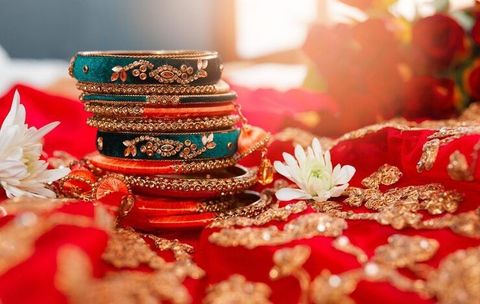
Bracelet styles can be classified according to their structure and movement. A bangle generally has a rigid or semi-rigid circular form, while a chain bracelet consists of connected links that provide greater flexibility.
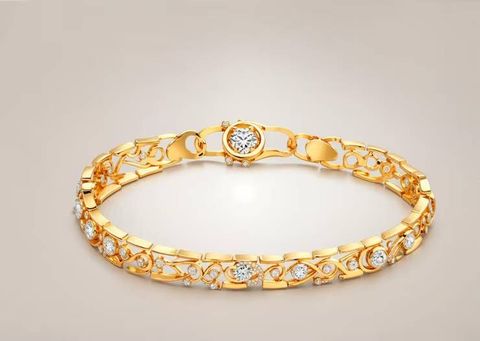
Cuff bracelets usually have an open section and a relatively rigid body. Link bracelets use repeated sections connected through joints, while charm bracelets are designed with attachment points for decorative elements. Some designs combine several structures, such as rigid sections connected by flexible links.
Understanding Design Features
Design features affect both appearance and physical construction. Common features include:
- Link shapes, which determine how sections connect and move.
- Clasps, which help secure a flexible bracelet around the wrist.
- Hinges, which allow controlled movement in rigid or articulated designs.
- Textures, including polished, brushed, hammered, engraved, or patterned surfaces.
- Settings, which hold decorative stones or other materials in place.
- Edges and profiles, which influence the bracelet's shape and contact with the wrist.
These features also provide clues about how a bracelet was constructed and how its individual components interact.
Recent Updates
Gold jewellery standards and hallmarking practices in India have continued to develop during 2024–2026. The Bureau of Indian Standards has expanded the geographical coverage of mandatory hallmarking through successive phases, while later amendments have added further districts. The current BIS mandatory hallmarking page lists amendments through 2026.
The HUID-based hallmarking system remains an important part of the current framework. HUID stands for Hallmark Unique Identification and consists of a six-character alphanumeric identification number. BIS states that consumers can use the BIS Care application to verify HUID information associated with a hallmarked article.
Changes in Hallmarking Coverage
Recent regulatory development has focused on extending mandatory hallmarking coverage to additional districts rather than changing the basic concept of identifying gold purity. The Department of Consumer Affairs reported that the fourth phase expanded mandatory hallmarking coverage to 361 districts in late 2024, while BIS has subsequently published additional amendments and district additions through 2026.
Digital Verification
Digital verification has become more closely connected with hallmarking. The BIS Care application includes a HUID verification feature that can provide information such as the marked purity and relevant registration details. This creates a digital method for checking information associated with a physical hallmark.
Laws or Policies
In India, gold jewellery hallmarking is administered by the Bureau of Indian Standards under the national standards and conformity-assessment framework. The hallmark identifies the purity or fineness of a precious-metal article and provides a standardized method for communicating this information.
BIS Hallmark Components
A current HUID-based hallmark on gold jewellery generally consists of three main elements: the BIS Standard Mark, the purity expressed through caratage and fineness, and the six-digit alphanumeric HUID number. These markings allow the physical article to be associated with standardized purity information and a unique identification number.
The applicable Indian standard has expanded the recognized gold jewellery grades beyond the original 14K, 18K, and 22K categories. BIS information states that hallmarking can cover six categories: 14K, 18K, 20K, 22K, 23K, and 24K.
Mandatory Hallmarking
Mandatory hallmarking applies in districts covered by the relevant government orders, subject to specified exemptions. BIS lists several exemptions, including certain articles weighing less than two grams, specific export-related articles, particular exhibition categories, and certain traditional jewellery forms such as Kundan, Polki, and Jadaau.
The framework also contains requirements concerning invoices and article descriptions. BIS guidance states that documentation for a hallmarked precious-metal article should include information such as the article description, net precious-metal weight, purity in karat and fineness, and applicable hallmarking information.
Checking a Hallmarked Bracelet
A person examining a hallmarked gold bracelet can look for the applicable BIS marking, purity information, and HUID. The HUID can then be checked through the BIS Care application using its verification feature. BIS also provides mechanisms for purity testing through recognized Assaying and Hallmarking Centres.
If a hallmarked article is subsequently found to have lower purity than the marked level, BIS consumer guidance describes a compensation mechanism under the applicable rules. The exact legal treatment depends on the circumstances and applicable regulations.
Tools and Resources
Several resources can help readers understand gold bracelets without requiring specialist jewellery knowledge.
Purity Conversion Tools
A karat-to-fineness calculator can convert common purity descriptions into approximate gold percentages. For example, 18K corresponds to 18 parts gold out of 24, or approximately 75% gold. Such calculations are useful for understanding terminology, although official hallmark information should be interpreted according to the applicable standard.
BIS Care Application
The BIS Care application includes the “Verify HUID” function for hallmarked gold jewellery. It can provide information associated with a HUID and help users understand the identification details recorded within the BIS system.
BIS Hallmarking Resources
The BIS website provides information about hallmarking, recognized grades, mandatory hallmarking areas, consumer procedures, and frequently asked questions. These resources are useful when a reader needs information about the regulatory framework rather than general jewellery terminology.
Bracelet Measurement Guides
A basic wrist-measurement guide or ruler can help readers understand bracelet dimensions. Measurements are generally considered together with the bracelet's internal circumference, width, thickness, and construction. Flexible chain bracelets and rigid bangles may require different measurement approaches because they move differently around the wrist.
FAQs
What does Gold Bracelet Knowledge include?
Gold Bracelet Knowledge includes information about bracelet styles, gold purity, construction methods, design features, markings, clasps, links, finishes, and basic terminology. It helps readers understand how a bracelet is structured and what different gold markings mean.
How does gold purity affect a bracelet?
Gold purity indicates the proportion of gold in the alloy. Higher-purity gold contains a greater proportion of gold, while lower-karat alloys contain more other metals. The alloy composition can influence hardness, color, workability, and other physical characteristics.
What are common gold bracelet construction methods?
Common construction methods include casting, forming, stamping, forging, link assembly, soldering, laser joining, and machining. A single bracelet can use several methods, depending on whether it contains solid sections, hollow components, articulated links, decorative details, or stone settings.
What is HUID on a hallmarked gold bracelet?
HUID is a six-digit alphanumeric Hallmark Unique Identification number used within India's current hallmarking system. BIS states that the number can be verified through the BIS Care application, where relevant information about the hallmarked article can be displayed.
What are the main gold bracelet styles?
Common styles include bangles, cuffs, chain bracelets, link bracelets, charm bracelets, and articulated designs. Their differences mainly relate to structure, flexibility, closure mechanisms, decorative elements, and the way individual components are connected.
Conclusion
Gold bracelets combine material composition, metalworking techniques, structural design, and decorative features. Gold purity is expressed through karat and fineness, while construction methods determine how individual components are formed and connected. In India, BIS hallmarking and HUID provide standardized information for covered gold jewellery and support digital verification. Understanding styles, purity, construction methods, and design features provides a clearer foundation for interpreting gold bracelet terminology and markings.