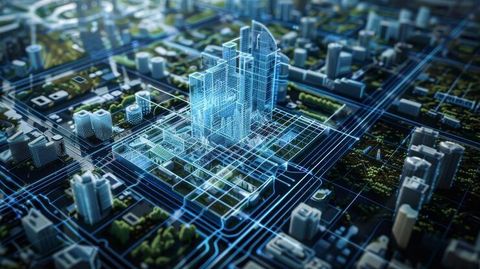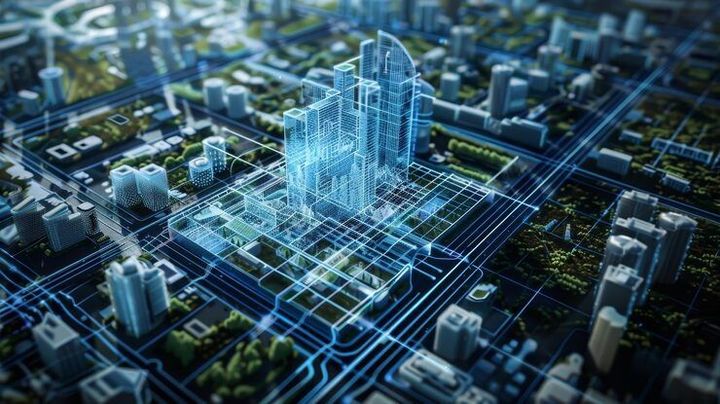
Smart City Design Explore: Connected Buildings, Transportation, Energy and Public Infrastructure
Smart city design refers to the planning and development of urban areas where buildings, transportation networks, energy systems, water infrastructure, public spaces, and digital technologies work together. The concept developed from the broader idea of using information and communication technology to improve how cities are planned, operated, and maintained.
A modern smart city does not simply mean a city filled with sensors or connected devices. Instead, smart city design focuses on connecting physical infrastructure with data and digital systems so that urban planners can better understand traffic, energy use, water consumption, environmental conditions, and public infrastructure.
Connected buildings are an important part of this approach. Building systems can use sensors and automated controls to monitor lighting, temperature, electricity consumption, equipment conditions, and indoor environmental factors. When these systems communicate with wider urban platforms, information can support broader planning.
Transportation is another major component. Smart city transportation can combine public transit information, traffic monitoring, intelligent signals, electric mobility infrastructure, pedestrian facilities, and cycling networks. The objective is to make movement through urban areas more coordinated and accessible.
Energy and public infrastructure also form part of the same system. Smart grids, renewable energy, efficient buildings, water networks, street lighting, waste management, and digital mapping can provide information that helps cities manage resources and infrastructure more systematically.
Importance
Responding to urban growth
Cities are experiencing increasing pressure from population growth, traffic, energy demand, water requirements, and changing environmental conditions. Traditional infrastructure can become difficult to manage when different systems operate independently.
Smart city design provides a framework for connecting information from multiple urban systems. For example, transportation data can help planners understand congestion patterns, while building energy information can help identify areas with high electricity demand.
The approach affects many groups, including residents, commuters, businesses, municipal authorities, planners, infrastructure operators, and emergency teams. The quality of urban planning can influence everyday activities such as traveling, accessing public spaces, using buildings, and obtaining information about infrastructure.
Connecting major urban systems
A smart city can be viewed as a group of connected layers rather than a single technology platform.
- Connected buildings can monitor occupancy, lighting, temperature, equipment, and energy use.
- Smart transportation can use traffic information, transit data, parking information, and connected signals.
- Smart energy systems can monitor electricity generation, distribution, storage, and consumption.
- Public infrastructure can include roads, street lighting, water networks, drainage, parks, public facilities, and waste systems.
- Digital platforms can bring information from several systems together for analysis and planning.
The main challenge is integration. A city may have advanced technology in one area while another infrastructure system remains disconnected. Smart city design therefore involves planning standards, data structures, communication networks, cybersecurity, maintenance processes, and human decision-making alongside physical infrastructure.
Supporting everyday urban planning
Data can help city authorities identify patterns that are difficult to observe through manual inspection alone. Traffic sensors, building management systems, energy meters, geographic information systems, and environmental monitoring equipment can generate information about urban conditions.
However, data does not replace professional planning. Information needs to be interpreted in context, checked for accuracy, and considered alongside accessibility, local conditions, public needs, and existing regulations.
Recent Updates
Digital urban infrastructure
From 2024 through 2026, the development of digital urban infrastructure in India has increasingly focused on interoperability, shared platforms, data governance, and connected urban systems. The National Urban Digital Mission was created to establish shared digital infrastructure, standards, specifications, and frameworks for India's urban ecosystem.
The National Urban Innovation Stack also emphasizes reusable digital components, urban data, interoperability, privacy, security, and data-driven governance. This direction is relevant to smart city design because different municipal systems can potentially work through common digital frameworks rather than isolated technology platforms.
Energy-efficient buildings
Building energy management has also received attention. The Bureau of Energy Efficiency lists the Energy Conservation and Sustainable Building Code 2024 and Eco-Niwas Samhita 2024 among its current building-related resources. These frameworks support greater consideration of energy efficiency and sustainable building practices.
Smart buildings can complement these approaches through occupancy sensors, automated lighting controls, energy monitoring, efficient cooling systems, and building management platforms. The technology can provide information that helps building operators understand patterns of energy use.
Mobility and public infrastructure
Urban mobility continues to develop around public transportation, pedestrian infrastructure, cycling facilities, electric mobility, traffic monitoring, and integrated planning. India's urban programs have included attention to smart mobility infrastructure and non-motorized transport such as footpaths and bicycle lanes.
AMRUT 2.0 also incorporates areas such as water supply, sewerage, water-body rejuvenation, parks, GIS-based planning, energy efficiency, and electric vehicle charging infrastructure. Current project information shows that implementation continues across different urban areas.
Data protection and connected systems
As cities collect more digital information, privacy and data protection have become increasingly important. India's Digital Personal Data Protection Rules, 2025 provide a regulatory framework connected to the Digital Personal Data Protection Act, 2023, with provisions coming into force according to the specified implementation timeline.
This is relevant when smart city systems process information that can be associated with individuals. Urban technology planning therefore needs to consider data collection, purpose, security, retention, and appropriate access controls.
Laws or Policies
Smart Cities Mission
India's Smart Cities Mission has provided an important policy foundation for technology-enabled urban development. Its urban projects have included smart mobility, redesigned roads, non-motorized transport infrastructure, digital governance, and citizen participation. The Ministry of Housing and Urban Affairs' 2024–25 outcome documentation included smart mobility infrastructure and non-motorized transport among its planned outputs.
The mission's policy direction illustrates that smart city design involves physical infrastructure as well as digital technology. Roads, public spaces, mobility systems, and governance platforms can all form part of an integrated urban framework.
National Urban Digital Mission
The National Urban Digital Mission focuses on shared digital infrastructure for India's urban ecosystem. It includes digital building blocks, open standards, urban data infrastructure, and frameworks intended to support interoperability among urban systems.
For smart city projects, these principles can help reduce fragmentation between different digital platforms and support more consistent approaches to urban data.
Energy conservation and building rules
The Energy Conservation Act, 2001 provides the legislative foundation for India's energy-efficiency framework, while the Bureau of Energy Efficiency develops policies, programs, and technical resources under this framework. BEE currently lists the Energy Conservation and Sustainable Building Code 2024 and related residential building guidance.
Building requirements can vary according to building type, location, size, and applicable state or local rules. Smart building technology therefore needs to be considered alongside applicable building codes rather than treated as a replacement for them.
Urban water and infrastructure programs
AMRUT 2.0 addresses areas such as water supply, sewerage and septage management, water-body rejuvenation, parks, GIS-based planning, and related urban reforms. Its guidelines also include provisions related to electric vehicle charging points and energy efficiency.
Together, these programs demonstrate how smart city design can extend beyond digital systems into water, mobility, energy, public spaces, and physical infrastructure.
Tools and Resources
Geographic information systems
Geographic Information System platforms help planners display roads, buildings, land use, water networks, public facilities, environmental information, and other geographic data. GIS can support urban mapping and planning by placing different information layers on a common geographic framework.
Building energy tools
Building energy calculators and energy modeling platforms can help estimate electricity demand and examine how design choices affect building performance. BEE's published resources include building efficiency guidance, retrofit manuals, and sustainable building documents.
Urban digital platforms
The National Urban Digital Mission provides information about digital urban infrastructure, standards, frameworks, and reference components. Its resources can help readers understand how digital systems are being structured within India's urban ecosystem.
Smart city planning data
Open geographic datasets, municipal dashboards, traffic datasets, environmental monitoring platforms, and public infrastructure databases can support research and planning. Their usefulness depends on data quality, update frequency, geographic coverage, and the rules governing access and use.
Common smart city components
| Urban area | Connected technology | Typical information |
|---|---|---|
| Buildings | Sensors and building management systems | Occupancy, temperature, energy use |
| Transportation | Traffic sensors and connected signals | Traffic flow, travel patterns |
| Energy | Smart meters and grid monitoring | Electricity consumption and demand |
| Water | Digital meters and network monitoring | Flow, pressure, consumption |
| Public lighting | Connected lighting controls | Operating status and energy use |
| Environment | Air and noise monitoring | Environmental conditions |
| Public spaces | Cameras, sensors, and GIS | Usage patterns and infrastructure conditions |
FAQs
What is smart city design?
Smart city design is an approach to urban planning that connects physical infrastructure, digital technology, data, and public planning. It can include connected buildings, transportation, energy networks, water systems, and public infrastructure.
How do connected buildings work in a smart city?
Connected buildings use sensors, meters, communication networks, and building management systems to collect information about conditions such as occupancy, temperature, equipment operation, and energy use. The information can support building management and wider urban planning.
How does smart city transportation use technology?
Smart city transportation can combine traffic monitoring, connected signals, public transit information, digital mapping, electric mobility infrastructure, and pedestrian or cycling data. These systems can help planners understand movement patterns and manage transportation networks.
Why is energy important in smart city design?
Energy affects buildings, transportation, public infrastructure, and urban operations. Smart meters, energy monitoring, efficient building systems, renewable generation, and grid-management technologies can provide information about consumption and demand.
Does smart city design include public infrastructure?
Yes. Public infrastructure is a major part of smart city design. Roads, water networks, drainage, lighting, parks, public buildings, transportation facilities, and digital systems can all be incorporated into an integrated urban planning framework.
Conclusion
Smart city design brings together connected buildings, transportation, energy systems, and public infrastructure within a broader urban planning framework. India's recent policies and digital initiatives show increasing attention to interoperability, energy efficiency, urban data, mobility, water infrastructure, and privacy. Technology can provide useful information, but effective urban development also depends on planning, regulations, infrastructure quality, data governance, and public needs. A smart city is therefore better understood as a connected planning ecosystem rather than simply a collection of digital devices.