Smart Traffic Lights Explained: Types, Sensors, Control Systems, Benefits and Urban Applications
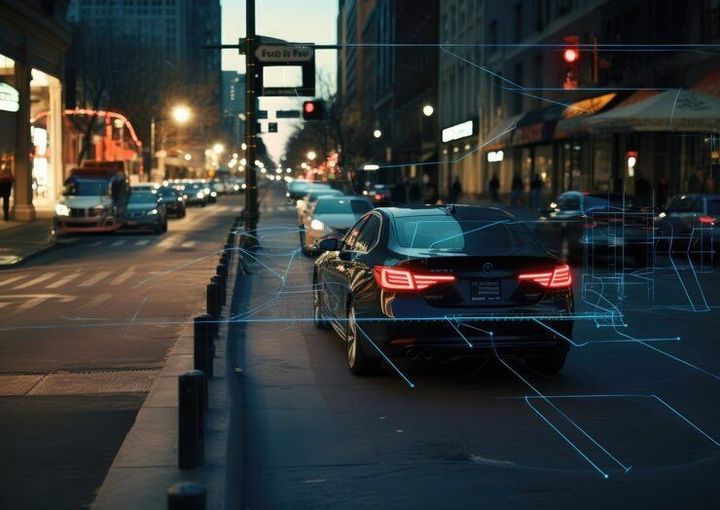
Smart traffic lights are signal systems that use sensors, cameras, communication networks, and control software to adjust traffic movements according to changing road conditions. Unlike a fixed-time signal, a smart traffic light can respond to vehicle queues, pedestrian activity, public transport movements, incidents, or other traffic information. These systems are part of intelligent transportation systems and can connect with wider urban traffic platforms.
Traditional traffic signals generally use programmed phases. A signal may give a road a fixed green period, followed by amber and red phases, even when traffic volumes change considerably during the day. This approach is predictable, but it may not reflect actual conditions at every intersection.
Smart traffic lights developed from traffic engineering and intelligent transportation systems. Their purpose is to combine traffic sensing with computerized control so signal timing can respond to road information. In India, C-DAC describes ITS applications including urban traffic control, signal monitoring, red-light violation identification, and emergency vehicle priority.
How a smart signal works
A typical system has three basic stages: detection, decision-making, and signal control. Sensors or cameras collect information, a controller or software platform analyzes it, and the traffic signal changes according to programmed rules.
Data can include vehicle counts, lane occupancy, queue length, pedestrian requests, or the presence of buses and emergency vehicles. Some systems also exchange information with a central traffic platform so several intersections can be monitored together.
Importance
Why traffic signals need real-time information
Urban traffic changes with travel periods, school activity, road construction, events, weather, collisions, and other conditions. When a signal has information about these changes, its timing can be adjusted within defined limits.
For example, an intersection with a long vehicle queue on one approach may receive a longer green phase, while an approach with little traffic may receive less green time. The control method depends on road design, traffic rules, safety requirements, and the software used.
Effects on everyday road users
Smart traffic lights affect drivers, pedestrians, cyclists, public transport operators, and emergency responders. Their functions may include:
- Coordinating signals along a corridor so traffic moves through several intersections with fewer unnecessary stops.
- Detecting pedestrian requests and allocating crossing time according to programmed safety rules.
- Giving priority to buses or emergency vehicles where the traffic authority has configured such a function.
- Detecting unusual queues or incidents that may require attention from traffic operators.
- Providing data that can help city authorities understand recurring congestion patterns.
Smart signals do not remove congestion by themselves. Road capacity, intersection design, travel demand, public transport, pedestrian movement, and incidents also influence traffic conditions.
Main types of smart traffic lights
Smart traffic signals can be grouped by how they collect information and make decisions.
| Type | Main input | Typical control approach |
|---|---|---|
| Sensor-based signals | Vehicle detectors | Adjust timing from detected traffic |
| Camera-based signals | Video analytics | Estimate vehicles, queues, and movements |
| Adaptive signals | Multiple real-time inputs | Adjust signal phases according to conditions |
| Networked signals | Data from several intersections | Coordinate signals across a corridor |
| Priority signals | Transit or emergency vehicle data | Provide configured priority |
| AI-assisted signals | Historical and live traffic data | Use analytical or predictive models |
Recent Updates
More connected traffic management
From 2024 through 2026, Indian traffic management has increasingly moved toward integrated intelligent transportation systems rather than isolated signal controllers. In 2024, the Ministry of Road Transport and Highways described Advanced Traffic Management Systems as part of a phased approach for highways and expressways, including applications connected with incident response and traffic management. A Bengaluru–Mysuru corridor was reported as completed in 2024, while several other corridors were listed at different implementation stages.
By 2025, government information described wider use of Advanced Traffic Management Systems with technologies such as video-based incident detection, automatic number plate recognition, cameras, and variable message signs. These systems are intended to support monitoring, enforcement, incident detection, and field response.
Data-driven urban traffic systems
Urban traffic management is also becoming more data oriented. National Urban Digital Mission material published in 2025 identifies measures such as intersection efficiency, travel-time reliability, traffic performance, and congestion indicators. It also describes smart traffic signal systems that can adapt to real-time vehicle density and support emergency-vehicle priority.
Integrated Command and Control Centres have become another part of this trend. Government information in 2026 reported that ICCCs were operational across all 100 Smart Cities and that traffic and mobility management, including intelligent traffic management systems and ANPR, formed part of their wider urban-management functions.
New communication possibilities
Another developing area is vehicle-to-infrastructure communication, in which roadside equipment exchanges information with connected vehicles. A 2026 Telecom Regulatory Authority of India consultation document included discussion of V2I communication for smart signals, congestion alerts, hazard warnings, and emergency-vehicle priority. Deployment approaches vary by road authority and technology.
Laws or Policies
Traffic rules and signal compliance
In India, traffic signal operation exists within the broader road-traffic legal framework. The Central Motor Vehicles Rules and Motor Vehicles Driving Regulations establish requirements related to traffic control and driver behavior. The Motor Vehicles Driving Regulations specify how drivers should respond to red, green, amber, and directional signals, including requirements to give way to pedestrians and other road users in relevant situations.
Smart equipment does not change the basic meaning of traffic signals. Drivers must follow applicable signals, road signs, markings, and directions of authorized traffic personnel.
Electronic monitoring and enforcement
India has also created a framework for electronic monitoring and enforcement. Government information states that rules published in 2021 cover electronic monitoring and enforcement at high-risk and high-density corridors and at critical junctions in cities meeting specified population or program criteria. Technologies can include cameras, speed detection equipment, ANPR, and other devices specified by the relevant government authority.
Urban transport responsibilities are shared across levels of government. The central government provides policies, standards, and guidance, while states, urban local bodies, and other authorities are responsible for many aspects of urban transport planning and implementation. Government information also identifies the National Urban Transport Policy and other urban-transport policies as part of this broader framework.
Tools and Resources
Traffic management platforms
Cities can use traffic management software to monitor signal status, vehicle flows, incidents, and intersection performance. C-DAC's ITS work includes urban traffic control, traffic signal monitoring and management, emergency vehicle priority, pedestrian safety control, and related systems developed for Indian conditions.
Data and planning resources
Urban planners and researchers can use indicators such as intersection efficiency, average delay, travel-time reliability, and traffic performance. These measures help compare conditions over time and identify intersections for further study. The National Urban Digital Mission's urban analytics material provides examples of such metrics.
Regulations and technical references
Useful references include the Ministry of Road Transport and Highways, Central Motor Vehicles Rules, Motor Vehicles Driving Regulations, Ministry of Housing and Urban Affairs publications, and Indian urban-transport guidance. Local authorities may also publish signal plans, road-closure information, mobility data, or traffic notices.
FAQs
What are smart traffic lights?
Smart traffic lights are signal systems that use sensors, cameras, communication networks, or software to adjust signal operation based on traffic information. They can be connected to individual intersections or larger urban traffic management systems.
How do smart traffic light sensors work?
Smart traffic light sensors detect information such as vehicles, lane occupancy, queue length, or pedestrian activity. The controller processes this information and can adjust signal timing within programmed safety and traffic-control rules.
What are the main types of smart traffic lights?
Common types include sensor-based, camera-based, adaptive, networked, priority, and AI-assisted traffic signals. Many modern systems combine several of these approaches rather than using only one type.
Can smart traffic lights reduce traffic congestion?
Smart signals can help manage traffic flow by adjusting timing to changing demand and coordinating intersections. Their effect depends on road layout, traffic volumes, signal design, public transport, pedestrian activity, incidents, and other conditions.
Are smart traffic lights used in Indian cities?
Yes. Indian cities use intelligent traffic management technologies, including urban traffic control, signal monitoring, camera-based systems, and integrated command centres. The specific technologies and operating arrangements vary between cities and authorities.
Conclusion
Smart traffic lights combine traffic signals with sensors, cameras, communications, and control software to respond to changing road conditions. Their applications range from adaptive intersection timing to corridor coordination, pedestrian management, emergency priority, and integration with wider traffic platforms. In India, recent developments show increasing use of intelligent transportation systems and data-driven urban traffic management. Their operation remains subject to traffic rules, road-safety requirements, and the policies of the responsible authorities.