Automated Warehouses Guide: Types, Robotics, Storage Systems, Applications and Key Features
Automated warehouses combine storage equipment, software, sensors, and machines to move and organize goods with limited manual handling. An Automated Warehouses Guide helps explain the main types, robotics, storage systems, applications, and key features in simple terms. These facilities developed from conventional warehouses as businesses needed to manage larger inventories, faster order cycles, and more complex movement of materials.
Context
What an automated warehouse is
An automated warehouse is a storage facility where software and mechanical systems perform some or many tasks that people traditionally handled manually. Depending on the design, automation may control inventory records, storage locations, item movement, picking, sorting, packing, or retrieval.
Automation does not always mean a warehouse operates without people. Workers may supervise systems, inspect equipment, handle exceptions, maintain machinery, manage inventory information, and perform tasks that are difficult to automate.
How warehouse automation developed
Traditional warehouses relied heavily on fixed shelving, forklifts, carts, paper records, and manual counting. As product ranges expanded, these methods became harder to coordinate, especially when inventory had to move through receiving, storage, picking, and dispatch areas.
Modern automated warehouses use combinations of warehouse management software, conveyors, automated storage and retrieval systems, autonomous mobile robots, robotic arms, sensors, barcode readers, and control systems. The exact combination depends on building design, inventory characteristics, operating patterns, and required handling methods.
Importance
Why automation matters
Warehouse operations affect manufacturers, retailers, distributors, transport networks, and consumers. A well-organized storage system can help goods move through a facility in a predictable sequence while providing clearer information about inventory locations.
Automation is also relevant when warehouses handle heavy loads, repetitive movements, narrow aisles, or large numbers of similar items. Machines can perform repeated movement patterns while people focus on monitoring, exception handling, quality checks, and other activities.
Common challenges addressed
Automated warehouses are designed around practical challenges such as:
- Finding stored items accurately
- Moving materials between different warehouse zones
- Managing high inventory volumes
- Reducing unnecessary travel inside storage areas
- Coordinating receiving, storage, picking, and dispatch
- Recording inventory movement in digital systems
- Handling repetitive or physically demanding tasks
- Using vertical building space more effectively
Automation can also introduce new challenges. Systems require appropriate layout planning, equipment integration, software controls, maintenance procedures, worker training, and safety measures.
Recent Updates
Robotics and mobile automation
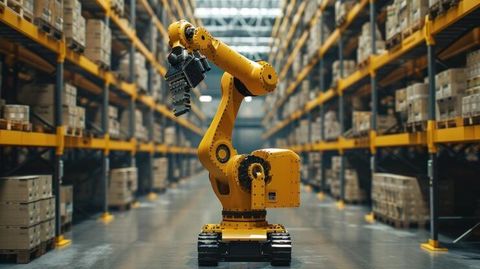
From 2024 through 2026, warehouse automation has continued moving toward combinations of mobile robots, automated storage systems, machine vision, sensors, and software coordination. Autonomous mobile robots can navigate defined warehouse areas and move containers, shelves, or materials between work zones.
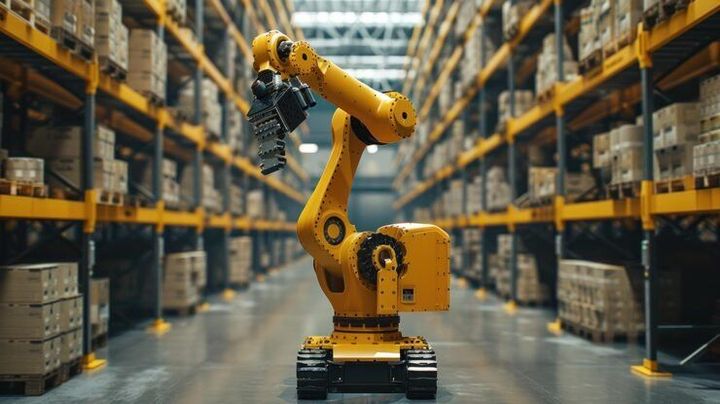
Robotic arms are also used for tasks such as pallet handling, item picking, depalletizing, and sorting. Vision systems can help machines identify objects, positions, labels, and package characteristics.
Software and data integration
Another current trend is closer integration between warehouse management systems, warehouse execution systems, robotics controls, and enterprise software. Instead of treating each machine as a separate unit, modern designs increasingly use connected data to coordinate inventory information and material movement.
Digital twins and simulation tools are also used during planning. A digital model can represent storage locations, traffic paths, equipment, and process rules so different layouts or operating scenarios can be examined before physical changes are made.
Safety and robot standards
Indian standards work has also continued to address industrial robot safety. BIS materials reference Indian Standards based on ISO 10218 for industrial robots and robot-system safety, including areas such as functional safety and cybersecurity related to robot safety. These developments are relevant to automated warehouse designs that use industrial robotic equipment.
Laws or Policies
Building and fire safety in India
In India, warehouse buildings are affected by applicable building, fire, electrical, environmental, and local authority requirements. The National Building Code of India 2016 provides a national framework covering areas such as fire and life safety, structural design, electrical installations, mechanical ventilation, accessibility, and facility management. Local authorities may adopt or apply these provisions through their own rules and approval processes.
Automated warehouses need particular attention to fire detection, emergency exits, access routes, electrical systems, ventilation, storage arrangements, and firefighting provisions. The exact requirements depend on the building, occupancy, stored materials, location, and applicable local rules.
Worker safety
The Occupational Safety, Health and Working Conditions Code, 2020 consolidates several central labour laws and addresses workplace safety and working conditions. Government material describes its application to specified establishments and sets out requirements related to registration and occupational safety.
For automated warehouses, safety planning can include machine guarding, controlled access, emergency stopping arrangements, safe pedestrian routes, training, and procedures for working around moving equipment. The applicable requirements can vary according to the type and size of establishment and the rules in force.
Standards for robots and machinery
BIS maintains Indian Standards covering industrial robots, machinery safety, electrical equipment, and related areas. Compliance requirements depend on the specific equipment and whether a particular product or system falls under a mandatory regulatory order. The BIS standards portal can be used to check current standards and revisions.
| Area | Examples of relevant considerations |
|---|---|
| Storage | Racks, bins, pallets, vertical space |
| Movement | Conveyors, mobile robots, lifts |
| Identification | Barcodes, RFID, machine vision |
| Control | WMS, WES, warehouse control systems |
| Safety | Guards, emergency stops, pedestrian separation |
| Building | Fire protection, exits, electrical systems |
Tools and Resources
Warehouse management software
Warehouse management systems, commonly called WMS, record inventory locations, receiving, picking, replenishment, and dispatch information. In automated warehouses, the WMS may exchange information with warehouse control or execution software that coordinates equipment.
Simulation and digital planning
Warehouse layout software can model aisles, racks, conveyors, robot paths, storage zones, and material flows. Simulation can help compare different arrangements before equipment is installed or a facility is modified.
Identification and monitoring tools
Barcode scanners and RFID systems can associate physical items with digital inventory records. Sensors can monitor equipment conditions, movement zones, temperature, position, or other operational information depending on the application.
Standards and reference resources
Useful reference sources in India include the Bureau of Indian Standards portal, the National Building Code material, and government labour resources. These sources can help readers understand applicable standards, building provisions, and workplace rules. Requirements should be checked against the current rules applicable to the specific warehouse and location.
FAQs
What are the main types of automated warehouses?
Common types include automated storage and retrieval systems, shuttle-based storage, vertical lift systems, automated pallet warehouses, robotic goods-to-person systems, and facilities that combine several technologies. The selection depends on inventory type, storage density, building layout, and workflow.
How do robotics work in automated warehouses?
Warehouse robots use sensors, software instructions, navigation systems, and control equipment to move materials or perform defined handling tasks. Some robots transport shelves or containers, while robotic arms can handle individual items or pallets.
What storage systems are used in automated warehouses?
Storage systems include pallet-based automated storage and retrieval systems, shuttle systems, vertical lift modules, automated carousel systems, and robotic shelf systems. Each arrangement uses a different method for storing and retrieving inventory.
Are automated warehouses fully operated by robots?
Not necessarily. Many facilities use a combination of people and automation. People may supervise equipment, manage exceptions, inspect goods, maintain systems, and perform activities that require judgment or physical flexibility.
What safety rules apply to automated warehouses in India?
Applicable requirements can include building and fire provisions, occupational safety rules, electrical requirements, local authority regulations, and relevant Indian Standards. The specific rules depend on the warehouse location, building type, equipment, stored materials, and operating conditions.
Conclusion
Automated warehouses combine storage systems, robotics, software, sensors, and control equipment to organize the movement of inventory. Their designs range from partly automated facilities to highly integrated environments where storage and movement are coordinated digitally. Current developments increasingly connect mobile robots, machine vision, simulation, and warehouse software while placing continued attention on machinery and workplace safety. In India, building, fire, labour, electrical, and applicable standards requirements all form part of the wider operating environment.