Collaborative Robot Integration Systems Guide: Hardware, Software, Sensors and Industrial Uses
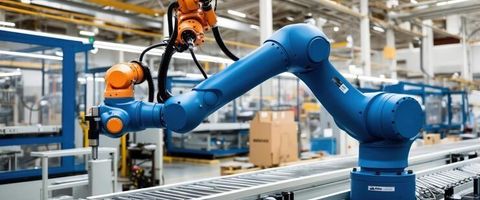
A Collaborative Robot Integration Systems Guide explains how collaborative robots, commonly called cobots, are connected with industrial equipment, software, sensors, and production processes. Unlike traditional industrial robots that often operate inside restricted safety zones, cobots are designed for applications where people and automated equipment may work in the same general workspace. Their safe use depends on the robot's design, the application, the surrounding equipment, and an appropriate risk assessment.
Context
A Collaborative Robot Integration Systems Guide explains how collaborative robots, commonly called cobots, are connected with industrial equipment, software, sensors, and production processes. Unlike traditional industrial robots that often operate inside restricted safety zones, cobots are designed for applications where people and automated equipment may work in the same general workspace. Their safe use depends on the robot's design, the application, the surrounding equipment, and an appropriate risk assessment.
Collaborative robot integration developed alongside advances in robotics, electronic controls, machine vision, and human-machine interaction. Manufacturers began exploring ways to automate repetitive or physically demanding tasks while allowing workers to retain responsibility for inspection, decision-making, and other activities. Modern integration systems combine mechanical equipment, control software, sensors, communication networks, and safety measures into a coordinated production arrangement.
Understanding Collaborative Robot Integration Systems
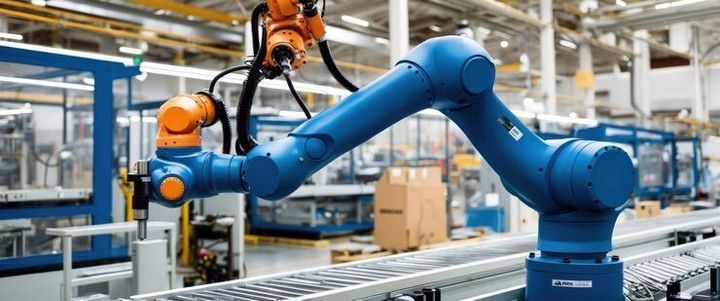
A collaborative robot integration system includes the robot arm and the equipment needed to perform a particular task. The complete arrangement may contain a gripper, camera, force sensor, controller, mounting structure, production software, and safety devices.
For example, a cobot used for packaging may pick up a product, position it inside a container, and communicate with a conveyor controller. A robot used for machine tending may load components into a machine, wait for the machining cycle to finish, and remove the completed part.
The integration process involves selecting compatible components, programming movements, connecting communication systems, evaluating hazards, and testing the complete application. A robot that operates correctly on its own may still require substantial integration work before it can function reliably within a production line.
Main Components of a Collaborative Robot System
The hardware and software components have different responsibilities:
Robot arm: Provides controlled movement through several joints.
End effector: A gripper, suction device, screwdriver, or other tool that interacts with the workpiece.
Robot controller: Processes commands and manages robot movement.
Sensors: Collect information about position, force, distance, objects, or surrounding conditions.
Safety equipment: May include scanners, interlocks, protective stops, and other devices selected through risk assessment.
Integration software: Coordinates robot programs, machine communication, task sequences, and production data.
The exact configuration depends on the task, workspace, payload, required accuracy, and interaction between workers and equipment.
Importance
Collaborative robot integration matters because manufacturers need automation systems that fit existing production processes without requiring every task to operate as a completely independent robotic cell. Cobots can support repetitive handling, assembly, inspection, packaging, and machine-tending activities, although their suitability depends on the application.
Integration also affects product consistency, production planning, equipment coordination, and worker safety. Incorrect communication settings, poorly designed tooling, or incomplete safety assessments can interrupt production and create hazards.
Industrial Uses of Collaborative Robot Integration
Cobots are used across several manufacturing and industrial activities. Their applications range from simple object handling to coordinated operations involving cameras, machine controllers, and production software.
Common examples include:
Assembly: Positioning components, fastening parts, and assisting with repetitive assembly sequences.
Machine tending: Loading and unloading compatible machining, molding, or processing equipment.
Packaging: Placing products into containers, arranging items, and preparing packages for further processing.
Quality inspection: Moving parts beneath cameras or measurement devices for examination.
Material handling: Transferring components between workstations and organizing production materials.
Laboratory automation: Handling containers or equipment in controlled environments when the application and materials permit.
A cobot does not automatically improve every process. Heavy payloads, high operating speeds, sharp tools, hazardous materials, and unpredictable movement may require different equipment or additional protective measures.
Hardware, Software, and Sensor Integration
Hardware selection establishes the physical capabilities of the system. Important considerations include reach, payload, mounting position, end-effector compatibility, cable routing, and the size of the working area. Tooling must also account for the weight and shape of the object being handled.
Software integration connects the robot program with other production equipment. Depending on the system, communication may use industrial Ethernet, fieldbus networks, programmable logic controllers (PLCs), or application programming interfaces (APIs). These connections allow the robot to receive commands, exchange status information, and coordinate production sequences.
Sensors provide information that helps the system respond to its surroundings. The following table summarizes common sensor types.
| Sensor type | Main function | Example application |
|---|---|---|
| Vision camera | Identifies objects and visual features | Part inspection and picking |
| Force-torque sensor | Measures forces and rotational forces | Assembly and controlled contact |
| Proximity sensor | Detects nearby objects | Part presence detection |
| Encoder | Measures joint or motor position | Movement control |
| Safety laser scanner | Monitors defined areas | Access detection and protective stopping |
| Pressure or vacuum sensor | Monitors gripping conditions | Suction-based handling |
Not every sensor is a safety-rated device. Equipment used to perform safety functions must have appropriate specifications and be integrated according to the applicable safety design.
Recent Updates
From 2024 through 2026, collaborative robot integration has continued to develop through improvements in machine vision, programming interfaces, connectivity, and the coordination of robots with digital production systems. Adoption patterns differ by industry, and individual capabilities depend on the manufacturer and installed configuration.
Easier Programming and Machine Vision
Some cobot platforms provide graphical programming, guided movement, reusable task sequences, and simulation tools. These features can help technical teams configure routine tasks without writing every movement instruction from the beginning. Complex applications may still require robotics knowledge, programming, and engineering validation.
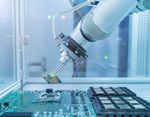
Machine vision has also become an important integration component. Cameras combined with image-processing software can help identify component orientation, detect visible defects, and locate objects that are not positioned identically every time. Lighting, surface reflectivity, camera placement, and environmental conditions can influence the results.
Industrial Connectivity and Digital Monitoring
Manufacturing systems increasingly connect robots with production dashboards, machine controllers, and data-management platforms. Depending on the configuration, these connections can record cycle information, equipment status, faults, and task completion.
Some systems also support simulation and digital-twin approaches, where a virtual representation of equipment is used to examine movement, layout, or production sequences before physical implementation. Such models depend on accurate equipment data and do not replace real-world commissioning or safety testing.
Laws or Policies
Collaborative robot integration is influenced by machinery safety requirements, electrical standards, workplace regulations, and the legal framework of the country where the equipment operates. The word collaborative does not mean that a robot can safely share space with workers under every condition. Safety depends on the complete application, including tooling, workpieces, speed, forces, and surrounding machinery.
Industrial Robot Safety Standards
ISO 10218-1 and ISO 10218-2 address industrial robot safety, including robot requirements and the integration of robot applications and cells. ISO/TS 15066 provides additional technical guidance for collaborative industrial robot applications. The relevant editions and applicable legal requirements should be verified for a particular project.
Risk assessment generally examines possible contact, crushing and trapping points, sharp tooling, dropped objects, unexpected movement, and access to hazardous equipment. Protective measures may include speed and separation monitoring, safety-rated monitored stops, hand-guided operation, or power and force limiting where appropriate. The selected method must be suitable for the actual application.
Indian Industrial Requirements
In India, industrial robot installations may be subject to applicable occupational safety requirements, electrical rules, machinery requirements, and state-specific regulations. The Occupational Safety, Health and Working Conditions Code, 2020, forms part of India's occupational safety legislative framework; its practical application depends on commencement provisions, relevant rules, and the establishment concerned.
Electrical installations and industrial control equipment may also need to comply with applicable Indian standards and other requirements. Manufacturers and integrators should establish which provisions apply to their facility, machinery, and industry before commissioning an installation.
Documentation and Worker Training
A complete integration project normally includes risk assessments, system diagrams, control descriptions, operating instructions, maintenance procedures, and records of validation testing. Workers need suitable instruction on operating procedures, emergency stops, restricted areas, and responses to faults.
Changes to robot tooling, programs, payloads, or surrounding equipment can affect the original safety assessment. Significant modifications therefore need appropriate review and validation before the revised system returns to operation.
Tools and Resources
Several technical resources help engineers plan, integrate, test, and maintain collaborative robot systems. Their suitability depends on the robot platform, production equipment, and project requirements.
Robot Programming and Simulation Tools
Robot manufacturers commonly provide programming environments, configuration utilities, and simulation applications. These tools can help define movement paths, configure end effectors, inspect reach limitations, and plan communication with external equipment.
Simulation is particularly useful for identifying possible collisions, awkward tool orientations, and layout constraints before installation. However, simulated behavior may not fully represent physical conditions, sensor limitations, or unexpected interactions.
Industrial Communication and Engineering Resources
PLC programming environments, industrial network configuration tools, and diagnostic applications help coordinate robot movements with conveyors, machine tools, and other production equipment. Network documentation should specify communication protocols, signal definitions, fault handling, and recovery procedures.
Useful reference resources include the International Organization for Standardization (ISO), the International Electrotechnical Commission (IEC), the International Federation of Robotics (IFR), and applicable Indian standards publications. Robot manufacturers also publish technical manuals, compatibility information, and application guidance.
Integration Planning Checklist
A structured planning process commonly includes the following activities:
Define the production task, workpiece characteristics, and expected operating sequence.
Confirm robot reach, payload, tooling, mounting, and environmental requirements.
Identify necessary cameras, force sensors, machine interfaces, and safety devices.
Design communication between the robot controller and external equipment.
Conduct a documented risk assessment and establish protective measures.
Test normal operation, fault recovery, emergency stops, and relevant safety functions.
Train operators and establish inspection and maintenance procedures.
This process helps teams examine the entire installation rather than treating the robot arm as an isolated piece of equipment.
FAQs
What is a collaborative robot integration system?
A collaborative robot integration system combines a cobot with tooling, sensors, software, controllers, and safety equipment to perform an industrial task. The components must operate together according to the application's functional and safety requirements.
Which sensors are used in collaborative robot integration?
Common sensors include vision cameras, force-torque sensors, proximity detectors, encoders, and safety laser scanners. The choice depends on whether the system needs object recognition, movement feedback, force measurement, or protective monitoring.
How is collaborative robot integration software used?
Integration software programs robot movements and coordinates tasks with PLCs, cameras, conveyors, and other equipment. It may also support simulation, fault diagnosis, production monitoring, and communication with manufacturing systems.
What safety standards apply to collaborative robot integration systems?
ISO 10218-1 and ISO 10218-2 address industrial robot and integration safety, while ISO/TS 15066 provides additional guidance for collaborative applications. Applicable national laws and the results of a task-specific risk assessment also determine the required protective measures.
Which industries use collaborative robot integration?
Applications occur in automotive manufacturing, electronics assembly, packaging, metalworking, consumer goods production, and selected laboratory processes. Suitability depends on the task, equipment, work environment, and required safety controls.
Conclusion
Collaborative robot integration systems combine robot hardware, software, sensors, industrial communication, and protective measures into coordinated applications. Their uses include assembly, machine tending, packaging, material handling, and inspection. Effective integration depends on equipment compatibility, appropriate programming, documented risk assessment, and validation of safety functions. Applicable standards, workplace regulations, and ongoing maintenance remain important throughout the operating life of the installation.