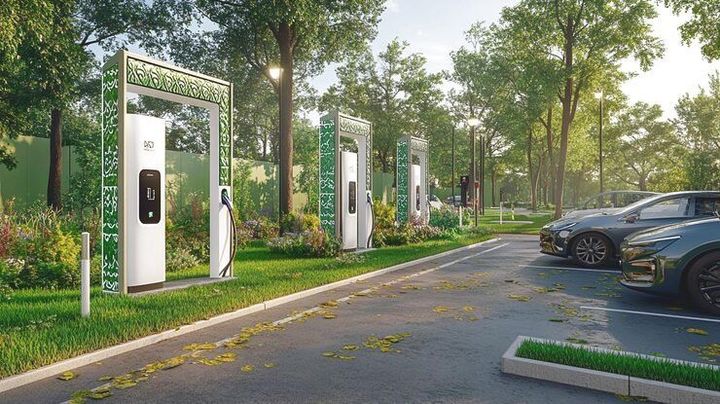
Electric Vehicle Charging Stations Guide: Levels, Charging Methods, Locations and Key Considerations
Electric Vehicle Charging Stations Guide: Levels, Charging Methods, Locations and Key Considerations explains how electric vehicles receive energy from charging equipment and how drivers can identify suitable charging locations. Unlike conventional vehicles that use liquid fuel, an electric vehicle (EV) stores electrical energy in a battery and needs a compatible charging connection to replenish that energy.
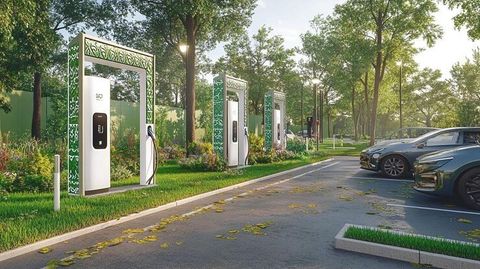
EV charging stations can be installed at homes, workplaces, apartment buildings, parking areas, shopping locations, transport hubs, highways and other public places. Charging equipment can use alternating current (AC) or direct current (DC), with charging speed depending on the vehicle, charger, battery, electrical connection and other technical factors.
In India, the Ministry of Power issued the Guidelines for Installation and Operation of Electric Vehicle Charging Infrastructure-2024. These guidelines apply to charging infrastructure in private, semi-restricted and public locations, as well as highways and expressways.
How EV Charging Works
An EV charging station connects electrical power to the vehicle through a compatible connector. With AC charging, electricity is converted into the form needed by the vehicle through its onboard charger. With DC charging, the charging equipment supplies DC power directly to the battery system under the vehicle's charging controls.
Charging time depends on several factors, including battery capacity, battery state of charge, charging power, temperature and the vehicle's maximum charging capability. A higher-rated charger does not automatically mean that every vehicle will charge at that rate.
Importance
Why Charging Infrastructure Matters
Charging availability affects how easily EV owners can plan daily travel and longer journeys. A driver may need charging at home for routine use, at a workplace during the day, or at a public station during a highway trip.
A developed charging network also has importance for electric buses, commercial vehicles, delivery fleets and other high-use vehicles. These vehicles may require charging at planned locations according to operating schedules.
India's 2024 charging guidelines identify deployment patterns for urban areas and major roads. They suggest charging stations within a 1 km × 1 km grid in urban areas and at intervals of about 20 km on highways, expressways and major roads. For long-range and heavy-duty EVs, the guidelines describe fast-charging locations at longer-road intervals.
Everyday Factors for Drivers
Before using an EV charging station, drivers generally need to consider:
- Connector compatibility with the vehicle
- AC or DC charging method
- Available charging power
- Current battery level
- Expected charging duration
- Station location and operating status
- Payment method and applicable tariff
- Parking or access conditions
- Vehicle manufacturer's charging instructions
These factors can vary between vehicles and charging locations, so the information displayed by the vehicle and charging platform can be useful when planning a journey.
Charging Levels and Methods
Level 1 Charging
Level 1 generally refers to low-power AC charging using a standard electrical connection. It is usually associated with slow charging and can be suitable when a vehicle remains connected for an extended period.
The actual charging rate depends on the electrical connection, vehicle and charging equipment. Because charging is relatively slow, this method is more relevant to situations where the vehicle is parked for many hours.
Level 2 Charging
Level 2 generally refers to higher-power AC charging through dedicated charging equipment. It can provide substantially more power than basic household charging, although the exact charging rate varies by installation and vehicle.
Dedicated AC charging is commonly considered for homes, workplaces, apartment buildings and other locations where vehicles remain parked for a moderate period.
DC Fast Charging
DC fast charging uses dedicated equipment that supplies direct current to the vehicle's battery system. It can provide substantially more power than many AC arrangements and is commonly associated with public charging locations and longer-distance travel.
Charging speed can change during a session. Battery management systems may reduce charging power as the battery approaches a high state of charge, helping manage battery temperature and electrical conditions.
Common Charging Methods
The main charging methods can be summarized as follows:
| Charging method | Typical setting | General characteristic |
|---|---|---|
| Low-power AC | Home or extended parking | Slower charging |
| Dedicated AC | Home, workplace, parking | Moderate charging |
| DC fast charging | Public stations, highways | Higher-power charging |
| Battery swapping | Selected EV applications | Battery is replaced rather than charged in the vehicle |
Battery swapping is another approach in which a depleted battery is replaced with a charged battery. India has also developed draft policy guidance addressing battery swapping and battery charging stations.
Locations and Key Considerations
Where Charging Stations Are Located
EV charging stations can appear in many different environments. Common locations include residential buildings, office areas, shopping complexes, railway stations, airports, metro areas, municipal parking facilities, petrol stations, bus depots and highways.
The 2024 Indian guidelines specifically cover private parking, office buildings, educational institutions, hospitals, housing societies, e-bus depots, commercial complexes, railway stations, airports, metro stations, shopping areas, municipal parking and highways or expressways.
Checking Compatibility
Connector type is an important consideration because charging equipment and vehicle inlets must be compatible. India uses standards covering EV conductive charging systems, connectors, vehicle inlets and AC or DC charging equipment. BIS maintains standards including the IS 17017 series for EV charging systems.
Drivers should check the vehicle manufacturer's specifications before selecting a charging point. A station can have an appropriate electrical output but still be unsuitable if its connector or communication arrangement does not match the vehicle.
Home and Public Charging
Home charging can be useful for vehicles that remain parked for long periods. Under India's 2024 guidelines, residential owners may use an existing electricity connection for EV charging or seek a separate metered connection with a dedicated EV charging tariff.
Public charging is more relevant when a vehicle is away from its regular parking location. Public stations may have different power ratings, connectors, payment systems and access arrangements, so checking station information before travelling can reduce uncertainty.
Recent Updates
Expansion of Charging Infrastructure
India's EV charging network has expanded as electric mobility has developed. Government data reported 25,202 public EV charging stations deployed in the country in late 2024, while another government response reported 29,151 public EV charging stations based on information received from BHEL by early 2026. Differences between figures can result from reporting dates and data sources.
PM E-DRIVE Developments
The PM E-DRIVE scheme includes a ₹2,000 crore allocation for public EV charging infrastructure. Operational guidelines for EV public charging stations were issued in 2025, establishing a framework for deployment through eligible government and public entities and participating charging operators.
By 2026, government activity around charging infrastructure continued to focus on nationwide deployment, including urban, semi-urban and rural areas. The scheme's charging-infrastructure component is intended to cover different vehicle categories and charging requirements.
Charging Technology Standards
Charging technology is also evolving. BIS records show continuing work and review of Indian standards covering EV connectors, AC charging, DC charging and electrical protection. A 2025 standard addresses dual-gun DC EV supply equipment, while additional EV charging standards have been reviewed or revised during 2025–2026.
Laws or Policies
India's Charging Infrastructure Rules
In India, setting up an EV charging station has been treated as an unlicensed activity under the Ministry of Power's policy framework. Private entities can establish charging stations in accordance with the applicable Ministry of Power guidelines.
The 2024 guidelines also address electricity connections, tariffs, public land arrangements, safety, interoperability and charging network development. For charging stations, the guidelines provide for Low Tension electricity connections for loads up to 150 kW under specified conditions.
Standards and Electrical Safety
BIS standards provide technical requirements for EV charging equipment and related electrical systems. IS 17017 includes requirements covering conductive charging systems, connectors, AC charging configurations and DC charging equipment. These standards help establish technical consistency and electrical safety requirements across charging infrastructure.
State electricity regulatory authorities and distribution companies can also have relevant requirements concerning electricity connections and tariffs. Therefore, installation requirements can vary according to the location and type of charging facility.
Tools and Resources
Finding Charging Stations
Navigation applications and EV-focused charging platforms can help users identify nearby charging points, connector information and station availability. Information can change as stations become operational or unavailable, so current platform data is more useful than an older location list.
Government Resources
The Ministry of Power publishes EV charging infrastructure guidelines and related documents. The Ministry of Heavy Industries also maintains the PM E-DRIVE portal, including information about scheme guidelines and charging-infrastructure developments.
Vehicle Information
The vehicle owner's manual or manufacturer's technical documentation can help identify compatible connectors, maximum AC or DC charging power, battery-related guidance and recommended charging procedures. These details are particularly important when planning longer journeys.
FAQs
What are the main EV charging levels?
The commonly used EV charging levels are Level 1, Level 2 and DC fast charging. Level 1 generally uses lower-power AC charging, Level 2 uses dedicated higher-power AC equipment, and DC fast charging supplies direct current through dedicated equipment.
How do I find EV charging stations near my location?
EV charging stations can be located through navigation applications, EV charging platforms and vehicle-integrated systems. Available information may include location, connector type, charging power and current station status.
How long does EV charging take?
Charging duration depends on battery capacity, starting battery level, charger power, vehicle charging capability, temperature and other conditions. AC charging generally takes longer than high-power DC charging, but actual time varies by vehicle and station.
What should I check before using an EV charging station?
Check connector compatibility, charging method, available power, station status, payment requirements and any access conditions. The vehicle's charging specifications should also be checked before selecting a charger.
What are EV charging infrastructure rules in India?
India's Ministry of Power issued consolidated EV charging infrastructure guidelines in 2024. They address charging locations, electricity connections, tariffs, safety, interoperability and network development, while BIS standards provide technical requirements for charging equipment.
Conclusion
Electric Vehicle Charging Stations provide the electrical connection needed to replenish energy in EV batteries. Charging can take place through low-power AC, dedicated AC, DC fast charging or, in selected applications, battery swapping. Station location, connector compatibility, charging power, vehicle specifications and applicable rules are important factors when understanding EV charging. In India, government guidelines and technical standards continue to shape the development of public and private charging infrastructure.