Industrial HVAC Units Guide: System Designs, Cooling Methods, Heating and Ventilation Applications
An Industrial HVAC Units Guide explains how heating, ventilation, and air conditioning systems regulate indoor temperatures, air movement, humidity, and air quality in industrial buildings. HVAC stands for heating, ventilation, and air conditioning. These systems developed from earlier heating, cooling, and mechanical ventilation technologies as factories, warehouses, laboratories, and other large buildings required more controlled indoor environments.
Context
An Industrial HVAC Units Guide explains how heating, ventilation, and air conditioning systems regulate indoor temperatures, air movement, humidity, and air quality in industrial buildings. HVAC stands for heating, ventilation, and air conditioning. These systems developed from earlier heating, cooling, and mechanical ventilation technologies as factories, warehouses, laboratories, and other large buildings required more controlled indoor environments.
Industrial HVAC units differ from many residential systems because they may need to manage large spaces, heavy equipment heat, changing occupancy, airborne particles, and demanding operating conditions. Their designs can include rooftop units, central air handling systems, chillers, industrial boilers, ventilation fans, and duct networks. The appropriate configuration depends on building size, production activities, climate, and indoor environmental requirements.
Understanding Industrial HVAC System Designs
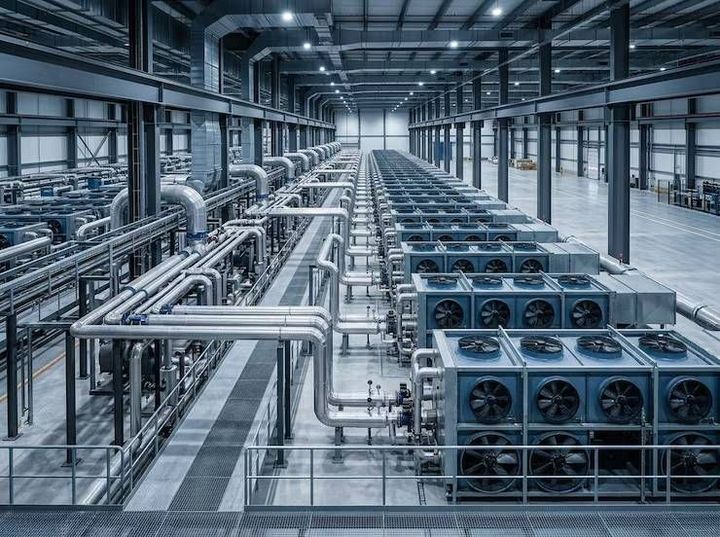
Industrial HVAC systems combine equipment that heats, cools, filters, distributes, and sometimes dehumidifies air. A central system may use a chiller to produce chilled water, an air handling unit to condition air, and ducts to distribute it throughout a building. Other installations use packaged equipment that combines several functions within a single assembly.
Common industrial HVAC designs include:
Rooftop HVAC units: Packaged systems installed on suitable roof structures, often serving commercial or industrial spaces.
Air handling units (AHUs): Assemblies containing components such as fans, filters, heating or cooling coils, and dampers.
Chiller systems: Equipment that removes heat from water or another circulating fluid for cooling applications.
Variable refrigerant flow systems: Systems that adjust refrigerant flow to meet the needs of different indoor zones.
Industrial ventilation systems: Fans, ducts, and air outlets that introduce outdoor air, remove indoor air, or control specific contaminants.
Evaporative cooling systems: Equipment that cools air through water evaporation, where climate and humidity conditions are suitable.
Each design has different operating characteristics. Some systems focus on maintaining comfortable temperatures, while others must control humidity, remove process heat, or maintain specific environmental conditions for manufacturing.
Importance
Industrial HVAC units influence worker comfort, equipment operation, product quality, and indoor air conditions. Factories, data centers, food-processing facilities, pharmaceutical manufacturing areas, and warehouses can generate substantial heat or require controlled temperature and humidity. Poor ventilation may allow heat, moisture, dust, fumes, or other airborne contaminants to accumulate.
HVAC requirements also vary according to the activity taking place inside a building. A warehouse may need broad temperature management and adequate fresh air, whereas an electronics production area may require more precise environmental control. Some industrial processes need dedicated exhaust systems that operate separately from general building ventilation.
Heating and Cooling Requirements
Heating systems maintain suitable indoor temperatures during cold conditions or support processes that require heat. Common technologies include boilers that heat water, electric resistance heaters, heat pumps, and heating coils installed within air handling equipment.
Industrial cooling methods remove heat from indoor spaces, machinery, or production processes. These methods may include mechanical refrigeration, chilled-water systems, direct expansion cooling, and evaporative cooling. The selection depends on the heat load, outdoor climate, required temperature range, water availability, and equipment operating conditions.
Ventilation and Indoor Air Quality
Ventilation introduces outdoor air and removes indoor air to help control carbon dioxide, moisture, odors, and certain airborne contaminants. Industrial buildings may also use local exhaust ventilation to capture dust, fumes, or vapors near the point where they are generated. General ventilation alone may not adequately control a contaminant produced by a specific industrial process.
Important factors include:
Airflow rate: The quantity of air moved through a room or process area.
Filtration: Removal of particles from air using filters suited to the application.
Humidity control: Management of moisture to support comfort, product quality, or process requirements.
Temperature control: Maintenance of the required indoor or process temperature.
Pressure relationships: Management of air movement between rooms to limit the transfer of contaminants where required.
Proper system design considers these factors together rather than treating heating, cooling, and ventilation as completely separate tasks.
Industrial HVAC Applications
| Application | Main HVAC requirement | Common system components |
|---|---|---|
| Manufacturing plants | Temperature control and process heat removal | AHUs, chillers, exhaust fans |
| Warehouses | Ventilation and broad temperature management | Packaged units, fans, ductwork |
| Data centers | Continuous heat removal | Precision cooling units, chillers |
| Food-processing facilities | Temperature, humidity, and hygiene controls | Air handlers, filters, refrigeration |
| Laboratories | Controlled airflow and contaminant management | Exhaust systems, specialized AHUs |
| Workshops | Heat removal and local exhaust | Ventilation fans, extraction hoods |
These are general examples. Actual requirements depend on the process, building design, local climate, and applicable safety standards.
Recent Updates
Industrial HVAC development during 2024–2026 has continued to focus on energy efficiency, electrification, digital monitoring, refrigerant changes, and improved control systems. Adoption varies according to the age of the building, regional regulations, electricity infrastructure, and the requirements of individual industries.
Energy Efficiency and Electrification
Modern HVAC designs increasingly use variable-speed fans, efficient pumps, improved heat exchangers, and automated controls to match equipment operation with actual demand. Variable-speed equipment can reduce unnecessary operation when loads are lower, although the outcome depends on system design, commissioning, and maintenance.
Heat pumps are also receiving attention because they can transfer heat rather than generate all heating energy directly. In industrial applications, their suitability depends on the required temperature, available heat sources, climate, and the type of process being served. Some facilities continue to require boilers or specialized high-temperature equipment.
Smart Controls and Predictive Monitoring
Building management systems can coordinate HVAC equipment, monitor temperatures, track energy use, and adjust operating schedules. Sensors can identify unusual conditions such as unexpected temperature changes, pressure differences, or increased energy consumption.
Some industrial facilities use data analytics to identify equipment deterioration and plan maintenance before major disruption occurs. However, sensor readings and automated alerts require appropriate calibration and interpretation. Digital monitoring does not replace physical inspections or safety procedures.
Refrigerants and Environmental Considerations
Refrigerants transfer heat within many cooling systems. Their environmental impact varies according to properties such as global warming potential, leakage rates, and the energy efficiency of the equipment using them. International agreements and national regulations are encouraging changes in the refrigerants used in various applications.
Alternative refrigerants may require different equipment designs, operating procedures, or safety precautions. Certain refrigerants can be flammable, toxic, or operate at high pressure, so installation and maintenance requirements must match the equipment and applicable standards.
Laws or Policies
Industrial HVAC systems are affected by building regulations, energy-efficiency requirements, occupational safety rules, environmental legislation, and standards governing refrigerants and equipment. The exact requirements depend on the type of building, industrial activity, system capacity, and jurisdiction.
Industrial HVAC Regulations in India
In India, relevant requirements may include state building regulations, applicable fire safety provisions, electrical safety rules, factory legislation, and environmental requirements. The National Building Code of India provides technical guidance on building design, including mechanical ventilation and air conditioning, where adopted or referenced by relevant authorities. The applicable legal requirements depend on local adoption and the project circumstances.
The Energy Conservation Building Code (ECBC), developed by the Bureau of Energy Efficiency, establishes energy-efficiency provisions for qualifying commercial buildings through the relevant implementation framework. Applicability depends on the building category, connected load or other prescribed criteria, and state-level adoption. Industrial facilities should determine which provisions apply to their specific building and use.
Refrigerant and Workplace Safety Requirements
India's obligations under the Montreal Protocol and its Kigali Amendment influence the phase-down of certain ozone-depleting substances and hydrofluorocarbons. The applicable requirements vary by substance, equipment category, and regulatory schedule.
Workplace safety requirements may also address adequate ventilation, exposure to hazardous substances, machine guarding, electrical isolation, and safe equipment maintenance. Facilities handling industrial fumes, combustible dust, or hazardous chemicals may need dedicated engineering controls beyond standard comfort cooling.
Designers and facility operators should consult the relevant state authorities, the Bureau of Energy Efficiency, the Bureau of Indian Standards, and applicable environmental regulators when determining compliance requirements. General guidance cannot replace a project-specific review of current regulations.
Tools and Resources
Several technical resources help engineers, facility managers, and building owners evaluate industrial HVAC system designs. Their suitability depends on the project stage and the user's technical responsibilities.
HVAC Design and Energy Assessment Tools
HVAC load calculators estimate heating and cooling requirements using information such as floor area, building materials, occupancy, climate, lighting, and equipment heat. For industrial facilities, a detailed assessment may also need to account for production schedules, process heat, outdoor air requirements, and specialized environmental conditions.
Energy modeling software can compare system configurations and estimate energy consumption under different operating conditions. Examples include EnergyPlus and eQUEST, which are used for building energy analysis. Results depend on the accuracy of the building model, input assumptions, and operating schedules.
Monitoring and Maintenance Resources
Building management systems can display temperatures, equipment status, alarms, and energy trends. Portable instruments such as anemometers, temperature sensors, and differential-pressure meters can help qualified personnel assess airflow and operating conditions.
Maintenance records can track filter replacement, coil cleaning, refrigerant leak checks, fan performance, and equipment inspections. A maintenance log may include the equipment identifier, inspection date, measured readings, observed faults, and corrective work. Manufacturer documentation should be used for equipment-specific procedures.
FAQs
What are industrial HVAC units used for?
Industrial HVAC units regulate heating, cooling, ventilation, and sometimes humidity in factories, warehouses, laboratories, data centers, and other large facilities. Some systems also remove heat generated by industrial processes.
What are the main types of industrial HVAC systems?
Common types include rooftop packaged units, air handling units, chiller systems, variable refrigerant flow systems, heat pumps, and industrial ventilation systems. The appropriate configuration depends on the building and process requirements.
How do industrial HVAC cooling methods differ?
Mechanical refrigeration uses a refrigeration cycle to transfer heat, while chilled-water systems distribute cooling through circulating water. Evaporative cooling uses water evaporation and is more dependent on outdoor humidity and climate conditions.
How does industrial ventilation improve indoor air quality?
Ventilation replaces or dilutes indoor air and can remove heat, moisture, odors, and certain contaminants. Local exhaust systems capture pollutants near their source, which may be necessary for industrial processes that produce fumes or dust.
What regulations apply to industrial HVAC units in India?
Applicable requirements may include building codes, energy-efficiency provisions, fire safety rules, workplace safety legislation, and refrigerant regulations. The specific obligations depend on the facility, location, equipment, and current legal framework.
Conclusion
Industrial HVAC units combine heating, cooling, ventilation, and air control technologies to support a wide range of industrial environments. System designs vary according to building size, process heat, air quality requirements, climate, and operating conditions. Current developments include energy-efficient equipment, digital monitoring, electrification, and changing refrigerant requirements. Understanding the relevant technical factors and Indian regulatory framework provides a foundation for evaluating industrial HVAC applications.