Material Handling Conveyors Guide: Belt Designs, Roller Systems, Uses and Operating Principles
A Material Handling Conveyors Guide explains how conveyor systems move materials between different locations in factories, warehouses, distribution centers, and processing facilities. These systems use belts, rollers, chains, or other moving components to transport goods along a defined path. Conveyor technology developed alongside industrial manufacturing, where increasing production volumes created a need to move materials more consistently between workstations.
Context
A Material Handling Conveyors Guide explains how conveyor systems move materials between different locations in factories, warehouses, distribution centers, and processing facilities. These systems use belts, rollers, chains, or other moving components to transport goods along a defined path. Conveyor technology developed alongside industrial manufacturing, where increasing production volumes created a need to move materials more consistently between workstations.
Today, material handling conveyors support activities ranging from moving small packages to transporting heavy industrial components, agricultural products, and bulk materials. Their design depends on the weight, size, shape, and surface characteristics of the materials being transported. Understanding belt designs, roller systems, uses, and operating principles helps explain how conveyors fit into modern industrial operations.
What Is a Material Handling Conveyor?
A material handling conveyor is a mechanical system that transfers materials from one point to another. It may operate continuously or move items in controlled stages, depending on the application. Some conveyors transport individual boxes, while others carry loose materials such as grain, sand, minerals, or recycled materials.
A typical conveyor system includes a supporting frame, a carrying surface or rollers, a drive mechanism, and controls. Depending on the design, it may also contain sensors, guards, emergency stops, transfer points, and mechanisms for adjusting belt tension or tracking.
Main Types of Conveyor Systems
Different conveyor designs address different material handling requirements.
Belt conveyors: Use a continuous moving belt to carry items or bulk materials along a route.
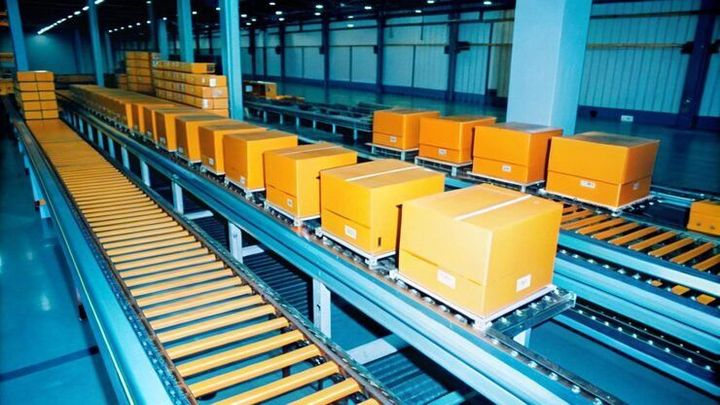
Roller conveyors: Use a series of rotating rollers to move packages, cartons, trays, or other suitable loads.
Chain conveyors: Use chains and attachments to move heavy items or materials through defined paths.
Screw conveyors: Use a rotating helical screw inside a trough or tube to move powders, granules, and other bulk materials.
Slat conveyors: Carry items on connected plates or slats, often where a rigid carrying surface is required.
Pneumatic conveyors: Move suitable powders or particles through pipelines using airflow.
Each type has different operating characteristics. A system designed for lightweight parcels may not be suitable for hot materials, abrasive minerals, or heavy machine components.
Importance
Material handling conveyors help organize the movement of goods throughout industrial facilities. Without a suitable transport arrangement, workers may need to move materials manually between production stages, storage areas, and packaging stations. Conveyors can reduce repetitive handling and support a more predictable flow of materials when properly designed and maintained.
These systems affect manufacturing plants, warehouses, food processing facilities, mining operations, agricultural businesses, and logistics centers. Their performance influences production schedules, workplace safety, material damage, and the coordination of connected equipment.
Common Industrial Uses
Conveyor systems are used in many industries because materials must often travel between multiple operations.
Manufacturing: Moves components between assembly, inspection, processing, and packaging stations.
Warehousing: Transfers cartons, containers, and parcels between receiving, sorting, storage, and dispatch areas.
Food processing: Transports suitable food products through washing, preparation, inspection, and packaging stages.
Mining and construction: Carries bulk materials such as stone, aggregate, coal, and minerals.
Agriculture: Moves grain, seeds, harvested crops, and other agricultural materials.
Recycling: Transfers separated materials through sorting and processing equipment.
The operating environment affects conveyor selection. Food processing may require hygienic materials and cleanable surfaces, while mining applications may require resistance to abrasion, impact, dust, and heavy loads.
Benefits and Operational Challenges
Conveyors can support consistent material movement, reduce repeated manual carrying, and connect multiple production stages. Automated controls may also coordinate movement with sensors, weighing systems, sorting equipment, and packaging machinery.
However, conveyor systems introduce their own challenges. Incorrect loading, worn belts, misaligned rollers, blocked transfer points, and unsuitable operating speeds can interrupt production. Poorly guarded moving components can also create serious hazards, making equipment design, training, and maintenance essential.
Recent Updates
Material handling conveyor technology continues to develop through automation, condition monitoring, energy management, and integration with warehouse and factory control systems. During 2024–2026, industrial operators have continued to explore sensor-based monitoring, connected equipment, and more flexible conveyor arrangements. Adoption varies by industry, facility size, technical requirements, and investment priorities.
Smart Sensors and Predictive Maintenance
Sensors can monitor operating conditions such as belt speed, temperature, vibration, motor load, and alignment. When connected to suitable control systems, these measurements can help identify unusual operating patterns before they develop into major interruptions.
Predictive maintenance uses equipment data and analysis to estimate when maintenance may be necessary. It differs from routine preventive maintenance, which follows a planned schedule. Sensor readings still require appropriate interpretation, and monitoring systems cannot eliminate every unexpected failure.
Automation and Energy Management
Modern conveyor installations may connect with programmable logic controllers, warehouse management systems, and manufacturing execution systems. These connections allow equipment to coordinate material flow, identify packages, control accumulation zones, and communicate operating status.
Energy management is another area of attention. Variable-frequency drives can adjust motor speed according to operating requirements, while suitable conveyor controls can stop unused sections when conditions permit. Actual energy savings depend on the system design, loading pattern, control strategy, and operating environment.
Modular conveyor sections and adjustable layouts are also used where production lines or warehouse processes change over time. Such systems can simplify some modifications, although structural requirements, load limits, safety arrangements, and integration with existing machinery must still be evaluated.
Laws or Policies
Material handling conveyors are subject to workplace safety requirements, machinery standards, electrical rules, and environmental requirements that depend on the installation and its location. In India, industrial conveyor operators must consider applicable occupational safety legislation, factory requirements, electrical safety provisions, and relevant technical standards.
Workplace Safety in India
The Occupational Safety, Health and Working Conditions Code, 2020, forms part of India's framework for workplace health and safety. Its applicability and the relevant obligations depend on the provisions in force, applicable rules, and the type of establishment. Factories and other industrial workplaces must also consider the requirements that apply to their operations and machinery.
Conveyor hazards can include entanglement, crushing, falling materials, unexpected movement, and contact with electrical components. Suitable safeguards may include fixed guards, emergency-stop arrangements, safe access routes, warning labels, and procedures for clearing blockages. The precise requirements depend on the equipment, risk assessment, and applicable standards.
Machinery Standards and Maintenance Procedures
Relevant Indian Standards and recognized engineering standards may provide guidance on conveyor design, belt dimensions, guarding, electrical systems, and safe operation. The appropriate standard depends on the conveyor type and its intended use.
Routine inspections should address belt condition, rollers, bearings, drive components, guards, sensors, and emergency-stop devices. Before maintenance or cleaning near hazardous moving parts, equipment should be isolated from energy sources and secured against unexpected startup. Lockout and isolation procedures should follow applicable workplace rules and manufacturer instructions.
Tools and Resources
Several technical resources help engineers, maintenance teams, and facility operators understand conveyor performance and plan system requirements. The selection of a tool depends on whether the task involves initial design, capacity assessment, troubleshooting, or routine maintenance.
Conveyor Design and Calculation Tools
Conveyor design calculators can assist with estimating belt speed, material flow, load capacity, motor power, and other operating parameters. The calculations require accurate inputs, including material density, conveyor length, incline, belt width, friction, and loading conditions.
For bulk materials, engineers may need to consider particle size, moisture content, flow characteristics, and the angle of repose. For packaged goods, package dimensions, weight distribution, spacing, and transfer requirements are important. Calculator results are estimates and do not replace a complete engineering assessment.
Monitoring and Maintenance Resources
Programmable logic controllers and industrial monitoring software can track operating conditions and coordinate conveyor movements. Some facilities also use maintenance management systems to record inspections, repair history, component replacement, and scheduled maintenance.
Useful reference materials include:
Manufacturer manuals: Explain installation, operating limits, inspection requirements, and component maintenance.
Belt selection charts: Help identify belt materials and constructions suited to particular loads and environments.
Engineering standards: Provide technical guidance for conveyor design and safety.
Maintenance checklists: Organize inspections of belts, rollers, drives, guards, and sensors.
Process flow diagrams: Show how conveyors connect with upstream and downstream equipment.
Comparing Belt and Roller Conveyors
| Feature | Belt conveyor | Roller conveyor |
|---|---|---|
| Carrying method | Continuous moving belt | Series of rotating rollers |
| Typical materials | Packages, bulk materials, irregular items | Boxes, trays, containers with suitable bases |
| Inclined movement | Possible with a suitable belt design | Depends on design and load characteristics |
| Surface support | Continuous support | Support at roller contact points |
| Common limitations | Belt wear, tracking, tension | Roller wear, gaps, unsuitable package bases |
| Drive arrangement | Usually powered by a drive pulley | Gravity-driven or motor-powered |
The table describes general differences. Specific capabilities depend on conveyor dimensions, components, material properties, and operating conditions.
FAQs
What are material handling conveyors used for?
Material handling conveyors transport products, components, packages, and bulk materials between workstations, storage areas, processing equipment, and dispatch points. They are used in manufacturing, warehousing, agriculture, mining, and recycling.
What is the difference between belt and roller conveyor systems?
A belt conveyor carries materials on a continuous moving surface, while a roller conveyor moves suitable items over rotating rollers. Belt systems accommodate a wider range of item shapes, whereas roller systems commonly handle packages with stable, compatible bases.
How do material handling conveyor systems work?
A drive mechanism moves a belt, chain, or set of rollers, transferring materials along a defined route. Sensors and control systems may regulate speed, detect items, coordinate equipment, and stop movement when required.
How is conveyor belt capacity calculated?
Capacity depends on belt width, speed, material density, loading profile, and operating conditions. Bulk conveyor capacity is often estimated using the material's cross-sectional area on the belt and its travel speed, with appropriate adjustments for the material and system design.
What safety precautions are important for conveyor operation?
Important precautions include guarding moving parts, keeping clear of pinch points, using emergency stops correctly, and following approved isolation procedures during maintenance. Operators also need appropriate training and must follow the equipment manufacturer's instructions and applicable workplace requirements.
Conclusion
Material handling conveyors move goods and bulk materials through industrial processes using belt, roller, chain, screw, and other mechanical systems. Their designs and operating principles differ according to load characteristics, production requirements, and environmental conditions. Automation and monitoring technologies are expanding the ways facilities coordinate conveyor operations and identify maintenance needs. Proper design, inspection, training, and compliance with applicable safety requirements remain essential to reliable operation.