Metal Scrap Balers Explained: Designs, Compression Methods, Uses, Features and Maintenance
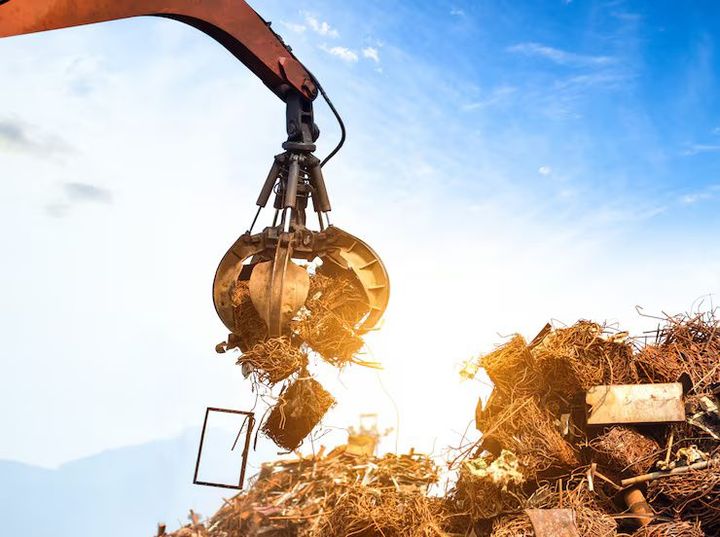
Metal scrap balers are machines designed to compress loose metal pieces into compact bundles, commonly called bales. Metal Scrap Balers are used in recycling yards, manufacturing facilities, vehicle dismantling operations, fabrication plants, and other locations where metal offcuts or discarded components accumulate. By reducing the volume of loose material, baling can make handling, storage, sorting, and transportation more organized.
The basic idea behind a baler is straightforward. Loose scrap is placed inside a chamber, and a hydraulic or mechanical system applies pressure through one or more moving plates. The compressed material is then released as a dense bundle that can be handled using suitable lifting equipment.
Metal balers have developed alongside the growth of industrial manufacturing and organized recycling. Early systems relied on relatively simple mechanical compression, while modern machines commonly use hydraulic power, automated controls, sensors, and programmable operating sequences. Different designs are available because scrap materials vary considerably in shape, thickness, size, and composition.
Common materials handled
Metal Scrap Balers can process several forms of recyclable metal, depending on machine design and operating limits. Typical materials include:
- Steel and iron offcuts
- Aluminum pieces
- Copper-containing scrap
- Sheet-metal trimmings
- Automotive metal components
- Manufacturing remnants
- Metal containers and fabricated sections
Material preparation is important because sealed containers, pressurized components, batteries, and materials containing hazardous substances may require separate handling before compression.
Importance
Loose metal scrap can occupy considerable space and may be difficult to arrange consistently. Sharp edges, irregular shapes, and mixed pieces can also create handling challenges. Baling changes the physical form of the material, allowing a large quantity of loose scrap to be grouped into manageable units.
This process can be relevant to manufacturing facilities, recycling operations, vehicle dismantling centers, construction-related activities, and metal fabrication businesses. Organized scrap handling can also support more consistent sorting and material tracking.
Practical advantages of compression
Compression primarily changes volume rather than the basic composition of the metal. The main operational effects include:
- Reduced bulk of loose scrap
- More consistent material bundles
- Easier movement with suitable lifting equipment
- More organized storage areas
- Improved separation of different scrap categories
- More predictable loading arrangements
The exact degree of compression depends on the metal type, moisture or contamination level, chamber dimensions, hydraulic pressure, and machine configuration. A bundle made from thin aluminum pieces will behave differently from one made from thick steel sections.
Why machine selection matters
A baler must correspond to the material being processed. Factors such as scrap dimensions, metal thickness, required bale dimensions, available floor area, electrical supply, operating cycle, and expected material volume can influence the appropriate configuration.
Using equipment outside its specified operating range can create mechanical stress or unsafe conditions. Manufacturers normally provide limits for material size, chamber loading, pressure, and operating procedures.
Designs and Compression Methods
Metal Scrap Balers are available in several configurations. The differences mainly relate to how material enters the chamber, how compression occurs, and how the finished bale is discharged.
Horizontal balers
Horizontal balers generally have a longer chamber and a horizontal compression direction. Scrap enters through a feeding opening, and a hydraulic ram pushes the material through the compression chamber.
These machines can accommodate substantial quantities of scrap and are commonly associated with continuous or higher-volume material handling arrangements. Some configurations include automatic tying or bale discharge systems.
Vertical balers
Vertical balers use a chamber in which material is compressed downward. They generally occupy less floor area than many horizontal systems and can suit locations where available space is limited.
Their operating sequence may involve loading material into the chamber, closing the access area, applying pressure, releasing the compressed material, and securing the bale according to the machine design.
Two-ram and multi-ram systems
Two-ram systems use separate hydraulic movements for compression and bale discharge or positioning. This arrangement can provide greater control over the movement of material through the chamber.
Multi-ram designs may use several hydraulic cylinders to compress irregular scrap from different directions. Such systems can be useful when the material contains larger or uneven pieces that are difficult to arrange manually.
Shear balers
Some heavy-duty systems combine compression with cutting action. These machines can reduce the dimensions of bulky metal sections before forming a compact bale.
Shear balers are generally associated with heavier scrap streams, including structural sections and vehicle-related metal. Their operating requirements can be substantially different from those of smaller baling equipment.
Compression comparison
| Baler design | Main movement | Typical material form | General application |
|---|---|---|---|
| Vertical | Downward | Smaller loose pieces | Limited-space operations |
| Horizontal | Horizontal | Mixed or continuous scrap | Higher-volume handling |
| Two-ram | Multiple hydraulic movements | Irregular scrap | Controlled compression |
| Multi-ram | Several directions | Bulky or uneven pieces | Heavy material streams |
| Shear baler | Compression plus cutting | Large metal sections | Heavy scrap processing |
Uses and Features
Metal Scrap Balers are used at different points in the material recovery process. Their role depends on the type and quantity of scrap generated at a particular location.
Manufacturing and fabrication
Factories producing metal components can generate offcuts, punchings, trimmings, and rejected pieces. Baling these materials can create more consistent storage units and reduce the amount of loose scrap around production areas.
Vehicle dismantling
End-of-life vehicles contain large quantities of steel, aluminum, and other materials. After suitable dismantling and removal of regulated components, metal sections can be processed into compact bundles.
India's End-of-Life Vehicles Rules introduced a formal framework for handling vehicles that have reached the end of their usable life. These rules also establish responsibilities connected with material recovery and extended producer responsibility.
Recycling facilities
Recycling facilities may use balers after sorting and preparing metal fractions. Separate bales can be created for different material categories, depending on the facility's process and downstream requirements.
Important machine features
Common features found across different Metal Scrap Balers include:
- Hydraulic cylinders for compression
- Reinforced compression chambers
- Control panels
- Pressure monitoring
- Safety interlocks
- Access doors or gates
- Bale discharge mechanisms
- Automatic or manual operating modes
- Sensors for position and operating conditions
Not every machine contains all of these features. Configuration varies according to capacity, material type, automation level, and intended operating environment.
Recent Updates
From 2024 through 2026, India's metal recycling environment has continued moving toward more organized material recovery, resource efficiency, and formal processing systems. The Ministry of Steel's Steel Scrap Recycling Policy provides a framework for scientific processing and recycling of ferrous scrap and encourages organized collection, dismantling, and shredding activities.
The Ministry of Steel also published process-based safety guidance for the iron and steel sector. The second volume, finalized in 2024, contains guidance covering workplace safety and specific steelmaking processes.
Another development has been the expansion of environmental frameworks around end-of-life vehicles. The Environment Protection (End-of-Life Vehicles) Rules, 2025 came into force in 2025 and cover producers, registered vehicle owners, bulk consumers, registered vehicle scrapping facilities, collection centers, and other entities involved in handling and processing end-of-life vehicles.
In 2026, draft amendments to these vehicle rules were published for public comments. The draft included provisions concerning extended producer responsibility and recycled steel associated with vehicles. Because this was a draft proposal, its provisions should not be treated as the same as an already effective rule.
India's Green Steel Taxonomy, released in 2024, also reflects a wider policy direction toward lower-carbon steel production and greater attention to sustainable industrial processes.
Laws or Policies
In India, metal scrap handling can be influenced by environmental, industrial, transportation, and waste-management regulations. The exact requirements depend on the material, facility, activity, and state or local permissions involved.
Steel Scrap Recycling Policy
The Steel Scrap Recycling Policy establishes a framework for organized processing and recycling of ferrous scrap. It emphasizes environmentally sound collection, dismantling, shredding, and processing activities.
Non-ferrous metal framework
The National Non-ferrous Metal Scrap Recycling Framework, 2020 addresses organized collection, segregation, sorting, and recycling of non-ferrous metals. The framework covers materials such as aluminum and other non-ferrous metal streams.
Environmental regulations
Facilities handling particular waste streams may also fall under rules administered through the Ministry of Environment, Forest and Climate Change and the Central Pollution Control Board. Hazardous materials require particular attention because their storage, movement, treatment, and disposal can be regulated separately.
CPCB maintains dedicated information on waste-management rules and areas such as batteries, used oil, waste tyres, and end-of-life vehicles.
For a specific recycling facility, applicable permissions may also involve the relevant State Pollution Control Board or Pollution Control Committee. Requirements can differ according to the material and industrial activity, so general information should not be treated as a substitute for regulatory guidance.
Tools and Resources
Several official resources can help readers understand scrap processing, environmental requirements, and industrial safety.
Government information sources
- Ministry of Steel: information on steel scrap recycling policy, steel-sector safety, and green steel initiatives.
- Central Pollution Control Board: waste-management rules, environmental guidance, and information concerning regulated waste streams.
- Ministry of Environment, Forest and Climate Change: notifications and rules covering environmental protection and end-of-life vehicles.
- Ministry of Mines: information relating to the National Non-ferrous Metal Scrap Recycling Framework.
Practical planning tools
A basic material log can record scrap type, approximate quantity, source, contamination status, bale dimensions, and processing date. A maintenance checklist can track hydraulic fluid condition, hoses, cylinder areas, electrical controls, guards, chamber surfaces, and abnormal noises.
A simple bale-density calculation can compare the approximate mass of a bale with its external volume. This can help operators understand how compression changes material density, although actual measurements depend on the material and bale shape.
FAQs
What are Metal Scrap Balers used for?
Metal Scrap Balers compress loose metal into compact bundles. They are used in manufacturing, recycling, vehicle dismantling, fabrication, and other operations that generate recyclable metal.
How does a metal scrap baler compress material?
Most modern Metal Scrap Balers use hydraulic cylinders to move a ram or compression plate. The pressure pushes loose material against the chamber walls or another compression surface until the required bale form is reached.
What types of metal can a scrap baler process?
Depending on its design, a baler may handle steel, iron, aluminum, copper-containing scrap, sheet-metal pieces, and other recyclable metal fractions. The permitted material size and type should always follow the equipment specifications.
What maintenance does a metal scrap baler need?
Routine maintenance can include checking hydraulic components, hoses, seals, electrical controls, safety interlocks, chamber surfaces, lubrication points, and structural components. Inspection frequency depends on operating conditions and the equipment manufacturer's instructions.
Are metal scrap balers regulated in India?
The machine itself is only one part of the regulatory picture. Scrap-handling facilities may need to comply with environmental, waste-management, workplace-safety, and state-level requirements depending on their activities. End-of-life vehicle processing is additionally covered by the Environment Protection (End-of-Life Vehicles) Rules, 2025.
Conclusion
Metal Scrap Balers convert loose metal into compact bundles that are easier to organize, handle, store, and process. Different designs, including vertical, horizontal, multi-ram, and shear configurations, are suited to different material forms and operating conditions. Recent developments in India show increasing attention to organized recycling, end-of-life vehicle management, resource efficiency, and industrial safety. Proper material preparation, machine operation, inspection, and maintenance remain important parts of controlled scrap processing.