Modular Manufacturing Guide: Design Principles, Components, Processes and Implementation
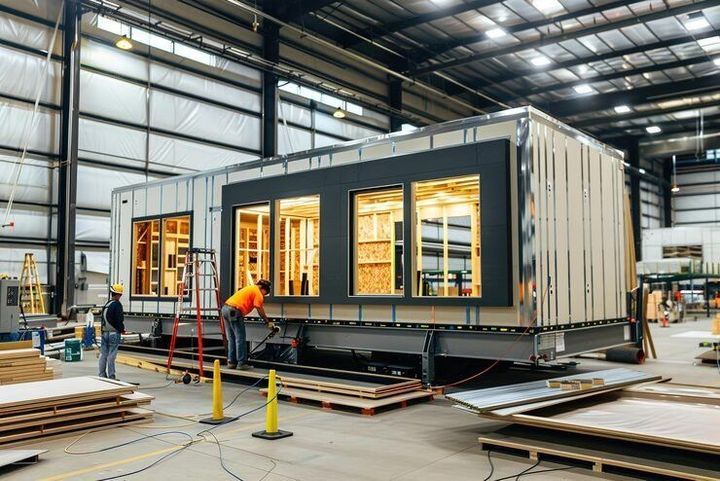
Modular manufacturing is a production approach in which a product, machine, or manufacturing system is divided into separate units called modules. Each module performs a specific function and can be designed, produced, tested, and assembled with other compatible modules. This approach is used across industries such as automotive manufacturing, industrial machinery, electronics, construction equipment, and factory automation.
Context
Modular manufacturing is a production approach in which a product, machine, or manufacturing system is divided into separate units called modules. Each module performs a specific function and can be designed, produced, tested, and assembled with other compatible modules. This approach is used across industries such as automotive manufacturing, industrial machinery, electronics, construction equipment, and factory automation.
The idea developed from standardized components, interchangeable parts, and assembly-line production. Traditional manufacturing often relies on a fixed product design and production arrangement, whereas modular manufacturing organizes equipment and products into functional sections that can be combined or changed when requirements evolve. Modern computer-aided design, digital production planning, and automated machinery have expanded the ways manufacturers apply this approach.
Understanding Modular Manufacturing Design
Modular manufacturing design begins by identifying the main functions of a product or production system. Designers then divide these functions into modules with defined responsibilities, physical dimensions, connections, and operating requirements. For example, an automated production machine may contain separate feeding, processing, inspection, and packaging modules.
A module should perform its intended task while remaining compatible with the other units in the system. Standardized interfaces, electrical connections, communication protocols, and mounting arrangements help make integration more manageable. The degree of modularity depends on the product's complexity, safety requirements, production volume, and intended operating environment.
Main Types of Modular Manufacturing
Manufacturers use modular principles in several ways:
Product modularity: A finished product contains replaceable or configurable units, such as battery packs, control panels, or electronic assemblies.
Production-line modularity: A factory uses separate workstations for operations such as cutting, assembly, inspection, and packaging.
Equipment modularity: Machines are built from functional units that can be arranged or expanded according to production needs.
Software modularity: Manufacturing applications use separate software components to manage planning, machine control, inventory, or quality information.
These approaches can be used independently or together. A factory, for instance, may operate modular production equipment while using modular software to monitor production activities.
Importance
Modular manufacturing matters because industrial requirements can change as products evolve, customer specifications vary, and production volumes fluctuate. Manufacturers need ways to manage these changes without redesigning every part of a product or rebuilding an entire production line.
This approach affects equipment manufacturers, factory operators, engineers, maintenance teams, and businesses that depend on industrial production. It can support product variation and equipment reconfiguration, although the actual results depend on design quality, compatibility, and implementation planning.
Key Design Principles
Several principles shape effective modular manufacturing systems.
Functional separation: Each module has a clearly defined task, reducing unnecessary overlap between units.
Standardized interfaces: Modules use agreed physical, electrical, mechanical, or digital connections.
Compatibility: Units are designed to work within specified operating limits and communicate correctly.
Scalability: The system can accommodate additional modules when its original design permits expansion.
Maintainability: Individual units can be inspected, repaired, or replaced without unnecessary disruption to unrelated sections.
Quality control: Each module has defined inspection criteria and acceptance requirements before integration.
Designers must also consider heat, vibration, power requirements, material flow, operator access, and workplace safety. A module that performs well on its own may still cause problems when connected to other units, making system-level testing essential.
Components Used in Modular Manufacturing
The components vary by industry, but many systems share common categories.
Mechanical components include frames, fixtures, conveyors, actuators, gears, and mounting structures. Electrical components may include motors, sensors, wiring, drives, and control panels. Digital components can include programmable logic controllers, industrial networks, monitoring software, and manufacturing execution systems.
The following table summarizes typical modules and their functions.
| Module type | Main function | Example |
|---|---|---|
| Material handling | Moves materials between operations | Conveyor unit |
| Processing | Performs a manufacturing task | Cutting or drilling station |
| Assembly | Joins parts or components | Robotic assembly cell |
| Inspection | Checks product characteristics | Vision inspection station |
| Control | Coordinates equipment operation | PLC control panel |
| Packaging | Prepares finished products | Automated packing unit |
Not every production system requires all these modules. The appropriate configuration depends on the manufacturing process, product characteristics, and required production capacity.
Recent Updates
Between 2024 and 2026, modular manufacturing has continued to develop alongside industrial automation, connected machinery, artificial intelligence, and digital engineering. These technologies are influencing how modules are designed, monitored, integrated, and maintained. Adoption differs across industries and depends on technical capabilities, investment priorities, and existing factory infrastructure.
Digital Twins and Connected Production Systems
A digital twin is a digital representation of a physical product, machine, or production process. Manufacturers can use digital models to examine equipment layouts, simulate production sequences, and evaluate changes before implementing them on the factory floor.
Connected sensors and industrial communication systems can also provide information about equipment performance, temperature, vibration, and production output. When modules share compatible data formats and communication protocols, operators can coordinate operations more effectively. However, reliable results depend on accurate data, appropriate system integration, and regular maintenance.
Robotics and Artificial Intelligence
Robotic modules are increasingly used for tasks such as material handling, machine tending, assembly, and inspection. Modular robotic cells can be arranged for particular production requirements, provided that their reach, payload, tooling, and safety arrangements are suitable.
Artificial intelligence can support visual inspection, production planning, anomaly detection, and analysis of equipment data. These applications may require additional computing resources, reliable training data, and human oversight. AI integration does not remove the need for conventional safety controls or validated manufacturing procedures.
Flexible Production and Energy Management
Manufacturers are also examining production layouts that can accommodate different product configurations and changing output requirements. Modular equipment can support this approach when the modules, interfaces, and control systems were designed for reconfiguration.
Energy monitoring is another relevant development. Individual modules may be monitored for electricity use, compressed-air consumption, or operating time. Such information helps manufacturers examine energy patterns, although improvements depend on equipment efficiency, operating practices, and the wider production process.
Laws or Policies
Modular manufacturing is influenced by workplace safety legislation, machinery requirements, electrical standards, environmental rules, and product-specific regulations. The applicable requirements depend on the country, industry, equipment type, and intended use. A modular system may need to meet requirements as an integrated machine even when its individual modules have been tested separately.
Manufacturing Regulations in India
In India, manufacturing operations must comply with applicable central and state legislation. Workplace safety requirements may arise under the Occupational Safety, Health and Working Conditions Code, 2020, subject to its commencement and applicable provisions. Relevant factories, machinery, and workplaces must follow the legal requirements in force for their circumstances.
Electrical installations and industrial equipment may also need to comply with applicable safety rules and technical standards. The Bureau of Indian Standards publishes standards covering various industrial and engineering subjects. Whether a particular standard is mandatory depends on the applicable regulation, product category, or certification requirement.
Quality, Environmental, and Equipment Safety
Manufacturers may use ISO 9001 quality management principles to organize inspection, documentation, corrective action, and production consistency. ISO 14001 provides a framework for environmental management, while ISO 12100 addresses machinery risk assessment and risk reduction. The use of a standard does not automatically establish legal compliance, and certification requirements vary.
Modular equipment also requires suitable guarding, emergency stops, electrical protection, and safe operating procedures where applicable. When modules are integrated, manufacturers should evaluate hazards arising from moving parts, unexpected startup, shared control systems, and changes to operating sequences.
Environmental requirements may concern emissions, waste handling, resource consumption, and the management of industrial materials. Manufacturers should identify the rules applicable to their location and production activities rather than assuming that one standard covers every obligation.
Tools and Resources
A range of engineering and production tools supports modular manufacturing, from early design through installation and performance monitoring.
Design and Simulation Software
Computer-aided design software helps engineers create three-dimensional models of modules, examine dimensions, and check how components fit together. Tools such as Autodesk Inventor, SolidWorks, and Siemens NX are used for mechanical design and related engineering tasks.
Simulation software can help assess movement, structural behavior, production flow, and equipment layouts. Engineers may use these tools to identify potential interference or capacity problems before manufacturing physical components. The accuracy of the results depends on model quality and the assumptions used.
Production Planning and Control Systems
Manufacturing execution systems help track production activities, work orders, material usage, and quality information. Programmable logic controllers coordinate machine operations, while industrial communication systems exchange information among sensors, equipment, and control devices.
Planning templates can document module specifications, interface requirements, inspection procedures, maintenance intervals, and installation dependencies. A module register can also record identification numbers, software versions, approved configurations, and replacement-part information.
Modular Manufacturing Implementation Process
Implementation usually follows a sequence of engineering and operational activities:
Requirement analysis: Define production targets, product variations, operating conditions, and safety needs.
Module definition: Divide the process into functional units and establish clear boundaries.
Interface design: Specify mechanical dimensions, electrical connections, and communication requirements.
Prototype development: Build or simulate representative modules and test their functions.
System integration: Connect modules and verify coordinated operation, material flow, and safety controls.
Validation and training: Confirm that the integrated system meets its acceptance criteria and that operators understand the procedures.
Monitoring and maintenance: Record performance, investigate faults, and manage approved changes.
The implementation sequence may differ depending on whether a manufacturer is designing new equipment or adapting an existing production line.
FAQs
What is modular manufacturing?
Modular manufacturing divides a product or production system into functional units that can be developed, tested, and integrated. Each module performs a defined task and connects with other units through compatible interfaces.
What are the main components of modular manufacturing systems?
Common components include mechanical structures, material-handling equipment, processing units, sensors, controllers, inspection systems, and production software. The exact combination depends on the manufacturing application.
How does modular manufacturing design work?
Modular manufacturing design identifies production functions, separates them into modules, defines interfaces, and tests compatibility. The integrated system is then validated for performance, quality, and safety.
What are the main benefits and limitations of modular manufacturing?
Potential benefits include easier reconfiguration, component replacement, and expansion where the design supports these activities. Limitations can include interface complexity, integration challenges, additional planning, and compatibility issues between equipment generations.
Which technologies support modular manufacturing implementation?
Computer-aided design, simulation tools, programmable logic controllers, industrial networks, robotics, and manufacturing execution systems can support implementation. Their suitability depends on production requirements, system compatibility, and operator capabilities.
Conclusion
Modular manufacturing organizes products and production systems into functional units connected through defined interfaces. Its design principles include functional separation, standardization, compatibility, maintainability, and safety. Digital twins, robotics, connected equipment, and data analysis are expanding how manufacturers plan and operate modular systems. Effective implementation depends on careful engineering, applicable regulatory compliance, integration testing, and ongoing equipment management.