Pallet Jet Forklift Basics: Structure, Controls, Lifting Mechanism and Operating Process
A pallet jet forklift is a compact material-handling machine designed to move palletized loads across warehouses, factories, distribution areas, and storage facilities. The term is commonly used for powered pallet trucks that combine a pallet fork assembly with an electric drive system, allowing an operator to move loads without manually pushing a fully loaded pallet.
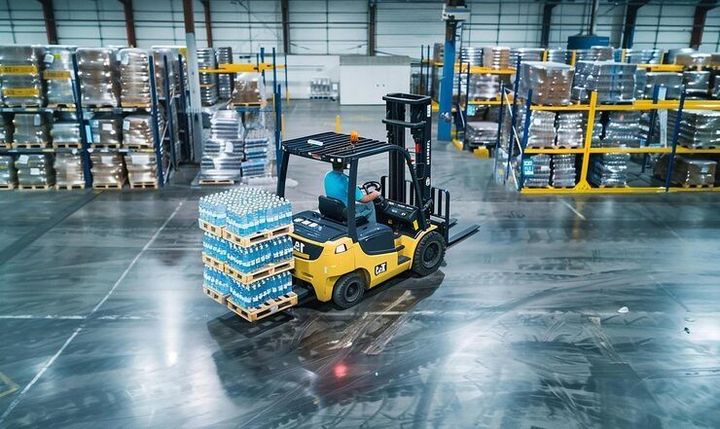
The basic idea behind a pallet jet forklift is straightforward. Pallets are placed on two fork arms, the lifting mechanism raises the load to the required height, and the powered drive system moves the machine across the floor. Depending on the design, the operator may walk behind the equipment or control it from a riding platform.
How pallet handling developed
Traditional pallet movement depended heavily on manual pallet trucks and other simple handling equipment. As warehouses became larger and material movement increased, powered equipment became more common. Electric pallet trucks developed as a way to reduce the physical effort required to move heavier loads over longer indoor distances.
Modern pallet jet forklifts can include electronic controls, battery management systems, emergency stopping devices, speed controls, warning indicators, and sensors. Their design focuses on controlled horizontal movement and relatively low-level lifting rather than the high stacking heights associated with larger warehouse forklifts.
Where pallet jet forklifts are used
These machines are commonly associated with:
- Warehouses and storage facilities
- Manufacturing plants
- Distribution centers
- Loading and unloading areas
- Retail backrooms
- Packaging and processing facilities
- Cold-storage environments with suitable equipment
The exact configuration varies according to load capacity, fork dimensions, floor conditions, battery system, and operating environment.
Importance
Understanding pallet jet forklift structure and operation is important because these machines move substantial loads through areas that may also contain pedestrians, racks, vehicles, and other equipment. A relatively compact machine can still create hazards when loads are unstable, visibility is restricted, or operating areas are congested.
For general users, understanding the basic controls and lifting mechanism also helps explain why operating procedures matter. A pallet should remain properly positioned on the forks, the load should remain within the rated capacity, and the travel path should be suitable for the equipment.
Main challenges addressed
Pallet jet forklifts address several common material-handling challenges. Manual movement can require significant physical effort, particularly when pallets are heavy or must travel considerable distances. Powered movement allows the operator to control acceleration and direction using dedicated controls.
Another challenge is consistent load positioning. The forks are designed to enter the pallet openings and support the load from underneath. Correct fork placement helps distribute the load across the machine's lifting structure.
Why the operating environment matters
A pallet jet forklift is affected by its surroundings. Uneven floors, ramps, narrow aisles, wet surfaces, poor lighting, and obstacles can influence handling characteristics. Pedestrian traffic is another important consideration because people may not always notice a moving machine, particularly in busy warehouse areas.
A suitable operating area normally includes clear travel paths, appropriate visibility, adequate lighting, and separation between moving equipment and pedestrians where practical.
Recent Updates
From 2024 through 2026, material-handling equipment has continued to move toward electric drive systems, improved electronic controls, battery monitoring, and additional safety technology. Indian industrial equipment developments during this period have included greater attention to lithium-ion battery systems and battery management technology in electric forklifts. These developments are part of a broader transition toward electrically powered material-handling equipment.
Electric and battery developments
Electric pallet equipment is particularly relevant to indoor environments because it does not rely on an internal combustion engine during normal operation. Battery systems have also developed beyond traditional lead-acid configurations, with lithium-ion technology appearing in newer industrial equipment.
Battery management systems can monitor operating conditions such as battery status, temperature, and charging behavior. The exact functions depend on the equipment design and battery architecture.
Electronic safety features
Modern material-handling equipment may include electronic speed control, warning indicators, emergency stop controls, presence detection, and proximity technologies. Some facilities are also exploring sensor-based systems that can alert operators or pedestrians when equipment approaches a restricted distance.
These technologies are generally intended to supplement established workplace controls rather than replace proper training, traffic planning, supervision, and equipment inspection.
Changing industrial standards
Indian standards work has also continued to address powered industrial trucks and related equipment. BIS documentation includes standards covering industrial truck classification, energy-efficiency testing, safety signs, stability, and operating practices. Recent standards activity shows continued attention to updating industrial equipment requirements as technology changes.
Laws or Policies
In India, workplace operation of pallet jet forklifts is influenced by occupational safety requirements, industrial workplace rules, equipment standards, and applicable state-level requirements. The regulatory framework changed significantly when the Occupational Safety, Health and Working Conditions Code, 2020 came into force nationally in November 2025.
Occupational safety requirements
The Occupational Safety, Health and Working Conditions Code provides a broader framework for occupational safety, health, and working conditions. Employers and workplace managers have responsibilities relating to safe working environments, risk control, worker protection, and other occupational safety matters.
For powered material-handling equipment, practical workplace controls can include operator instruction, suitable equipment selection, safe traffic arrangements, inspection procedures, and controls for interaction between pedestrians and moving equipment.
Equipment standards
Bureau of Indian Standards publications include standards concerning powered industrial trucks. Relevant standards address areas such as safety practices, industrial truck classification, capacity, stability, warning signs, and other technical matters.
The exact standard applicable to a particular pallet jet forklift depends on its design and use. Equipment documentation and applicable Indian Standards should therefore be checked for the specific model and workplace.
Workplace responsibilities
A workplace using pallet jet forklifts generally needs to consider:
- Operator competence and appropriate instruction
- Rated load capacity and equipment limitations
- Safe travel routes
- Pedestrian movement
- Visibility around corners and intersections
- Floor condition and gradients
- Battery charging arrangements
- Inspection and defect reporting
- Emergency procedures
State rules, local workplace requirements, and sector-specific regulations may add requirements beyond the general national framework.
Tools and Resources
Several resources can help readers understand pallet jet forklift operation and workplace safety.
Manufacturer documentation
The operator manual is one of the most useful references for understanding a particular pallet jet forklift. It normally explains control functions, rated capacity, battery information, lifting limits, warning indicators, and operating procedures specific to the equipment.
BIS resources
The Bureau of Indian Standards provides an online “Know Your Standard” facility where users can search Indian Standards by standard number or keyword. This can help identify documents associated with industrial trucks and related equipment.
Workplace inspection checklist
A simple inspection checklist can record items such as:
| Inspection Area | What to Check |
|---|---|
| Forks | Visible damage, bends, cracks, or abnormal wear |
| Wheels | Condition, movement, and visible damage |
| Controls | Steering, travel, lifting, and lowering functions |
| Emergency Stop | Correct operation |
| Battery | Charge condition and visible damage |
| Warning Devices | Audible or visual indicators |
| Load Area | Correct pallet position and stability |
| Travel Path | Obstacles, people, spills, and uneven surfaces |
The checklist should be adapted to the equipment manufacturer's instructions and the conditions of the workplace.
Training and safety materials
Government occupational-safety resources, equipment manuals, workplace procedures, and recognized industrial safety materials can provide additional background. The appropriate material depends on whether the reader is an operator, supervisor, warehouse manager, or general learner.
FAQs
What is a pallet jet forklift?
A pallet jet forklift is a powered pallet-handling machine designed primarily to move palletized loads. It normally uses fork arms, a lifting mechanism, steering controls, and an electric drive system.
How does a pallet jet forklift lifting mechanism work?
The lifting mechanism raises the fork arms using a powered hydraulic, electric, or electro-hydraulic arrangement, depending on the equipment design. The forks support the pallet from underneath while the mechanism moves the load vertically.
What are the main pallet jet forklift controls?
Common controls include forward and reverse travel, steering, lifting, lowering, braking, emergency stopping, and sometimes speed selection. The exact arrangement varies between models.
What should be checked before operating a pallet jet forklift?
The operator should check the equipment condition, forks, wheels, controls, battery condition, warning devices, emergency controls, and surrounding travel path. The load should also be positioned correctly and remain within the rated capacity.
Can pallet jet forklifts be used around pedestrians?
They can operate in workplaces where pedestrians are present, but the traffic arrangement should be planned to control interaction between people and moving equipment. Clearly defined routes, suitable visibility, physical separation where practical, warning systems, and workplace procedures can help manage this risk.
Conclusion
A pallet jet forklift combines powered travel, pallet forks, steering controls, and a lifting mechanism to move palletized materials through industrial and storage environments. Understanding its structure, controls, load limits, and operating process helps explain how the equipment should function within a controlled workplace. Recent developments have included greater use of electric drive systems, battery technologies, electronic controls, and additional safety technologies. In India, operation is also shaped by occupational safety requirements and applicable standards for industrial equipment.