Sheet Straightening Machines Guide: Designs, Processes, Uses, Benefits and Selection Factors
Sheet straightening machines are industrial machines designed to correct bends, waves, buckling, and other forms of unevenness in metal sheets and plates. They are commonly used after processes such as cutting, stamping, forming, welding, and coil processing, where heat, pressure, or mechanical stress can change the flatness of the material.
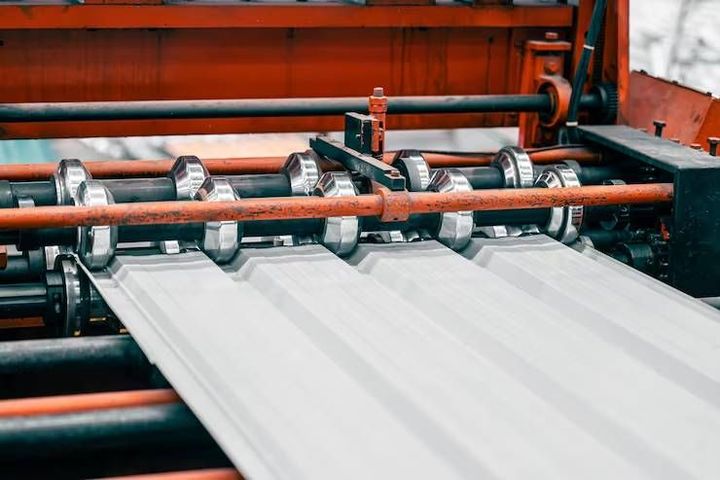
The basic principle is relatively simple. A sheet passes through a series of rollers that apply controlled bending from different directions. As the material moves through the roller arrangement, uneven areas are gradually corrected and internal stresses can be redistributed.
Sheet straightening machines are used with materials such as carbon steel, stainless steel, aluminum, copper, and other metal grades, depending on the machine design and its operating range. The suitable configuration depends on factors such as sheet thickness, width, material strength, required flatness, and production method.
Why straightening is needed
Metal sheets do not always remain flat throughout manufacturing. Coils may contain curvature from storage and processing, while thermal cutting can create localized distortion. Stamping, welding, and forming can also introduce stresses that affect the final shape.
A straightening process helps prepare material for later operations. A flatter sheet can be easier to position, measure, cut, bend, weld, or assemble, although the actual result depends on material properties and machine settings.
Importance
Sheet straightening machines matter because flatness can influence several stages of metal fabrication. Uneven sheets may create difficulties when components are positioned, joined, measured, or processed by automated equipment.
The machines are relevant to many industrial sectors, including automotive components, construction equipment, electrical enclosures, general fabrication, appliances, infrastructure products, and metal processing. Their role is particularly important when a production process requires repeatable sheet geometry.
Problems addressed by straightening
Common problems that straightening equipment is designed to address include:
- Edge waves caused by uneven stress across the sheet.
- Center buckling or waviness in the middle of a sheet.
- Curvature resulting from coil processing.
- Distortion created by thermal cutting.
- Unevenness created during stamping or forming.
- Local deformation associated with welding or fabrication.
Straightening does not simply push a sheet back into position. Roller leveling applies controlled deformation so that different parts of the material experience repeated bending. The process must account for thickness, yield strength, width, temperature, and existing deformation.
Main advantages of controlled leveling
A properly controlled process can improve sheet flatness and make subsequent fabrication steps more predictable. It can also help reduce manual correction work when sheets are processed repeatedly.
However, results vary according to material characteristics, machine configuration, roller geometry, settings, and operator control. A straightening machine therefore needs to be matched with the material and production process rather than treated as a universal solution.
Recent Updates
From 2024 through 2026, developments in sheet straightening have generally followed wider manufacturing trends toward automation, digital controls, feedback systems, and integration with continuous production lines.
Modern equipment increasingly uses PLC or CNC-based controls, servo drives, adjustable roller gaps, sensors, and digital operator interfaces. These features can allow production parameters to be recorded, adjusted, and repeated for different material batches. Recent industrial systems also show greater integration between uncoiling, leveling, feeding, cutting, and stacking operations.
Automation and control systems
Servo-controlled adjustment is becoming more common in precision leveling equipment. Instead of relying entirely on manual roller positioning, electronically controlled systems can adjust roller penetration, feeding speed, and other parameters according to programmed settings.
Another developing area is feedback-based operation. Sensors and control systems can monitor operating conditions and provide information to the machine controller. This approach supports more consistent processing and can make production records easier to maintain.
Integration with production lines
Sheet straightening machines are increasingly being incorporated into complete processing lines rather than operating as isolated machines. Cut-to-length systems, for example, can combine coil handling, straightening, feeding, cutting, and stacking into a coordinated workflow.
Digital modernization is also being applied to existing industrial equipment. Research and industrial projects have demonstrated the use of PLCs, servo drives, frequency converters, and human-machine interfaces to update older straightening equipment without necessarily replacing the entire mechanical structure.
Laws or Policies
For industrial users in India, machine operation is affected by occupational safety requirements, machinery standards, and applicable factory or workplace regulations. The Occupational Safety, Health and Working Conditions Code, 2020 came into force nationally on November 21, 2025, consolidating several earlier labour laws relating to workplace safety and working conditions.
The Central Government also issued the Occupational Safety, Health and Working Conditions (Central) Rules, 2025. These rules include provisions concerning establishment registration and workplace compliance, while implementation can involve the appropriate government authority depending on the establishment.
Machinery safety standards are also relevant. BIS maintains Indian Standards covering areas such as machinery risk reduction, electrical equipment of machines, emergency-stop functions, safety distances, and protective systems. BIS has also maintained Scheme-X information for machinery safety certification and product-specific requirements.
The machinery regulatory framework has undergone changes during 2024–2026. The Machinery and Electrical Equipment Safety framework issued in 2024 was subsequently amended, and BIS records show that the 2024 Omnibus Technical Regulation was rescinded in January 2026. Therefore, the exact regulatory requirements for a particular straightening machine should be checked against the current BIS notifications and the machine's applicable category rather than assumed from an older document.
For workplaces, important practical safety measures include guarding moving rollers, providing accessible emergency-stop controls, preventing access to pinch points, maintaining electrical protection, and training operators according to the equipment's documented procedures.
Tools and Resources
Several resources can help readers understand sheet straightening machines and their operating requirements.
Technical documentation
A machine manual normally provides information about roller arrangements, permitted material ranges, adjustment procedures, lubrication requirements, electrical systems, safety precautions, and routine inspections. Material datasheets can also help identify thickness, yield strength, and other characteristics relevant to straightening.
Measurement equipment
Flatness can be assessed using appropriate workshop measurement equipment. Depending on the application, this may include straightedges, feeler gauges, dial indicators, height gauges, surface plates, or specialized flatness measurement systems.
The appropriate measurement method depends on the required tolerance and the size and shape of the sheet. Measurement should be performed using a consistent procedure so that results from different batches can be compared.
BIS resources
The Bureau of Indian Standards provides the “Know Your Standard” platform, which allows users to search Indian Standards by standard number or keyword and access related information, amendments, notifications, and other standard details.
For machinery safety questions, BIS also maintains information about certification procedures and machine-specific guidance. These resources can help organizations identify which standards or regulatory documents may apply to particular equipment.
Common machine configurations
| Configuration | General purpose | Typical consideration |
|---|---|---|
| Multi-roll leveler | Continuous sheet leveling | Roller arrangement and sheet thickness |
| 4-high leveler | Controlled leveling with supported work rolls | Material strength and flatness requirements |
| Precision leveler | More controlled flatness correction | Tolerance and material condition |
| Servo-controlled leveler | Automated roller adjustment | Repeatability and production integration |
| Leveling feeder | Combines feeding and straightening | Press or coil-processing applications |
FAQs
What are sheet straightening machines used for?
Sheet straightening machines are used to correct curvature, waves, buckling, and other flatness problems in metal sheets. They are commonly used before cutting, forming, welding, stamping, or assembly operations.
How do sheet straightening machines work?
Most sheet straightening machines use multiple rollers positioned above and below the material. The sheet passes through these rollers while controlled bending progressively reduces unevenness and redistributes internal stresses.
What factors affect sheet straightening machine performance?
Important factors include sheet thickness, material strength, width, existing deformation, roller diameter, roller spacing, machine rigidity, feed speed, and roller-gap settings. The correct combination depends on the material and required flatness.
What is the difference between a sheet leveler and a straightening machine?
The terms are often used interchangeably in metal processing. A leveler generally emphasizes correcting sheet flatness, while a straightening machine can refer more broadly to equipment used to correct bends or deformation in different metal products.
Are automated sheet straightening machines different from manual systems?
Yes. Automated systems may use PLC or CNC controls, servo drives, sensors, digital interfaces, and programmable roller adjustments. Manual or mechanically adjusted systems rely more heavily on operator positioning and machine settings.
Conclusion
Sheet straightening machines use controlled roller deformation to correct unevenness and improve the flatness of metal sheets. Their applications extend across fabrication, automotive, construction, electrical equipment, and other manufacturing activities. Recent developments have focused on automation, servo control, digital monitoring, and integration with complete sheet-processing lines. In India, machine safety requirements should be considered alongside current occupational safety rules and applicable BIS standards.