The AI Trading Edge Guide: Trading Models, Predictive Analytics, Automation and Key Considerations
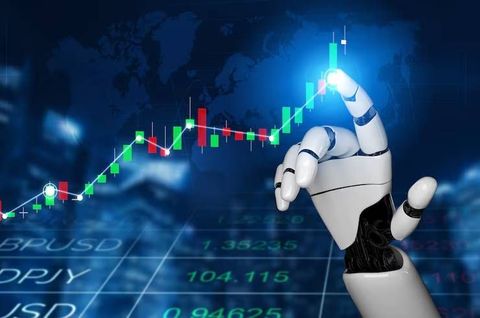
The AI Trading Edge Guide explains how artificial intelligence (AI), trading models, predictive analytics, and automated systems are used to study financial markets. AI trading combines financial data with computer algorithms to identify patterns, estimate possible market movements, and support trading decisions. Its development builds on earlier quantitative trading methods, which used mathematical models and statistical analysis to evaluate securities and market behavior.
Context
The AI Trading Edge Guide explains how artificial intelligence (AI), trading models, predictive analytics, and automated systems are used to study financial markets. AI trading combines financial data with computer algorithms to identify patterns, estimate possible market movements, and support trading decisions. Its development builds on earlier quantitative trading methods, which used mathematical models and statistical analysis to evaluate securities and market behavior.
Traditional trading often relies on human judgment, financial research, and technical indicators. AI-based approaches extend these methods by processing large datasets, identifying relationships, and adapting models when new information becomes available. However, market conditions are uncertain, and model predictions do not establish what prices will do in the future.
Understanding AI Trading Models
An AI trading model is a computer-based system that analyzes market information and produces outputs that may support trading decisions. Depending on its design, the model may classify market conditions, estimate price movements, identify unusual activity, or determine when predefined trading rules are met.
Common approaches include:
Machine learning: Algorithms learn patterns from historical or current data to estimate outcomes.
Deep learning: Neural networks process complex information, including sequences of prices and other market indicators.
Natural language processing: Systems analyze text such as company announcements, financial reports, and economic news.
Reinforcement learning: An algorithm learns through simulated actions and feedback under a defined reward structure.
Rule-based automation: Software follows predetermined conditions, such as entering or exiting a position when specified indicators reach particular levels.
These approaches serve different purposes. A model designed to classify market volatility, for example, may not be suitable for predicting individual stock prices or managing a diversified portfolio.
Importance
AI trading matters because financial markets generate large quantities of information across stocks, bonds, currencies, commodities, and digital assets. Prices can respond to company results, interest-rate decisions, economic reports, geopolitical developments, and changes in investor expectations. Analyzing these factors manually can be difficult, particularly when several markets operate simultaneously.
AI systems can help researchers examine relationships that might be difficult to identify through simple rules. They can also automate repetitive calculations and monitor predefined conditions continuously. Nevertheless, their usefulness depends on data quality, model design, transaction arrangements, and the suitability of the strategy for its intended market.
Predictive Analytics in Financial Markets
Predictive analytics uses historical observations, current indicators, and statistical techniques to estimate possible future outcomes. In AI trading, these estimates may concern price direction, volatility, trading volume, liquidity, or the likelihood of a particular market condition.
A model might combine historical prices with company financial information and economic indicators. It then produces an estimate or classification that can be evaluated alongside other evidence. This output is a probability-based assessment rather than a certain description of future market behavior.
Automation and Risk Management
Automated trading systems connect a strategy to software that monitors data and may submit orders when defined conditions are satisfied. Automation can reduce delays associated with manual execution, but it also introduces technical and operational risks.
Important considerations include:
Market risk: Prices can move against a position.
Model risk: A strategy may rely on incorrect assumptions or patterns that no longer apply.
Execution risk: Delays, limited liquidity, and price changes can affect order outcomes.
Technology risk: Software failures, network interruptions, or incorrect settings can disrupt trading.
Data risk: Inaccurate, incomplete, or delayed information can produce unreliable signals.
Risk controls may include position limits, exposure monitoring, order-size restrictions, and procedures for pausing a system when unusual behavior occurs. Such controls can reduce certain risks but cannot eliminate financial losses.
Comparing AI Trading Approaches
| Approach | Main purpose | Important limitation |
|---|---|---|
| Machine learning | Identify patterns in market data | Historical patterns may not continue |
| Deep learning | Analyze complex data relationships | Requires careful validation and substantial computing resources in some applications |
| Natural language processing | Interpret financial text | Language can be ambiguous or misleading |
| Rule-based automation | Execute predefined trading conditions | Fixed rules may respond poorly to changing markets |
| Reinforcement learning | Evaluate actions through simulated feedback | Simulation results may not reflect real trading conditions |
The appropriate approach depends on the market, available data, research objective, and level of automation involved.
Recent Updates
Developments from 2024 through 2026 have continued to shape AI trading research. More accessible machine learning tools, improvements in computing infrastructure, and wider use of generative AI have expanded the ways financial researchers analyze information. Adoption varies across institutions, individual traders, markets, and jurisdictions.
More Advanced Data Analysis
Modern research workflows increasingly combine price histories with company filings, economic indicators, news reports, and other information sources. Natural language processing can help organize large collections of financial documents, while machine learning models can evaluate relationships across multiple variables.
Generative AI can also assist with research summaries, code development, and explanations of quantitative methods. However, generated analysis may contain errors, unsupported conclusions, or outdated information. Financial calculations and model outputs therefore require independent verification.
Backtesting and Model Validation
Backtesting evaluates how a trading strategy would have performed using historical data. Researchers increasingly pay attention to realistic execution assumptions, transaction charges, changing market conditions, and the difference between training data and unseen observations.
A strategy can appear effective when tested on data that influenced its design but perform poorly on new information. This problem, known as overfitting, is an important limitation in AI trading. Testing across different periods and market environments can reveal weaknesses, although past performance still does not establish future results.
Human Oversight and Operational Controls
Automated systems continue to require monitoring, especially when they interact directly with trading platforms. Researchers and financial institutions may use alerts, exposure limits, audit records, and procedures for interrupting automated activity.
The degree of human oversight varies according to the system and its purpose. Research tools that generate signals have different operational implications from systems that submit orders without manual confirmation.
Laws or Policies
AI trading is subject to financial-market rules, brokerage requirements, data-protection obligations, and technology-related controls. Applicable requirements depend on the instrument traded, the participant's role, the trading platform, and the country in which the activity takes place. Using AI does not remove existing obligations concerning market conduct or financial risk.
Financial Market Regulation in India
In India, the Securities and Exchange Board of India (SEBI) regulates securities markets within its statutory authority. Its regulatory framework covers matters such as market integrity, intermediary obligations, investor protection, and applicable requirements for algorithmic trading.
Requirements for algorithmic trading can differ according to whether the participant is a retail investor, a broker, or an institutional participant, and according to the trading venue and arrangement. Traders should consult current SEBI circulars, exchange rules, and applicable broker requirements before using automated strategies in securities markets.
The Reserve Bank of India (RBI) regulates relevant banking and foreign-exchange activities within its legal authority. Currency trading rules depend on the instrument and transaction, and not every international foreign-exchange platform is authorized for Indian residents. Participation in a particular market should be assessed against current Indian regulations.
Data Protection and Responsible Use
AI trading tools may process personal information, financial records, account data, or licensed market data. India's Digital Personal Data Protection Act, 2023, together with applicable rules and commencement provisions, forms part of the country's data-protection framework. Specific obligations depend on the provisions in force and the nature of the information being processed.
Market participants must also consider rules concerning confidential information, market manipulation, and misleading conduct. Automated execution does not make a prohibited trading practice permissible. Regulatory requirements can change, so general explanations should not replace consultation of current official rules.
Tools and Resources
AI trading research can involve programming environments, historical datasets, charting applications, simulation tools, and regulatory publications. The capabilities and data coverage of each platform vary, so results from one environment may not transfer directly to another.
Research and Development Platforms
Python is commonly used for data analysis, statistical modeling, and machine learning. Libraries such as pandas and scikit-learn support data preparation and model development, while PyTorch and TensorFlow can be used to build neural networks.
Jupyter notebooks allow researchers to combine code, calculations, charts, and explanatory notes in one document. These tools can support experiments, but the reliability of results depends on the underlying data, implementation, and testing methods.
Market Data and Backtesting Tools
Charting platforms such as TradingView provide market visualizations and tools for examining technical indicators. QuantConnect supports algorithmic strategy research and backtesting across supported markets and datasets. Historical information and simulated execution should be checked for missing observations, realistic assumptions, and limitations in coverage.
A basic AI trading research template may track:
Model objective and intended market.
Data sources and observation periods.
Training, validation, and testing periods.
Assumptions about execution and transaction charges.
Performance measures, including drawdown and volatility.
Known limitations and conditions that require further review.
Official Financial Information
SEBI and the National Stock Exchange of India publish regulatory information, market notices, and educational materials relevant to securities trading. The Reserve Bank of India publishes information on monetary policy and foreign-exchange regulation. These sources help clarify the rules and market conditions relevant to a trading strategy.
FAQs
What is AI trading and how does it work?
AI trading uses algorithms to analyze financial information and support trading decisions. Depending on the system, it may identify patterns, estimate market conditions, generate signals, or automate order execution.
How does predictive analytics help in AI trading?
Predictive analytics uses historical and current information to estimate possible market outcomes. Its accuracy depends on the data, assumptions, and market conditions, and its estimates do not guarantee future results.
What are the main risks of automated trading systems?
Risks include financial losses, inaccurate data, model errors, software failures, execution delays, and unexpected market movements. Monitoring and risk controls can address some operational weaknesses but cannot remove market uncertainty.
Is AI trading regulated in India?
AI trading can fall under existing securities, exchange, brokerage, and other applicable regulations. Requirements depend on the trading activity and participant, so current SEBI, exchange, and broker rules are relevant.
Which tools are used to develop AI trading models?
Common tools include Python, pandas, scikit-learn, PyTorch, TensorFlow, Jupyter notebooks, and supported backtesting platforms. Each tool has different capabilities, and model quality depends on sound research and validation.
Conclusion
AI trading combines financial analysis, predictive analytics, machine learning, and automation to examine market information and support trading decisions. Its results depend on data quality, model validation, execution conditions, and changing market behavior. Regulatory requirements and technology risks remain important considerations for both individual participants and financial institutions. AI-generated predictions are estimates, not assurances of market outcomes.