Tractor Basics: Types, Main Components, Functions, Agricultural Applications and Benefits
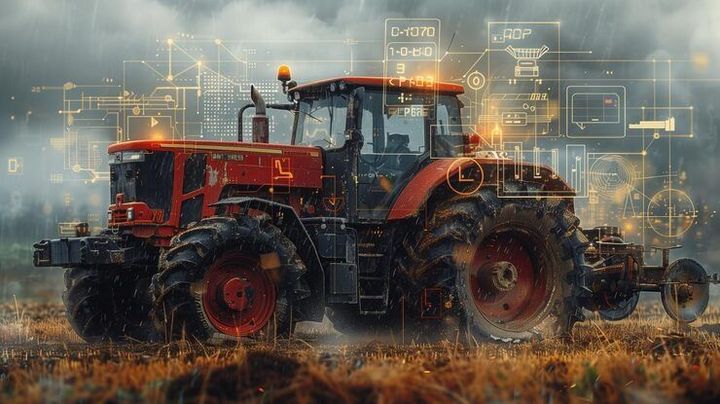
A tractor is a powered agricultural machine designed to provide traction and mechanical power for farming activities. Tractor Basics includes understanding the different types of tractors, their main components, how they function, and how they are used across agricultural operations.
Modern tractors developed from earlier farm machinery that relied heavily on animal power and basic mechanical tools. The introduction of internal-combustion engines allowed farmers to perform tasks such as soil preparation, planting, cultivation, and transportation with powered machinery.
Today, tractors range from compact machines designed for small farms and orchards to large agricultural tractors designed for extensive field operations. Their size, engine capacity, transmission, wheel arrangement, hydraulic systems, and attachments can vary according to the intended application.
What a Tractor Does
The primary function of a tractor is to provide pulling force and mechanical power. Implements such as plows, cultivators, seed drills, trailers, harvest-related equipment, and rotary tools can be connected to a tractor for specific agricultural tasks.
Tractors can also provide power through systems such as the power take-off (PTO) and hydraulic connections. These systems allow compatible implements to receive mechanical or hydraulic power from the tractor.
Importance
Tractors have an important role in modern agriculture because many farming activities require substantial pulling force and repeated field operations. Mechanized equipment can be used for soil preparation, planting, crop maintenance, material movement, and other activities.
The appropriate tractor depends on factors such as farm size, soil conditions, terrain, crop type, available implements, and operating requirements. Selecting equipment based only on engine size may not provide a suitable match for a particular agricultural task.
Main Agricultural Uses
Tractors can be used throughout several stages of crop production. Common applications include:
- Soil preparation using plows, harrows, and cultivators.
- Planting and seeding with compatible seed drills or planters.
- Crop cultivation between rows.
- Transportation of agricultural materials using trailers.
- Operation of certain PTO-driven equipment.
- Spraying and other crop-management activities with compatible implements.
- Orchard and vineyard work using specialized compact tractors.
- Landscaping and land maintenance in agricultural areas.
Different implements perform different functions, so the tractor is generally considered part of a larger agricultural machinery system rather than a standalone solution.
Factors Affecting Tractor Selection
Several characteristics influence whether a tractor is appropriate for a particular operation. Engine power is important, but traction, transmission type, hydraulic capacity, PTO specifications, dimensions, and compatibility with implements also matter.
Terrain is another consideration. A tractor used on flat cultivated fields may have different requirements from one used in hilly areas, orchards, or narrow planting rows.
Recent Updates
Precision Agriculture
From 2024 through 2026, agricultural machinery has continued to incorporate technologies associated with precision agriculture. Guidance systems, positioning technology, digital displays, and machine-monitoring systems can help operators manage field activities with greater consistency.
Some tractors can integrate with precision farming equipment that records information about field operations. Depending on the system, this information may include working paths, field boundaries, operating data, or implement activity.
Automation and Driver Assistance
Tractor manufacturers and agricultural technology developers continue to develop automation and driver-assistance features. These technologies can include automated steering, implement controls, obstacle detection, and systems that assist with repetitive field operations.
The level of automation varies considerably between tractor models. Some systems support the operator while others are designed for more automated operation under defined conditions.
Electrification and Alternative Power Systems
Agricultural machinery development also includes research and deployment of electric and alternative power systems. Smaller tractors and machines used for applications with lower power requirements can be suitable areas for electrification.
However, heavy field operations can require substantial energy and extended operating periods. Battery capacity, charging infrastructure, operating conditions, and machine requirements remain important factors when evaluating electric agricultural equipment.
Improved Machine Monitoring
Digital monitoring has become more common in agricultural equipment. Modern tractors may provide information about engine operation, fuel use, maintenance intervals, operating hours, and system status through onboard displays or connected platforms.
These developments can help operators understand machine condition and plan routine maintenance according to manufacturer instructions.
Laws or Policies
Tractor operation is influenced by agricultural, vehicle, environmental, and workplace regulations. The exact requirements vary according to the country and the intended use of the machine.
Road Use Requirements
A tractor used on public roads may be subject to different requirements from one used exclusively on private farmland. Depending on the jurisdiction, requirements can include registration, lighting, visibility equipment, speed restrictions, driver licensing, and road-safety provisions.
Operators should follow the rules applicable to the specific location where the tractor is being used. Agricultural machinery intended only for private land may have different regulatory requirements.
Agricultural Safety
Tractor safety is an important part of agricultural machinery operation. Operators may need training or instruction concerning machine controls, attachments, power take-off systems, hydraulic equipment, and safe operating procedures.
Rollover protection structures, seat belts, protective guards, and other safety systems may be required or recommended depending on the machine and applicable regulations.
Environmental Requirements
Agricultural machinery can also be affected by emissions standards and environmental regulations. Engine emissions requirements may vary according to engine size, machine category, manufacturing period, and jurisdiction.
Noise, fuel handling, waste management, and maintenance activities can also be subject to local rules. Regulatory requirements should therefore be checked for the specific tractor and location.
Tools and Resources
Several tools and resources can help users understand tractors and agricultural machinery.
Tractor Specifications
Manufacturer specifications and technical manuals provide information about engine power, transmission, PTO speed, hydraulic capacity, dimensions, operating weight, and compatible implements. These details help users understand whether a tractor is suited to a particular agricultural task.
Agricultural Calculators
Agricultural machinery calculators can be used to estimate field capacity, operating time, fuel consumption, and implement requirements. A basic field-capacity calculation can be represented as:
Theoretical field capacity = working width × operating speed ÷ 10
When working width is measured in meters and speed in kilometers per hour, the result is expressed in hectares per hour before accounting for field efficiency.
Actual field performance can be lower because of turning, overlapping passes, terrain, obstacles, loading, and other operating conditions.
Maintenance Records
A maintenance log can record operating hours, inspections, fluid changes, filter replacements, tire checks, and other routine activities. Manufacturer manuals should remain the primary reference for maintenance intervals and technical procedures.
Agricultural Extension Resources
Government agricultural departments, agricultural universities, extension programs, and machinery research organizations can provide educational material concerning farm mechanization, equipment operation, and agricultural safety.
FAQs
What are the main types of tractors?
Common tractor types include utility tractors, compact tractors, row-crop tractors, orchard tractors, garden tractors, crawler tractors, and specialized agricultural tractors. Their designs differ according to terrain, farm size, crop arrangement, and intended tasks.
What are the main components of a tractor?
Important tractor components include the engine, transmission, clutch or related drive system, axles, wheels or tracks, hydraulic system, PTO, three-point hitch, steering system, brakes, electrical system, cooling system, and operator controls.
What is the function of a tractor's PTO?
The power take-off transfers mechanical power from the tractor to compatible implements. PTO-driven equipment can include rotary cutters, certain pumps, forage equipment, and other agricultural machinery.
How are tractors used in agriculture?
Tractors are used for soil preparation, planting, cultivation, transportation, crop maintenance, and operation of compatible implements. The specific application depends on the tractor configuration and attached equipment.
What are the benefits of using tractors?
Tractors can provide substantial pulling and mechanical power for agricultural operations. They can support repeated field tasks, work with different implements, and help farmers mechanize activities that would otherwise require significant manual or animal power.
Conclusion
Tractors are versatile agricultural machines that provide traction and mechanical power for a wide range of farming operations. Their major components include the engine, transmission, hydraulic system, PTO, hitch, steering system, and supporting electrical and mechanical systems. Different tractor types are designed for different crops, terrain, farm sizes, and agricultural applications. Recent developments in precision agriculture, automation, digital monitoring, and alternative power systems continue to influence tractor technology.