Industrial Robotics Tools Guide: Equipment, Components, Uses and Selection Considerations
An Industrial Robotics Tools Guide explains the equipment, components, applications, and selection factors involved in industrial robotics. Industrial robots are programmable machines designed to perform physical tasks in manufacturing, warehousing, packaging, and other industrial environments. Their development grew from advances in mechanical engineering, electrical control, and computer programming, allowing repetitive operations to be carried out with greater consistency.
Context
An Industrial Robotics Tools Guide explains the equipment, components, applications, and selection factors involved in industrial robotics. Industrial robots are programmable machines designed to perform physical tasks in manufacturing, warehousing, packaging, and other industrial environments. Their development grew from advances in mechanical engineering, electrical control, and computer programming, allowing repetitive operations to be carried out with greater consistency.
Modern industrial robotics systems include robotic arms, controllers, sensors, end effectors, safety equipment, and programming software. These components work together to move materials, assemble products, inspect parts, weld metal, and perform other tasks. The equipment required depends on the work being performed, the production environment, and the level of automation involved.
Understanding Industrial Robotics Equipment
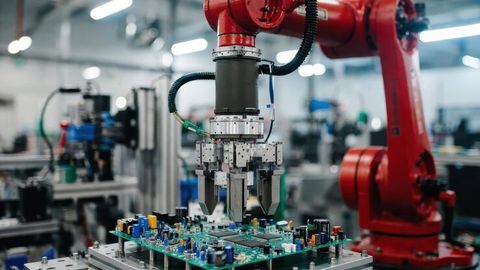
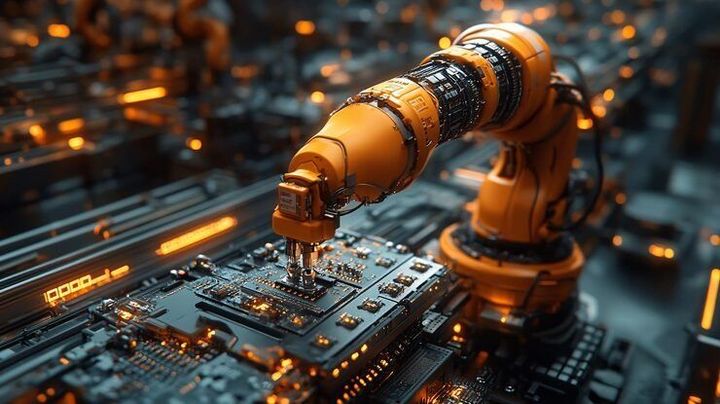
Industrial robotics tools include both the robot itself and the supporting equipment needed for operation. A robotic arm provides movement, while a controller coordinates its actions according to programmed instructions. Sensors provide information about position, force, distance, or surrounding objects.
Common industrial robot types include:
Articulated robots: Multi-jointed arms used for welding, material handling, assembly, and painting.
SCARA robots: Robots designed for rapid horizontal movement and selected assembly operations.
Cartesian robots: Systems that move along linear axes and are used for handling, positioning, and machining-related tasks.
Delta robots: Lightweight parallel-link robots often used for high-speed picking, sorting, and packaging.
Collaborative robots: Robots designed with features that can support certain forms of human interaction when the complete application is appropriately assessed.
Autonomous mobile robots: Mobile platforms that transport materials through industrial facilities, sometimes working alongside fixed robotic systems.
Each design has different movement capabilities, payload limits, reach, accuracy, and installation requirements. Selecting equipment therefore involves understanding the actual task rather than considering the robot type alone.
Importance
Industrial robotics tools matter because manufacturers need to handle repetitive operations, maintain consistent processes, and manage production requirements. Robots can perform activities that involve repetitive movement, awkward positioning, heavy components, or exposure to heat and other workplace hazards. Their use can also help address production bottlenecks when tasks are suitable for automation.
These systems affect manufacturers, machine operators, maintenance technicians, engineers, and workplace safety teams. Their successful operation depends on appropriate equipment, reliable programming, planned maintenance, and suitable training.
Main Components of an Industrial Robotics System
A complete robotics installation generally contains several interconnected elements.
Robot arm and joints: Provide the physical movement needed to reach and manipulate objects.
End effector: The tool attached to the robot, such as a gripper, welding torch, suction device, or inspection instrument.
Robot controller: Processes instructions and coordinates movement, speed, and programmed sequences.
Sensors and vision systems: Detect objects, measure positions, identify features, or provide feedback during operation.
Motors and drives: Generate and regulate movement across the robot's axes.
Programming interface: Allows qualified personnel to create, test, modify, and monitor robot tasks.
Safety equipment: Includes suitable guarding, interlocks, emergency stops, scanners, and other protective measures selected for the application.
The integration of these components is important. For example, an industrial robot may have sufficient reach to handle a component, but the gripper, sensor arrangement, and surrounding work area must also support the task.
Common Industrial Robotics Applications
Industrial robotics is used across several sectors, with applications varying according to production needs.
| Application | Typical robotic equipment | Main purpose |
|---|---|---|
| Welding | Articulated robot and welding torch | Join metal components |
| Assembly | Robot arm, gripper, vision system | Position and connect parts |
| Packaging | Delta or articulated robot | Pick, place, and arrange products |
| Material handling | Robot arm, lifting gripper | Move components between stations |
| Inspection | Robot arm, camera, measuring sensor | Examine product features |
| Palletizing | Robot arm and suitable gripper | Arrange packages on pallets |
| Machine tending | Robot arm and part gripper | Load and unload production machines |
The suitability of a robot depends on the material, object dimensions, required movement, operating speed, and environmental conditions. Some tasks also require specialized tooling or integration with conveyors, machine tools, or manufacturing software.
Recent Updates
Industrial robotics continues to develop through improvements in sensing, programming, artificial intelligence, and system integration. Trends observed from 2024 through 2026 include greater interest in adaptable automation, easier robot programming, digital simulation, and the integration of robotics with connected manufacturing systems. The extent of adoption varies by industry, facility, and application.
Artificial Intelligence and Machine Vision
Machine vision systems use cameras and image-processing software to identify objects, inspect surfaces, and estimate component positions. When integrated with a robot controller, this information can help a robot adjust its movements to variations in object placement.
Artificial intelligence is also being applied to selected tasks involving object recognition, motion planning, anomaly detection, and production monitoring. These capabilities do not remove the need for testing. Lighting conditions, reflective surfaces, unexpected objects, and changes in the production environment can affect system performance.
Simulation and Digital Twins
Robotics simulation tools allow engineers to create virtual models of robotic work cells before installing equipment. They can examine reach, movement paths, cycle sequences, and potential collisions in a simulated environment.
A digital twin may connect a virtual representation of equipment with information from the physical system. Depending on the implementation, it can support monitoring, process analysis, and maintenance planning. Simulation results still need to be checked against real operating conditions because virtual models may not capture every physical limitation.
Flexible Automation and Human Interaction
Manufacturers are exploring robotics systems that can be reprogrammed or reconfigured for changing production tasks. Collaborative robots are one part of this development, but collaboration depends on the entire application, including tooling, workpieces, speed, force, and workplace layout. A robot described as collaborative is not automatically safe for every form of direct human contact.
Laws or Policies
Industrial robotics is subject to machinery safety, workplace health and safety, electrical safety, and other applicable regulations. Requirements depend on the country, the equipment, the industry, and the way a robotic system is installed and operated.
Industrial Robot Safety Standards
International standards provide guidance for designing and integrating industrial robot systems. ISO 10218 addresses safety requirements for industrial robots and their applications, while ISO/TS 15066 provides additional guidance for collaborative industrial robot applications.
Standards are not automatically laws in every country. They may be adopted into national regulations, referenced by legal requirements, or used as technical guidance for demonstrating appropriate safety practices. Applicable editions and national adoption should be checked for the relevant installation.
Workplace Safety and Machinery Requirements in India
In India, industrial robotics installations may be affected by applicable occupational safety legislation, factory rules, electrical requirements, and state-specific regulations. The Occupational Safety, Health and Working Conditions Code, 2020, forms part of India's occupational safety framework, with applicability depending on its commencement and implementing provisions.
Employers and system integrators need to consider hazards such as crushing, unexpected movement, electrical exposure, tool failure, and access to hazardous work areas. Protective measures may include physical guarding, interlocked access points, risk-assessed safety sensors, emergency stops, and documented operating procedures.
Robotic equipment used in specialized sectors may also be subject to additional requirements. A safety assessment should consider the robot, end effector, workpiece, nearby machinery, programming methods, and interactions with workers rather than treating the robot as an isolated device.
Tools and Resources
Industrial robotics tools include software for programming, simulation, system monitoring, and maintenance planning. Technical documentation and relevant standards also help engineers understand equipment limitations and operational requirements.
Robot Programming and Simulation Software
Robot manufacturers and automation developers provide software for creating movement sequences, configuring robot controllers, and simulating work cells. Examples include ABB RobotStudio, FANUC ROBOGUIDE, and Siemens Process Simulate.
These platforms have different capabilities and compatibility requirements. Some focus on a particular manufacturer's robot family, while others support broader manufacturing simulation workflows. Users should check software versions, supported hardware, licensing terms, and required computer specifications.
Sensors, Tooling, and Maintenance Resources
Equipment documentation can help determine payload limits, reach, repeatability, tool compatibility, and maintenance intervals. Useful resources include:
Robot manuals: Explain installation requirements, operating limits, maintenance procedures, and controller functions.
End-effector specifications: Describe gripping force, allowable object dimensions, tool weight, and connection requirements.
Sensor documentation: Covers measurement ranges, environmental limits, calibration, and communication interfaces.
Maintenance logs: Record inspections, component replacements, faults, and corrective work.
Risk assessment templates: Help teams document hazards, evaluate risks, and record protective measures.
Simulation models: Support virtual checks of robot reach, movement paths, and work-cell layouts.
These resources should be matched to the exact equipment model and application. Generic documentation may not reflect the limitations of a specific installation.
Industrial Robotics Selection Checklist
Before choosing equipment, system planners typically evaluate the following factors:
Required payload, including the end effector and any carried components.
Working reach, movement range, repeatability, and required cycle time.
Environmental conditions, such as dust, moisture, temperature, and exposure to chemicals.
Compatibility with existing machines, sensors, controllers, and production software.
Worker access, guarding, emergency stops, and other safety requirements.
Programming, operator training, maintenance access, and spare-part availability.
A documented assessment helps establish whether the selected system fits the task and the surrounding production process.
FAQs
What tools are used in industrial robotics?
Industrial robotics uses robot arms, controllers, end effectors, sensors, cameras, programming interfaces, and safety equipment. Additional tools may include simulation software, calibration equipment, and maintenance instruments.
What are the main components of an industrial robotics system?
The main components include the robot arm, controller, motors, end effector, sensors, and programming software. Safety devices and communication interfaces support integration with the wider production environment.
How is industrial robotics equipment selected?
Selection depends on payload, reach, movement accuracy, cycle requirements, working conditions, compatibility, maintenance needs, and safety. The full application should be evaluated rather than selecting a robot based only on its rated capacity.
How is AI used in industrial robotics tools?
AI can support machine vision, object recognition, motion planning, inspection, and equipment monitoring. Performance depends on the task, available data, system configuration, and validation under actual operating conditions.
What safety standards apply to industrial robotics?
ISO 10218 addresses industrial robot safety, while ISO/TS 15066 provides guidance for collaborative applications. National laws and workplace rules also apply according to the installation's location and circumstances.
Conclusion
Industrial robotics tools combine mechanical equipment, controllers, sensors, software, and protective systems to perform a range of industrial tasks. Developments in artificial intelligence, machine vision, and simulation are expanding the ways robots can be programmed and integrated into production environments. Equipment selection depends on task requirements, system compatibility, operating conditions, and workplace safety. Applicable standards, technical documentation, and risk assessments provide important context for planning and maintaining robotic installations.