Welding Robots Explained: Components, Functions, Automation Methods and Applications
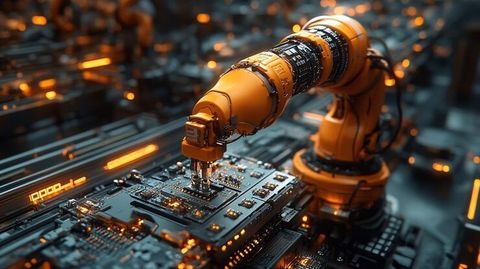
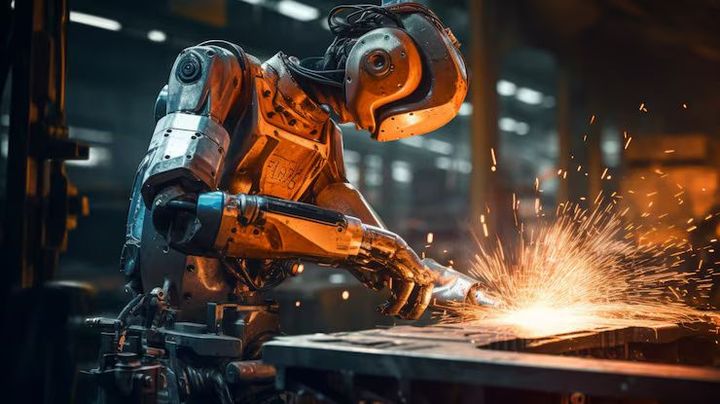
Welding robots are programmable industrial machines designed to perform welding operations with controlled movements and repeatable sequences. A typical robotic welding system combines a robot manipulator with a controller, welding equipment, sensors, tooling, and safety systems. Industrial robots are widely used for welding and other repetitive manufacturing activities.
The development of robotic welding is closely connected with industrial automation. As manufacturing processes became more standardized, robots became useful for tasks requiring repeated movements, controlled positioning, and consistent process parameters. Automotive manufacturing, metal fabrication, machinery production, and other industrial sectors have adopted robotic welding for different production requirements.
Unlike a standalone welding machine, a welding robot is part of an integrated system. The robot controls the movement of the welding tool, while a controller coordinates programmed movements and communication with equipment such as the welding power source, wire feeder, sensors, and workpiece positioners.
What Is Robotic Welding?
Robotic welding refers to the use of programmable robotic equipment to carry out welding operations. Depending on the application, a system may perform arc welding, resistance spot welding, or other automated welding processes.
The robot does not necessarily operate independently from people. Operators and technicians may be responsible for programming, setup, inspection, maintenance, material loading, troubleshooting, and monitoring. Safety procedures are particularly important because industrial robots can create hazards during setup, programming, maintenance, and other non-routine activities.
Importance
Welding can involve heat, sparks, fumes, ultraviolet radiation, repetitive movements, and awkward working positions. Automation can place some repetitive welding operations inside a controlled robotic cell while allowing workers to perform programming, supervision, inspection, and other tasks.
Robotic welding is particularly relevant where the same weld pattern must be repeated across many similar components. A programmed robot can follow defined movement paths and coordinate welding parameters with the manufacturing process.
Problems Addressed by Welding Automation
Several manufacturing challenges can influence the decision to automate welding:
- Repeated welding paths across similar components.
- Difficult access to particular joints.
- Requirements for consistent torch positioning.
- Repetitive physical movements.
- Production processes involving multiple identical parts.
- Need to coordinate welding with fixtures, conveyors, or positioners.
- Requirements for documented process parameters and inspection.
Automation does not eliminate the need for skilled personnel. Instead, the workforce may shift toward programming, robot integration, process setup, quality inspection, maintenance, and production monitoring.
Main Components of a Welding Robot System
An industrial robot system normally includes a manipulator, controller, teach pendant, and end-effector, with additional equipment integrated according to the application.
| Component | Main Function |
|---|---|
| Robot manipulator | Moves the welding tool along programmed paths |
| Robot controller | Coordinates movement, programs, inputs, and outputs |
| Teach pendant | Allows programming and manual robot operation |
| Welding torch | Applies the welding process to the joint |
| Welding power source | Provides the electrical energy required by the process |
| Wire feeder | Feeds welding wire when applicable |
| Sensors | Detect position, process conditions, or potential variations |
| Workpiece fixture | Holds components in defined positions |
| Positioner | Rotates or repositions the workpiece |
| Safety equipment | Helps control access and hazardous robot movement |
The exact configuration depends on the welding process, component dimensions, production requirements, and desired level of automation.
Recent Updates
Growth of Flexible Automation
From 2024 through 2026, industrial automation has continued moving toward systems that can handle changing production requirements. Manufacturers are increasingly interested in robotic systems that can be reprogrammed for different components rather than being limited to one permanent production sequence.
Sensors, machine vision, digital controls, and improved programming interfaces are contributing to this flexibility. These technologies can help robots identify component positions or compensate for certain variations in the workpiece.
Machine Vision and Sensing
Traditional robotic welding can rely heavily on accurately positioned fixtures and programmed coordinates. Modern systems can incorporate cameras and other sensors to identify workpiece locations or monitor process conditions.
Sensors may be used for functions such as:
- Joint detection.
- Part-position verification.
- Weld tracking.
- Collision detection.
- Process monitoring.
- Quality inspection.
The usefulness of a particular sensor depends on the material, joint design, welding process, and operating environment.
Collaborative Robot Applications
Collaborative robots, often called cobots, are another development in industrial automation. These systems are designed for applications where robots and people may have more direct interaction, but collaboration does not automatically make a welding application safe.
A collaborative application still requires an appropriate risk assessment and safety functions for the specific task. OSHA identifies functions such as speed limiting, force limiting, and protective stops among considerations for collaborative robot applications.
Data and Digital Monitoring
Modern robotic welding cells can also connect with manufacturing information systems. Production data may include operating conditions, cycle information, error notifications, and equipment status.
This can support process monitoring and maintenance planning. However, the value of collected data depends on how accurately the system measures the relevant variables and how the information is interpreted.
Laws or Policies
Welding robots are subject to workplace safety requirements and machinery standards that vary by country and jurisdiction. In the United States, OSHA provides guidance covering industrial robot hazards, while several voluntary consensus standards address robot and robotic welding safety. OSHA notes that there is currently no single OSHA standard specifically dedicated to the robotics industry; applicable workplace requirements can still apply to robotic systems.
Industrial Robot Safety
Safety considerations include the robot's operating envelope, safeguarding, controls, emergency stops, access procedures, and maintenance activities. Risk assessment should consider normal production as well as programming, testing, adjustment, and troubleshooting.
OSHA identifies hazards associated with mechanical movement, electrical energy, pneumatic or hydraulic systems, environmental conditions, human error, and unauthorized access.
Welding-Specific Safety
Welding introduces additional hazards, including arc radiation, heat, sparks, fumes, and hot surfaces. Robotic cells therefore need controls appropriate to both the robot and welding process.
The American Welding Society's AWS D16.1M/D16.1 addresses hazards associated with operating, maintaining, integrating, and setting up robotic arc-welding systems. International standards such as ISO 10218 address industrial robot safety and robot-system integration.
Worker Training
Personnel involved with robotic welding may need appropriate training for programming, operation, maintenance, inspection, and safety procedures. The exact training requirements depend on the workplace, equipment, jurisdiction, and assigned responsibilities.
Tools and Resources
Robot Programming Systems
A robot's controller and teach pendant are central programming tools. Operators can define movement sequences, welding positions, speeds, and other process instructions.
Some systems also support offline programming, allowing robot movements and production sequences to be prepared using computer-based software before deployment to the physical cell.
Welding Process Monitoring
Welding equipment can provide information about parameters such as current, voltage, wire feed rate, and travel speed. Monitoring these variables can help technicians identify changes in the welding process.
The appropriate parameters vary according to the welding method, material, joint design, electrode or wire, shielding arrangement, and other technical factors.
Vision and Inspection Equipment
Cameras and inspection systems can be integrated into robotic cells to locate components or examine welds. These systems may use image processing to identify deviations from defined conditions.
Inspection technology does not necessarily replace qualified human assessment. Its role depends on the application, inspection criteria, and applicable quality requirements.
Safety Documentation
Useful resources for a robotic welding installation can include:
- Robot operating manuals.
- Welding equipment documentation.
- Risk-assessment records.
- Maintenance procedures.
- Lockout and energy-control procedures.
- Training documentation.
- Inspection records.
- Applicable national and international standards.
FAQs
What is a welding robot?
A welding robot is a programmable industrial robot integrated with welding equipment to perform defined welding movements and sequences. It commonly includes a manipulator, controller, welding torch, and supporting equipment.
What are the main components of a welding robot?
The main components include the robot manipulator, controller, teach pendant, welding torch, welding power source, and related tooling. Sensors, wire feeders, fixtures, and workpiece positioners may also be integrated depending on the application.
What welding processes can robots perform?
Robotic systems can be configured for processes such as arc welding and resistance spot welding. The appropriate process depends on the material, component design, joint requirements, production environment, and equipment configuration.
How does robotic welding automation work?
The robot follows programmed movement instructions while the controller coordinates its movements with welding equipment and other devices. Fixtures and sensors can help maintain the required position and sequence.
Are welding robots safe?
A welding robot can be incorporated into a controlled and safeguarded industrial application, but the complete system must be assessed for hazards. Safety measures need to address robot movement, welding hazards, access, programming, maintenance, and other operating conditions.
Conclusion
Welding robots combine programmable robotic movement with welding equipment, controls, fixtures, sensors, and safety systems. They are used for applications where repeatable welding movements and coordinated automation are appropriate. Modern developments include greater flexibility, sensing, machine vision, collaborative applications, and digital monitoring. Proper system integration, worker training, risk assessment, and compliance with applicable safety requirements remain important parts of robotic welding.