Automotive Manufacturing Guide: Production Methods, Assembly Lines, Robotics and Quality Control
Automotive manufacturing is the process of designing, producing, assembling, and inspecting motor vehicles and their components. It includes passenger cars, commercial vehicles, electric vehicles, and specialized automobiles. Modern automotive manufacturing combines mechanical engineering, industrial machinery, robotics, digital control systems, and quality inspection to transform raw materials and individual components into completed vehicles.
Context
Automotive manufacturing is the process of designing, producing, assembling, and inspecting motor vehicles and their components. It includes passenger cars, commercial vehicles, electric vehicles, and specialized automobiles. Modern automotive manufacturing combines mechanical engineering, industrial machinery, robotics, digital control systems, and quality inspection to transform raw materials and individual components into completed vehicles.
The industry developed from small workshops where vehicles were assembled largely by hand. The introduction of standardized parts and moving assembly lines made it possible to produce larger quantities of vehicles through organized production stages. Today, automotive factories use a combination of human expertise, automated equipment, computer-controlled machines, and connected production systems.
Understanding Automotive Production Methods
Automotive production begins with vehicle design and material planning. Manufacturers determine the vehicle structure, components, manufacturing sequence, and inspection requirements before production equipment is configured.
Common production methods include:
Batch production: A group of similar components is manufactured before equipment or production settings are changed for another group.
Mass production: Large quantities of standardized vehicles or components are produced through repeatable processes.
Flexible manufacturing: Equipment and production schedules are adapted to accommodate different models or component variations.
Lean manufacturing: Production methods aim to reduce unnecessary movement, waiting, excess inventory, and other forms of waste.
Just-in-time production: Components are supplied according to production requirements, reducing the need to hold large inventories when supply conditions permit.
A vehicle factory may use several methods at once. The choice depends on production volume, model variety, component complexity, equipment capability, and supply-chain requirements.
Main Stages of Vehicle Manufacturing
Automotive manufacturing generally follows a sequence of connected stages. Although the exact process varies by vehicle type and factory design, the main stages include body production, painting, assembly, and final inspection.
During body production, metal sheets or other structural materials are shaped and joined to form the vehicle body. The body then passes through surface preparation and painting processes. At the assembly stage, workers and automated systems install electrical wiring, interior components, seats, glazing, wheels, and other parts.
The powertrain installation depends on the vehicle design. Conventional vehicles require engines and associated transmission systems, while battery-electric vehicles use electric motors, power electronics, and traction battery systems. After assembly, the completed vehicle undergoes inspections and functional tests.
Importance
Automotive manufacturing affects transportation, industrial development, employment, logistics, and the production of essential vehicle components. Cars and commercial vehicles support personal mobility, deliveries, public infrastructure projects, and many economic activities. Reliable manufacturing processes help ensure that vehicles meet defined specifications and operate as intended.
Manufacturing challenges can arise from component shortages, equipment failures, inconsistent materials, production delays, and quality defects. These problems may interrupt factory operations or require additional inspection and repair. Organized production methods, robotics, and quality control systems help manufacturers identify problems, manage complex operations, and maintain consistent production standards.
How Assembly Lines Improve Production
An automotive assembly line divides vehicle production into a series of workstations. Each station performs particular tasks, such as installing dashboard components, fitting doors, connecting electrical systems, or attaching wheels. The vehicle moves through the production sequence using conveyors, guided platforms, or other material-handling equipment.
Assembly lines support repeatable processes because each workstation follows defined instructions. However, the overall production rate depends on the time required at individual stations, equipment availability, component delivery, and the coordination of different tasks.
The Role of Robotics in Automotive Factories
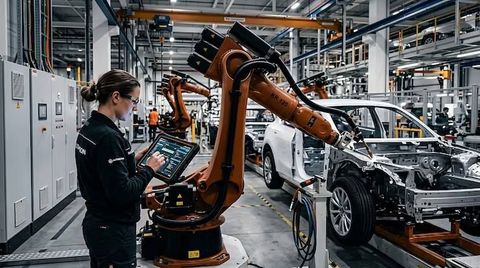
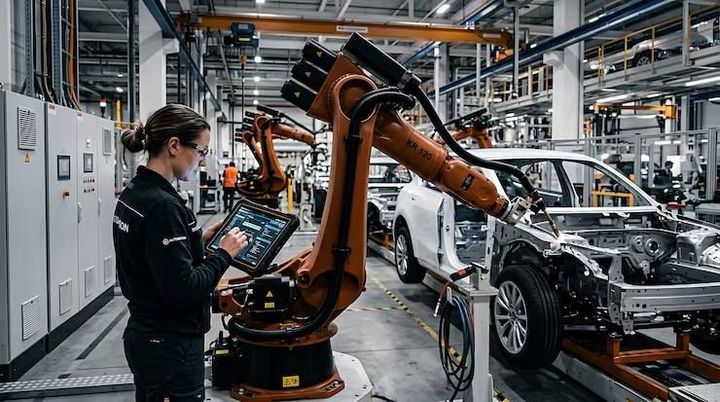
Industrial robots are commonly used for tasks that require repeatable movements, controlled positioning, or work in demanding environments. Their applications include welding, painting, adhesive application, material handling, and selected assembly operations.
Robots do not eliminate the need for human involvement. Engineers, technicians, operators, and inspectors configure equipment, monitor performance, maintain machinery, investigate faults, and manage production changes. Human oversight remains important when handling unexpected conditions or complex inspection decisions.
Quality Control Across Production Stages
Quality control involves checking whether materials, components, and finished vehicles meet established requirements. Inspections may occur before production, during individual manufacturing stages, and after final assembly.
Common inspection methods include dimensional measurement, visual examination, electrical testing, weld inspection, leak testing, and functional testing. Some factories use machine vision systems to identify surface defects or verify component placement. Detecting problems earlier in production can reduce the need for later repairs and repeated assembly work.
Recent Updates
Automotive manufacturing continues to change as manufacturers respond to electrification, digital technologies, supply-chain uncertainty, and environmental requirements. Developments across 2024–2026 include wider use of production data, increased attention to battery manufacturing, flexible factory layouts, and the integration of software with physical production equipment. The pace of adoption varies among manufacturers and regions.
Digital Manufacturing and Artificial Intelligence
Digital manufacturing systems connect machinery, production planning, maintenance records, and quality information. Sensors can monitor equipment temperature, vibration, energy use, and operating conditions. These measurements help production teams identify unusual patterns and investigate potential equipment problems.
Artificial intelligence is also being applied to selected factory tasks. Examples include visual defect detection, production scheduling, process monitoring, and predictive maintenance. Such systems depend on reliable data, appropriate testing, and human review. Their results can vary according to the equipment, manufacturing environment, and quality of the information used.
Electric Vehicles and Flexible Production Lines
Electric vehicle production has increased the importance of battery assembly, high-voltage electrical systems, thermal management, and specialized safety procedures. Manufacturers may need different equipment and inspection methods for electric vehicles compared with vehicles using internal combustion engines.
Some factories are adapting production lines to assemble multiple vehicle models or powertrain types within the same facility. Flexible manufacturing equipment can support these changes, although product variation may require additional programming, training, tooling, and quality checks.
Robotics and Predictive Maintenance
Modern robotic systems may work alongside sensors, programmable controllers, and production software. Some facilities use collaborative robots for selected tasks, subject to suitable risk assessment and protective measures. Traditional industrial robots continue to perform many repetitive operations in controlled work areas.
Predictive maintenance uses equipment data to identify signs of wear or abnormal operation. It can help maintenance teams plan inspections and repairs before certain failures occur, although predictions are not always accurate and physical inspections remain necessary.
Laws or Policies
Automotive manufacturing is governed by requirements relating to vehicle safety, emissions, factory operations, worker protection, environmental management, and product quality. The precise rules depend on the country, vehicle category, production activity, and intended market.
Automotive Manufacturing Regulations in India
In India, vehicle manufacturing and road-vehicle compliance are shaped by the Motor Vehicles Act, 1988, the Central Motor Vehicles Rules, 1989, and applicable amendments and notifications. These establish important requirements for motor vehicles, including specified safety and emissions provisions.
Vehicle manufacturers must follow applicable type-approval and conformity requirements before vehicles can be introduced into the relevant market. The Automotive Research Association of India (ARAI) and other designated testing agencies have roles in vehicle testing and certification, depending on the applicable regulatory framework.
Emissions requirements are also important. India's Bharat Stage emission standards regulate specified vehicle emissions, with requirements varying according to vehicle category and the rules in force. Electric vehicles have different technical requirements from conventional vehicles, including provisions relevant to electrical safety where applicable.
Factory Safety and Environmental Requirements
Automotive factories must comply with applicable occupational safety, industrial, and environmental rules. Depending on the facility and activity, these may cover machinery guarding, chemical handling, paint-shop emissions, waste management, worker training, fire prevention, and safe handling of batteries.
Environmental approvals and pollution-control requirements may involve central or state authorities. Manufacturers must identify which permissions and standards apply to their particular site and processes.
International manufacturers may also need to comply with the requirements of destination markets. Regulations can cover crash performance, lighting, braking, emissions, electrical systems, and other vehicle characteristics. Compliance in one country does not automatically establish compliance in another.
Tools and Resources
Automotive manufacturing relies on engineering software, production monitoring systems, inspection equipment, and technical standards. These resources help teams plan manufacturing processes, control equipment, document results, and investigate production issues.
Manufacturing and Engineering Software
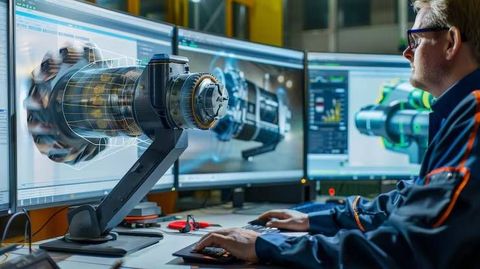
Computer-aided design (CAD) software is used to create vehicle components, assemblies, and engineering drawings. Computer-aided manufacturing (CAM) tools help prepare certain machining and production operations. Simulation software can be used to study manufacturing layouts, robot movements, material flow, and potential equipment conflicts before physical changes are made.
Manufacturing execution systems (MES) track production activity, work orders, materials, and process information. Enterprise resource planning (ERP) systems support broader planning involving inventory, purchasing, production, and business operations. Integration between these systems depends on the factory's technical setup.
Robotics and Quality Inspection Tools
Programmable logic controllers (PLCs) control many automated machines and production sequences. Industrial robot programming environments define robot movements, task sequences, and interactions with surrounding equipment. Machine vision systems use cameras and image-processing software to examine parts or verify assembly steps.
Quality teams may use coordinate measuring machines, torque measurement tools, electrical testers, and statistical process control software. Statistical process control helps teams examine process variation over time and identify patterns that may require investigation.
Technical Standards and Information Sources
The International Organization for Standardization (ISO) publishes standards relevant to quality management, environmental management, and other industrial practices. ISO 9001 addresses quality management systems, while ISO 14001 addresses environmental management systems. Their application depends on an organization's needs and chosen certification arrangements.
In India, resources from the Ministry of Road Transport and Highways, the Bureau of Indian Standards, ARAI, and the relevant pollution-control authorities can help readers understand applicable requirements. Current regulations and official technical documents should be consulted for specific compliance questions.
| Manufacturing area | Common tool or system | Main purpose |
|---|---|---|
| Vehicle design | CAD software | Create and revise component designs |
| Production planning | MES and ERP | Coordinate production and materials |
| Automated operations | Robots and PLCs | Control repeatable manufacturing tasks |
| Equipment monitoring | Industrial sensors | Measure operating conditions |
| Quality inspection | Vision systems and gauges | Detect defects and verify dimensions |
| Process improvement | Statistical process control | Monitor variation and identify patterns |
FAQs
What are the main stages of automotive manufacturing?
The main stages typically include component preparation, body production, painting, vehicle assembly, and final inspection. The exact sequence depends on the vehicle design and factory arrangement.
How are robots used in automotive manufacturing?
Industrial robots perform tasks such as welding, painting, material handling, adhesive application, and selected assembly operations. Their use depends on task requirements, equipment design, and workplace safety measures.
What is quality control in automotive production?
Quality control involves checking materials, components, manufacturing processes, and finished vehicles against defined specifications. It may include visual inspection, dimensional measurement, electrical tests, and functional checks.
How is artificial intelligence used in automotive manufacturing?
Artificial intelligence can support visual defect detection, production planning, equipment monitoring, and predictive maintenance. Its usefulness depends on data quality, system validation, and appropriate human oversight.
Which regulations apply to automotive manufacturing in India?
Applicable requirements may include the Motor Vehicles Act, Central Motor Vehicles Rules, vehicle safety and emissions standards, factory safety provisions, and environmental regulations. Specific obligations depend on the vehicle, factory, and activity.
Conclusion
Automotive manufacturing combines production methods, assembly lines, robotics, digital systems, and quality control to produce vehicles that meet defined requirements. Electrification, connected factory equipment, and artificial intelligence are changing selected manufacturing processes, while human supervision remains essential. Regulations covering vehicle safety, emissions, worker protection, and environmental management influence factory operations. Understanding these systems provides a foundation for learning how modern vehicles move from design to completed production.