Food Packaging Machinery Guide: Equipment Types, Operating Principles, Features and Industrial Uses
Food packaging machinery refers to the equipment used to prepare, fill, seal, label, and protect food products before distribution. These machines are used in industries that process dairy products, snacks, beverages, frozen foods, bakery items, grains, sauces, and ready-to-eat meals. Food packaging machinery connects food production with storage, transportation, retail distribution, and household consumption.
Context
Food packaging machinery refers to the equipment used to prepare, fill, seal, label, and protect food products before distribution. These machines are used in industries that process dairy products, snacks, beverages, frozen foods, bakery items, grains, sauces, and ready-to-eat meals. Food packaging machinery connects food production with storage, transportation, retail distribution, and household consumption.
Packaging methods developed from simple containers, paper wrapping, and manual sealing into automated mechanical systems. As food production expanded, manufacturers needed equipment that could handle larger quantities, maintain consistent package sizes, reduce direct handling, and protect products from contamination. Modern systems combine mechanical equipment, sensors, electronic controls, and packaging materials to perform different stages of the packaging process.
Main Types of Food Packaging Machinery
Food packaging equipment is selected according to the product's physical properties, packaging material, required shelf life, and production process. Common equipment types include:
Filling machines: Measure and dispense liquids, powders, pastes, or solid food portions into containers.
Sealing machines: Close packages using heat, pressure, adhesives, or other suitable methods.
Wrapping machines: Cover individual products or groups of products with flexible packaging material.
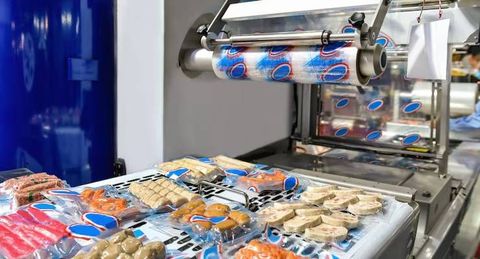
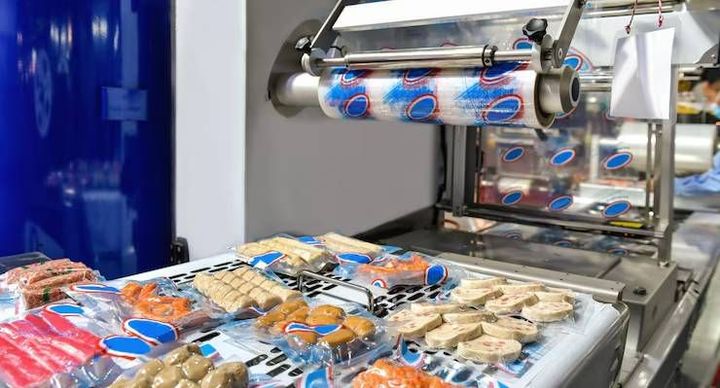
Vacuum packaging machines: Remove air from a package before sealing it, where appropriate for the food.
Labeling machines: Apply product labels containing information such as ingredients, dates, batch identification, and other required details.
Cartoning and case-packing machines: Place packaged products into cartons, boxes, or shipping cases.
Form-fill-seal machines: Form packages from packaging material, fill them with food, and seal them within an integrated process.
Each machine performs a particular task, although several functions may be combined in one production line. The equipment must match the food product, packaging format, production volume, and applicable hygiene requirements.
Importance
Food packaging machinery plays an important role in maintaining food quality, supporting safe distribution, and organizing production. Packaging helps protect food from dust, moisture, physical damage, and certain environmental conditions. Depending on the product and packaging design, it can also help limit exposure to oxygen, reduce leakage, and preserve product characteristics during storage.
These systems affect food processors, packaging manufacturers, distributors, retailers, and consumers. Consistent filling and sealing can reduce product variation, while readable labels help people identify ingredients, allergens, storage instructions, and relevant dates. However, packaging alone cannot make unsafe food safe or replace proper food handling, temperature control, sanitation, and quality checks.
How Packaging Equipment Supports Food Production
Different machines address different production challenges. Filling equipment helps control portion sizes, sealing equipment creates package closures, and inspection systems can identify certain packaging defects before products leave the production line.
Important operational considerations include:
Product consistency: Maintaining suitable fill quantities and package dimensions.
Food hygiene: Designing equipment that can be cleaned and inspected properly.
Product protection: Selecting packaging that suits moisture, oxygen, light, or temperature requirements.
Production coordination: Synchronizing filling, sealing, labeling, and case packing.
Waste management: Monitoring material usage, rejected packages, and product losses.
Traceability: Recording batch codes and other information needed to identify products during distribution.
Comparing Common Food Packaging Machines
| Machine type | Operating principle | Typical food applications |
|---|---|---|
| Liquid filler | Measures and dispenses liquid | Milk, juice, sauces |
| Powder filler | Uses augers or other dosing mechanisms | Flour, spices, drink powders |
| Weighing filler | Measures portions by weight | Grains, nuts, snacks |
| Heat sealer | Uses controlled heat and pressure | Pouches, trays, flexible films |
| Vacuum packer | Removes air before closing the package | Meat, cheese, selected prepared foods |
| Labeling machine | Applies printed or pre-produced labels | Bottles, jars, cartons |
| Cartoning machine | Forms or loads cartons | Bakery products, packaged meals |
| Form-fill-seal machine | Forms, fills, and closes packages | Snacks, powders, liquids, selected foods |
Actual performance depends on machine design, product characteristics, packaging material, operating settings, and maintenance.
Recent Updates
Food packaging machinery continues to develop through automation, improved monitoring, more adaptable production systems, and changes in packaging materials. Developments during 2024–2026 reflect broader efforts to improve production visibility, reduce material waste, support traceability, and respond to changing food packaging requirements. Adoption varies according to company size, product type, and local manufacturing conditions.
Automation and Digital Monitoring
Modern packaging lines may use programmable logic controllers, human-machine interfaces, sensors, cameras, and automated inspection equipment. These components coordinate machine movements, monitor operating conditions, and alert operators to selected faults or abnormal readings.
Some systems also collect production information, such as package counts, stoppages, rejected units, and equipment operating time. This information can help production teams identify recurring problems and plan maintenance. Artificial intelligence and machine vision are being applied in selected inspection and monitoring tasks, although their accuracy depends on system design, training data, lighting, and the defects being examined.
Flexible Packaging and Material Efficiency
Manufacturers are examining packaging formats that use less material, improve recyclability, or accommodate different package sizes. These changes can require adjustments to sealing temperatures, filling methods, material feeding systems, and inspection procedures.
Reducing packaging material is not simply a matter of making every package thinner. The material must still protect the food, maintain seal integrity, support transport, and meet applicable food-contact requirements. Equipment compatibility and the actual recycling infrastructure also influence whether a packaging change achieves its intended environmental outcome.
Connected Production and Traceability
Connected equipment can exchange production information with factory monitoring systems. When properly configured, this can help manufacturers identify a product batch, review operating records, and investigate packaging problems.
Digital records do not automatically ensure accurate traceability. Information must be recorded consistently, equipment clocks and batch identifiers must be managed correctly, and relevant records must remain accessible when needed.
Laws or Policies
Food packaging machinery must operate within the food safety, packaging, labeling, worker safety, and environmental requirements applicable to the country where it is used. Rules may cover equipment hygiene, food-contact materials, product declarations, machinery safeguards, waste handling, and the conditions under which food is processed and distributed.
Food Packaging Regulations in India
In India, the Food Safety and Standards Authority of India (FSSAI) administers food safety requirements under the Food Safety and Standards Act, 2006, and related regulations. The Food Safety and Standards (Packaging) Regulations, 2018, address requirements for packaging materials used with food. The Food Safety and Standards (Labelling and Display) Regulations, 2020, establish relevant labeling and display requirements, subject to applicable amendments and product-specific provisions.
Food businesses must determine which requirements apply to their products and operations. Packaging materials intended for food contact must meet relevant safety requirements, while labels may need information such as ingredient declarations, allergen details, nutritional information, dates, and other particulars, depending on the product and applicable rules.
Machinery Safety and Environmental Requirements
Industrial equipment may also be subject to applicable factory safety, electrical safety, occupational health, and machinery-related requirements. Guards, emergency stops, safe operating procedures, and appropriate maintenance practices can help reduce workplace hazards. Requirements depend on the equipment, installation, workplace, and applicable Indian laws and standards.
Environmental rules may affect packaging waste, plastic materials, recycling responsibilities, and waste disposal. India's Plastic Waste Management Rules, 2016, as amended, include provisions relevant to plastic waste management and extended producer responsibility for covered entities. Applicability depends on the material, business role, and current regulatory provisions.
Manufacturers and food businesses should verify current requirements with the relevant authorities and qualified compliance personnel before selecting equipment or changing packaging formats.
Tools and Resources
Several technical resources help food manufacturers understand machine capabilities, packaging compatibility, hygiene requirements, and production performance. The appropriate resource depends on the product, equipment configuration, and intended application.
Equipment Selection and Production Calculations
Machine specification sheets can be used to compare filling ranges, package dimensions, operating speeds, power requirements, changeover procedures, and cleaning methods. Product samples and packaging trials may be necessary because powders, liquids, sticky foods, fragile products, and irregular solids behave differently during processing.
Production calculations can estimate the number of packages required per hour. For example, a machine operating at 60 packages per minute has a theoretical output of 3,600 packages per hour. Actual output may be lower because of stoppages, cleaning, product changes, rejected packages, and other operating limitations.
Industry Standards and Technical References
The following resources provide information relevant to food packaging and machinery:
FSSAI: Indian food safety, packaging, and labeling regulations.
Bureau of Indian Standards (BIS): Relevant Indian standards for equipment, materials, and safety where applicable.
International Organization for Standardization (ISO): Standards relating to quality management, food safety management, and other industrial practices.
Food and Agriculture Organization (FAO): Educational material on food handling, preservation, and food systems.
Equipment manuals: Operating instructions, cleaning procedures, maintenance schedules, and safety information for specific machines.
Maintenance and Quality Records
A packaging line may use checklists to record cleaning, inspection, calibration, seal checks, label verification, and preventive maintenance. Records can also document downtime, rejected packages, equipment adjustments, and recurring faults.
A structured recordkeeping system helps teams compare production runs and identify patterns. Inspection frequency and acceptance criteria should reflect the product's risks, equipment instructions, and applicable food safety procedures.
FAQs
What are the main types of food packaging machinery?
Common types include filling machines, sealing machines, wrapping machines, vacuum packers, labeling machines, cartoning machines, and form-fill-seal systems. Selection depends on the food, packaging material, and production requirements.
How does food packaging machinery work?
Most systems perform one or more tasks, such as measuring portions, filling containers, closing packages, applying labels, or preparing cartons. Sensors and control systems may coordinate machine movements and monitor selected operating conditions.
Which food packaging machines are used for liquids and powders?
Liquid filling machines handle products such as juice, milk, and sauces, while powder filling machines dispense products such as flour, spices, and powdered ingredients. The dosing mechanism must suit the product's flow characteristics and required portion size.
What regulations apply to food packaging machinery in India?
Relevant requirements may include FSSAI packaging and labeling regulations, food-contact material requirements, workplace safety rules, and applicable packaging waste regulations. The exact obligations depend on the product, equipment, and business activities.
What factors influence food packaging equipment selection?
Important factors include product consistency, package format, production volume, hygiene needs, material compatibility, cleaning requirements, available floor space, and maintenance arrangements. Testing the complete packaging process can help identify technical limitations before installation.
Conclusion
Food packaging machinery supports the filling, sealing, labeling, protection, and distribution of many types of food products. Different equipment designs serve different products and packaging materials, while automation and digital monitoring can improve production visibility. In India, food packaging operations must account for applicable food safety, labeling, machinery safety, and environmental requirements. Equipment performance depends on suitable selection, correct operation, sanitation, inspection, and ongoing maintenance.