Box Making Machines Explained: Types, Components, Applications, Benefits and Production Methods
Box making machines are industrial machines used to produce cardboard boxes, corrugated packaging, folding cartons, and other containers for transporting, storing, and protecting products. These machines convert materials such as paperboard and corrugated sheets into finished packaging through processes that may include cutting, creasing, folding, gluing, printing, and stitching. Box making machines are used across manufacturing, retail, logistics, agriculture, electronics, and food packaging.
Context
Box making machines are industrial machines used to produce cardboard boxes, corrugated packaging, folding cartons, and other containers for transporting, storing, and protecting products. These machines convert materials such as paperboard and corrugated sheets into finished packaging through processes that may include cutting, creasing, folding, gluing, printing, and stitching. Box making machines are used across manufacturing, retail, logistics, agriculture, electronics, and food packaging.
The development of modern box making equipment is closely connected to the growth of paper manufacturing and commercial transportation. As businesses needed lightweight containers that could protect goods during storage and delivery, mechanical methods gradually replaced many manual packaging tasks. Modern production systems combine mechanical equipment, electrical controls, and digital monitoring to support different box designs and production requirements.
What Is a Box Making Machine?
A box making machine is equipment designed to manufacture packaging containers from sheets or rolls of suitable material. Depending on its design, a machine may perform one operation or several stages of production within a connected system. Some machines create simple shipping boxes, while others manufacture printed cartons, custom-shaped packaging, and specialized industrial containers.
The equipment selected depends on the material, dimensions, box design, production volume, and required finish. For example, corrugated cardboard is commonly used for shipping boxes because its layered structure provides cushioning and rigidity. Folding cartons often use thinner paperboard for products such as cosmetics, household items, and packaged consumer goods.
Main Types of Box Making Machines
Different box making machines support different packaging requirements.
Corrugated box making machines: Process corrugated sheets into shipping containers and industrial packaging.
Carton making machines: Produce folding cartons from paperboard, including containers used for retail packaging.
Automatic box making machines: Combine several production stages with limited manual handling.
Manual and semi-automatic machines: Require more operator involvement during feeding, positioning, folding, or joining.
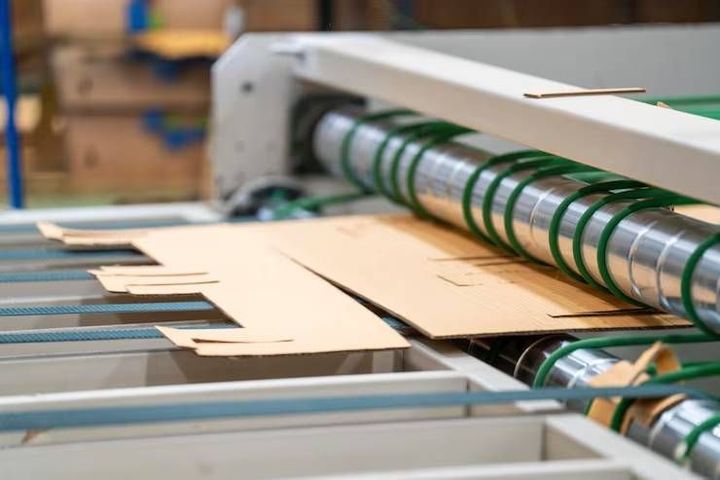
Die-cutting machines: Cut sheets into specific shapes and create folding lines.
Flexographic printing machines: Apply text, symbols, and graphics to packaging surfaces.
Box stitching and gluing machines: Join box panels using staples or adhesives, depending on the packaging design.
Each category serves a different purpose, and some manufacturing facilities use several machine types in a single production line.
Importance
Box making machines play an important role in modern packaging because goods frequently move through several stages before reaching their destination. Products may pass through factories, warehouses, distribution centers, retail outlets, and delivery networks. Packaging helps protect them from dust, moisture exposure, impacts, and handling damage, depending on the material and box construction.
These machines also affect the amount of material used, production speed, packaging consistency, and labor requirements. Businesses that manufacture or distribute products need containers that fit the product, support stacking, and allow practical handling. Packaging equipment helps manufacturers produce boxes in repeatable dimensions and prepare quantities suited to their operations.
Who Uses Box Making Equipment?
Box making machines serve a wide range of industries. E-commerce businesses use corrugated boxes for shipping orders, while food manufacturers use suitable paperboard and corrugated packaging for transportation and storage. Electronics manufacturers require packaging designs that accommodate protective inserts, and agricultural businesses use cartons or corrugated containers for produce.
Small packaging workshops may use manual or semi-automatic equipment for customized orders. Larger factories may operate integrated production lines that coordinate printing, cutting, folding, and joining. The choice depends on the complexity of the packaging, production schedule, available space, and workforce skills.
Common Production Challenges
Packaging manufacturers must manage several practical challenges. Incorrect cutting or creasing can make boxes difficult to fold, while unsuitable adhesive application can weaken the joints. Inconsistent sheet dimensions may create alignment problems, and poorly maintained equipment can result in rejected products or interruptions.
Other considerations include material waste, electricity consumption, operator safety, and changing customer requirements. Manufacturers address these issues through machine calibration, material inspection, routine maintenance, production planning, and quality checks at different stages.
Recent Updates
Recent developments in box making machines reflect wider changes in industrial automation, packaging design, and environmental management. Manufacturers are increasingly integrating digital controls, automated material handling, and production monitoring into packaging equipment. The degree of automation varies considerably between machine models and manufacturing facilities.
Automation and Digital Controls
Modern equipment may use programmable logic controllers, touchscreen interfaces, electronic sensors, and automatic adjustment systems. These features help operators set production parameters, monitor machine status, and identify certain process irregularities. Connected production systems can also record operating information for maintenance planning and production analysis.
Computer-controlled cutting and creasing equipment supports the production of boxes in different sizes and shapes. Digital job settings can reduce the need for repeated manual adjustments when changing between packaging designs, although results depend on equipment capabilities, operator training, and material conditions.
Material Efficiency and Packaging Design
Packaging manufacturers are paying greater attention to material usage, recyclability, and packaging dimensions. Box design software can help calculate sheet layouts and identify ways to reduce offcuts. Lightweight packaging designs may reduce material consumption while still needing to meet product protection and transportation requirements.
Interest in paper-based packaging has also encouraged development in printing, cutting, and converting processes. However, paper-based materials do not automatically make every package suitable for recycling. Coatings, adhesives, inks, and mixed materials can affect how packaging is processed through local recycling systems.
Developments in Quality Monitoring
Sensors and machine vision systems can help identify misaligned sheets, printing defects, incorrect dimensions, or other visible production problems. Some production lines use automated inspection to reduce reliance on manual checking alone. Human oversight remains important, particularly when defects are difficult to detect automatically or when packaging must meet specific customer requirements.
Laws or Policies
Rules affecting box making machines depend on the country where equipment is manufactured or operated and the products being packaged. In India, packaging manufacturers may need to consider machinery safety, electrical safety, workplace requirements, environmental rules, and packaging-specific regulations. Requirements vary according to the activity, material, industry, and applicable legal framework.
Machinery and Workplace Safety in India
Factories using box making equipment must follow applicable occupational safety and factory requirements. Relevant obligations may include machine guarding, safe electrical installations, operator training, emergency stopping arrangements, and procedures for maintenance and cleaning. Cutting blades, moving rollers, conveyors, and powered folding mechanisms require particular attention because they can create mechanical hazards.
The Occupational Safety, Health and Working Conditions Code, 2020, forms part of India's labor-law framework. Its applicability and operative provisions should be checked against current government notifications and relevant state requirements. Factory operators must also consider applicable rules governing electrical equipment, fire prevention, and industrial premises.
Packaging and Environmental Requirements
Packaging intended for food contact must meet applicable food-safety requirements. In India, the Food Safety and Standards Authority of India (FSSAI) establishes requirements for food packaging materials and related compliance matters. Packaging manufacturers and food businesses need to determine which requirements apply to the material, intended use, and supply chain.
India's Plastic Waste Management Rules and related amendments may apply when packaging contains plastic components or falls within regulated plastic-packaging categories. Paper and corrugated packaging may also be affected by waste-management, labeling, and environmental requirements, depending on the product and circumstances. Businesses should consult current official regulations rather than assume that every packaging material follows identical rules.
Tools and Resources
Several technical resources help manufacturers understand box making machines, estimate production requirements, and manage packaging operations. Their usefulness depends on the type of equipment, material, and manufacturing process.
Box Design and Production Tools
Computer-aided design (CAD) software can be used to create box layouts, calculate panel dimensions, and prepare cutting patterns. Packaging design applications may also provide three-dimensional previews that show how a flat sheet folds into a finished container. These tools are useful when developing packaging for products with unusual shapes or specific protection requirements.
Spreadsheet templates can help track sheet consumption, production quantities, rejected boxes, machine downtime, and maintenance activities. Material calculators may estimate the board area required for a particular box design, although actual consumption also depends on cutting layouts, waste allowances, and manufacturing tolerances.
Industry and Government Resources
Manufacturers can consult equipment manuals, technical documentation, and packaging standards to understand machine settings and operating limits. Useful resources include:
Bureau of Indian Standards (BIS): Information about applicable Indian standards and conformity requirements.
Food Safety and Standards Authority of India (FSSAI): Regulations and guidance relating to food packaging.
Central Pollution Control Board (CPCB): Environmental rules, waste-management information, and applicable packaging guidance.
Manufacturer documentation: Operating instructions, maintenance schedules, technical specifications, and safety procedures.
Packaging design software: Tools for creating box layouts, dielines, and structural packaging models.
Technical documentation should be matched to the exact machine model and the intended packaging application.
Comparison of Common Box Making Machines
| Machine type | Main function | Typical application |
|---|---|---|
| Corrugated box machine | Forms shipping boxes | Warehousing and transportation |
| Carton making machine | Produces folding cartons | Retail and consumer goods |
| Die-cutting machine | Cuts shapes and folding lines | Custom packaging designs |
| Flexographic printer | Prints graphics and text | Product identification and branding |
| Gluing machine | Joins box panels | Cartons and corrugated packaging |
| Box stitching machine | Joins panels with staples | Selected heavy-duty packaging |
The table describes general functions. Some production lines combine multiple operations in one machine, while other facilities use separate machines for each stage.
FAQs
What Is a Box Making Machine Used For?
A box making machine converts paperboard or corrugated sheets into packaging containers. Depending on its configuration, it may cut, crease, print, fold, glue, or stitch materials to produce boxes for shipping, storage, and retail packaging.
What Are the Main Types of Box Making Machines?
Common types include corrugated box machines, carton making machines, automatic box making machines, die-cutting machines, printing machines, and gluing or stitching equipment. Each type performs particular production tasks, and several may be combined in a manufacturing line.
How Does an Automatic Box Making Machine Work?
An automatic box making machine uses mechanical components, electrical controls, and programmed settings to coordinate production steps. Depending on its design, it may feed sheets, cut and crease material, fold panels, and join box sections with limited manual handling.
Which Materials Are Used in Box Manufacturing?
Common materials include corrugated cardboard, paperboard, kraft paper, and other suitable paper-based sheets. The material depends on the box's dimensions, expected load, moisture exposure, printing requirements, and intended use.
What Safety Rules Apply to Box Making Machines in India?
Applicable requirements may include factory safety rules, machine guarding, electrical safety, worker training, and emergency procedures. Food packaging and packaging containing regulated plastic components may also need to comply with additional material-specific requirements.
Conclusion
Box making machines convert paper-based materials into containers used across manufacturing, retail, agriculture, and transportation. Their types range from manually operated equipment to automated systems that coordinate cutting, printing, folding, and joining. Digital controls, material-efficient designs, and production monitoring are important developments in modern packaging operations. Equipment selection, workplace safety, quality control, and compliance with relevant packaging regulations all influence how these machines are used.

You May Also Like