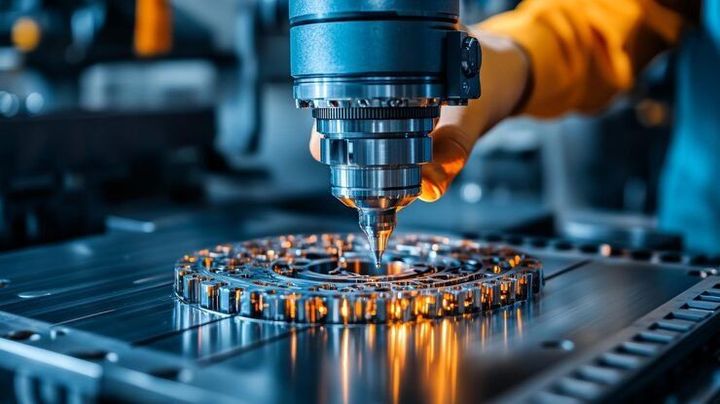
CNC Automation Tools Guide: Machine Integration, Functions, Components and Industrial Uses
CNC automation tools are technologies and systems that help control, monitor, and coordinate computer numerical control (CNC) machines. These machines follow programmed instructions to cut, drill, mill, turn, or shape materials such as metal, plastic, and wood. CNC automation combines machine controllers, software, sensors, robotic equipment, and material-handling systems to support consistent manufacturing processes.
Context
CNC automation tools are technologies and systems that help control, monitor, and coordinate computer numerical control (CNC) machines. These machines follow programmed instructions to cut, drill, mill, turn, or shape materials such as metal, plastic, and wood. CNC automation combines machine controllers, software, sensors, robotic equipment, and material-handling systems to support consistent manufacturing processes.
CNC technology developed from earlier numerical control systems, which used coded instructions to guide machine movements. As computers and digital controllers became more widely used in manufacturing, CNC machines gained the ability to execute complex programs, store machining instructions, and coordinate multiple axes of movement. Modern CNC automation extends these capabilities by connecting machines with production software, inspection equipment, and factory networks.
Today, CNC automation tools are used in automotive manufacturing, aerospace production, electronics, medical equipment manufacturing, industrial machinery, and precision engineering. Their configuration varies according to the material, component geometry, production volume, accuracy requirements, and factory layout.
Understanding CNC Automation Components
A CNC automation system contains several components that work together to translate a digital design into a physical part.
CNC controller: Interprets programmed instructions and coordinates machine movements.
Drive motors and servo systems: Move machine axes and regulate positioning according to control commands.
Cutting tools and tool changers: Remove material using selected tools, with automatic tool changers reducing the need for manual intervention between operations.
Sensors and probes: Measure selected machine conditions, tool positions, or workpiece dimensions.
Computer-aided manufacturing software: Converts design information into machining instructions and toolpaths.
Robotic systems: Load, unload, transfer, or position components when integrated with the machine.
Machine monitoring software: Collects operating information, production status, and selected performance measurements.
Not every CNC machine requires all these components. A basic machine may operate with a controller and manually loaded workpieces, while a highly automated production cell may include robots, inspection equipment, conveyors, and centralized monitoring.
How CNC Machine Integration Works
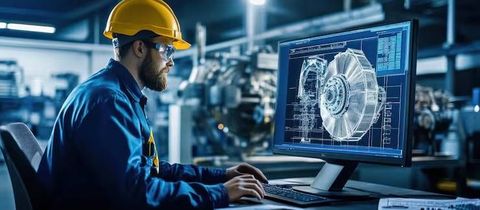
Machine integration connects CNC equipment with other systems used in a manufacturing process. For example, computer-aided design (CAD) software creates a digital component model, while computer-aided manufacturing (CAM) software generates toolpaths based on the model and machining requirements.
The resulting program is transferred to the CNC controller, where it guides cutting movements. Depending on the setup, sensors, probing equipment, or inspection systems can provide additional information about tool position, workpiece alignment, and finished dimensions. Production software may also record machine status and component output.
Importance
CNC automation tools matter because manufacturers must produce components with defined dimensions, repeatable processes, and predictable production schedules. Manual machining can be suitable for particular tasks, but complex or repeated operations may require careful coordination of tool movements, workpiece positioning, and inspection. CNC automation can reduce selected manual steps and help maintain consistent machining procedures.
The technology also supports industries where component geometry and dimensional accuracy affect the performance of a larger product. Automotive parts, aircraft components, industrial pump housings, electronic enclosures, and precision machine components may all require controlled machining operations.
Main Functions and Industrial Applications
CNC automation performs several functions across different production environments.
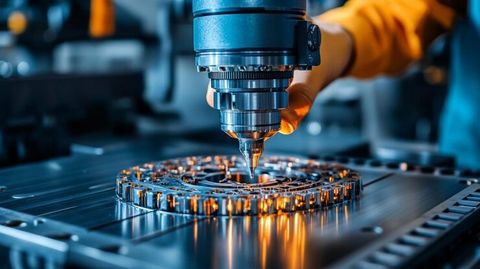
Automated machining: Executes programmed cutting, drilling, milling, and turning operations.
Tool management: Selects and changes tools according to the machining program when suitable equipment is installed.
Workpiece handling: Uses robots or automated loading systems to move components into and out of the machining area.
In-process measurement: Uses probes or sensors to check selected dimensions and positioning conditions.
Production monitoring: Records machine activity, cycle information, alarms, and equipment status.
Quality inspection: Connects machining processes with measuring instruments or inspection systems.
These functions can reduce repetitive handling and improve process visibility, but results depend on machine condition, programming quality, tool selection, material properties, and operator supervision.
Comparing Common CNC Automation Tools
| Tool or system | Main function | Typical industrial use |
|---|---|---|
| CAD software | Creates digital component designs | Mechanical part design |
| CAM software | Generates machining toolpaths | Milling and turning preparation |
| CNC controller | Executes programmed movements | Machine operation |
| Automatic tool changer | Changes cutting tools | Multi-operation machining |
| Robotic loading system | Moves workpieces | Repeated production cycles |
| Touch probe | Measures selected positions or dimensions | Workpiece alignment |
| Machine monitoring software | Records machine status and activity | Production coordination |
| Coordinate measuring machine | Measures component geometry | Dimensional inspection |
The systems serve different purposes and may be connected through a production workflow. Their compatibility depends on software formats, controller capabilities, communication protocols, and the requirements of the manufacturing operation.
Practical Considerations for Integration
Integrating CNC equipment requires more than connecting machines to a network. Engineers must check program compatibility, workpiece handling, tool access, machine guarding, emergency stops, and communication between controllers and other equipment.
Factories must also consider how components will be loaded, how finished parts will be inspected, and how faults will be handled. An automated cell needs a defined response when a tool breaks, a part is positioned incorrectly, or a sensor reports an unexpected condition.
Recent Updates
CNC automation continues to develop through improved connectivity, machine monitoring, robotics, and software integration. Across 2024–2026, manufacturers have increasingly explored ways to connect existing CNC machines with digital production systems and use operational data to support maintenance, scheduling, and quality control. Adoption differs according to factory size, production requirements, equipment age, and available technical expertise.
AI and Data-Based Machine Monitoring
Artificial intelligence and data analytics can help examine machine signals, operating histories, and inspection records. In selected applications, these tools may identify unusual vibration patterns, highlight changes in machining conditions, or help estimate when equipment needs inspection.
Such systems do not automatically identify every fault or prevent every machine interruption. Their usefulness depends on reliable data, suitable models, correct sensor installation, and validation under actual operating conditions. Maintenance personnel remain important for confirming findings and determining appropriate responses.
Robotics and Flexible Manufacturing Cells
Robotic loading systems are used to transfer workpieces between storage areas, CNC machines, and inspection stations. When integrated with suitable controls and safety equipment, these systems can support repeated production cycles and reduce manual material handling.
Manufacturers are also exploring flexible manufacturing cells that coordinate several machines or operations. These arrangements may use automated pallets, tool management, production scheduling software, and inspection equipment to handle different components within a shared production environment. Setup complexity and programming requirements increase when many part types or machine configurations must be supported.
Connected Equipment and Digital Workflows
Industrial networks allow CNC machines to exchange selected information with production management systems. This can help teams review machine availability, program status, cycle times, and production records without relying entirely on manual reporting.
Digital workflows can also improve program management by maintaining controlled versions of machining instructions and associated design files. Access controls and change records are important because an incorrect or outdated program may produce defective components or create unsafe machine movements.
Laws or Policies
CNC automation is affected by workplace safety requirements, machinery standards, electrical safety rules, environmental obligations, and cybersecurity considerations. Applicable requirements depend on the country, the type of machine, the industry, and whether the equipment is manufactured, imported, installed, or operated within a particular facility.
Manufacturing and Machine Safety in India
In India, industrial facilities must follow applicable occupational safety, factory, electrical, and environmental requirements. The Occupational Safety, Health and Working Conditions Code, 2020, forms part of India's occupational safety framework, subject to its commencement and applicable provisions. Manufacturers should verify the requirements currently in force for their establishment and state.
CNC equipment may also need to meet relevant technical standards for machine safety, electrical equipment, guarding, and control systems. The Bureau of Indian Standards (BIS) publishes Indian standards covering a range of industrial and engineering subjects. Whether a specific standard is mandatory depends on the applicable regulations, product category, and other legal requirements.
Machine operators and maintenance personnel need appropriate training in operating procedures, protective equipment, emergency stops, and safe maintenance practices. Guard doors, interlocks, and other protective measures must be suitable for the machine and its intended use.
Cybersecurity and Industrial Data
Connected CNC machines may exchange production programs, operating information, and equipment records with external systems. Network access should be controlled to reduce the risk of unauthorized program changes, data loss, and disruption to production.
Manufacturers can use network separation, restricted user permissions, secure remote access, backups, and software maintenance procedures to support industrial cybersecurity. International standards such as the IEC 62443 series provide guidance on protecting industrial automation and control systems. Their applicability depends on the organization's requirements and relevant contractual or regulatory obligations.
Tools and Resources
Manufacturers can use software, technical references, and planning templates to evaluate CNC automation requirements and coordinate implementation. The appropriate resources depend on the machine type, control system, component design, and production environment.
CNC Programming and Design Software
CAD and CAM platforms support component design and machining preparation. Examples include Autodesk Fusion, Mastercam, and Siemens NX. Their capabilities differ, so users must confirm compatibility with the intended CNC controller, post-processor, machine configuration, and machining operations.
Machine manuals and controller documentation provide important details about supported programming commands, tool offsets, coordinate systems, alarms, and operating procedures. These documents help users understand machine-specific functions that may not be identical across manufacturers.
Technical Standards and Industry Resources
Several organizations publish information relevant to CNC automation and industrial integration:
Bureau of Indian Standards (BIS): Indian technical standards and related conformity information.
International Organization for Standardization (ISO): Standards covering manufacturing, quality management, and selected machine-safety topics.
International Electrotechnical Commission (IEC): Technical standards relating to electrical systems and industrial automation.
National Institute of Standards and Technology (NIST): Manufacturing research and technical guidance on industrial systems and cybersecurity.
Association for Manufacturing Technology (AMT): Industry information concerning manufacturing technology and machine tools.
Planning and Monitoring Templates
A CNC integration checklist can record machine models, controller types, supported communication protocols, software versions, tooling requirements, and safety controls. A production monitoring spreadsheet can track machine availability, cycle duration, rejected parts, tool changes, and maintenance events.
Consistent records help production teams compare operating conditions and identify recurring problems. Measurements should use clear definitions, since cycle time, machine utilization, downtime, and part quality describe different aspects of manufacturing performance.
FAQs
What are CNC automation tools used for?
CNC automation tools control machining operations, manage cutting tools, handle workpieces, monitor machine conditions, and record production information. Their exact functions depend on the machine and the equipment connected to it.
How does CNC machine integration work?
CNC machine integration connects controllers, programming software, sensors, robots, inspection equipment, and production systems. Information moves between compatible components to coordinate machining and related manufacturing activities.
What is the difference between CNC and CNC automation?
CNC refers to computer-controlled machine operation, while CNC automation extends that operation through systems such as robotic loading, automatic tool changing, machine monitoring, and connected production software. A CNC machine can operate without a fully automated production cell.
Which software is used for CNC automation?
Common software categories include CAD for design, CAM for toolpath generation, controller-specific programming tools, and manufacturing execution systems for production coordination. The appropriate combination depends on machine compatibility and production needs.
What safety requirements apply to CNC automation in India?
CNC automation must comply with applicable workplace safety, machinery, electrical, and other relevant regulations. Requirements vary by equipment and facility, and safe operation includes suitable guarding, training, maintenance procedures, and emergency controls.
Conclusion
CNC automation tools combine machine controllers, programming software, sensors, robotics, and monitoring systems to coordinate industrial machining. Their applications range from individual CNC machines to connected manufacturing cells used across many industries. Effective integration depends on equipment compatibility, reliable programs, appropriate inspection, cybersecurity, and machine safety. Current developments in robotics, data analysis, and connected production systems continue to expand the ways CNC equipment can be integrated into manufacturing workflows.