CNC Machine Explained: Types, Components, Working Process, Applications and Key Features
A CNC machine, or Computer Numerical Control machine, is a manufacturing system that uses computer instructions to control the movement of cutting tools, workpieces, or other machine components. CNC technology is used to create parts from materials such as metals, plastics, wood, and composites with controlled movements and repeatable machining processes.
The idea behind CNC machining developed from earlier numerical-control systems used in manufacturing. As computers became more capable, numerical instructions could be stored, edited, and processed digitally. This development allowed machines to perform complex movements based on programmed instructions rather than relying entirely on manual control.
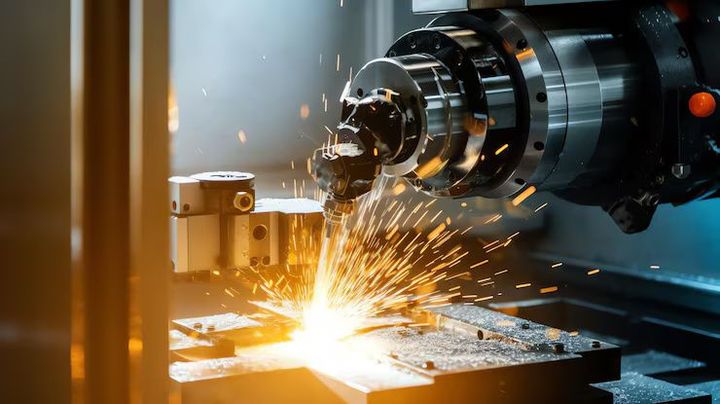
Today, CNC machines are found in many manufacturing environments. They can perform operations such as cutting, drilling, milling, turning, boring, engraving, and grinding. A CNC machine can follow a programmed sequence involving tool movement, cutting speed, feed rate, and other machining parameters.
How CNC technology works
A CNC process normally begins with a digital design. Computer-aided design (CAD) software can be used to create the geometry of a component. Computer-aided manufacturing (CAM) software can then convert the design into toolpaths and machine instructions.
The resulting program is transferred to the CNC controller. The controller interprets the instructions and coordinates motors, drives, spindles, and other machine components. Sensors and feedback systems can also help monitor machine movement and position.
Importance
CNC machines matter because modern manufacturing often requires consistent dimensions, repeatable movements, and the ability to produce complex shapes. Manual machining can require substantial operator input for every movement, while CNC systems can execute programmed sequences automatically.
CNC technology affects industries that produce physical components, including automotive manufacturing, aerospace, electronics, medical equipment, construction equipment, energy systems, and general engineering.
Common challenges that CNC machines help address include:
- Producing components with complex geometries
- Repeating the same machining sequence across multiple parts
- Controlling tool movement along several axes
- Reducing manual movement during repetitive operations
- Integrating digital designs with physical manufacturing
- Recording and adjusting machining programs
- Supporting automated production processes
The actual result depends on the machine configuration, tooling, material, programming, workholding, operator knowledge, and process conditions. CNC automation does not remove the need for proper setup, inspection, maintenance, and safety procedures.
Main CNC machine types
Different CNC machine types are designed for different machining operations.
- CNC milling machines use rotating cutting tools to remove material from a stationary or controlled workpiece.
- CNC lathes and turning centers rotate the workpiece while cutting tools shape its outer or inner surfaces.
- CNC machining centers combine multiple operations and may include automatic tool changing.
- CNC routers are commonly used for materials such as wood, plastics, composites, and some softer metals, depending on machine design.
- CNC grinding machines use abrasive wheels to achieve controlled surface finishes and dimensions.
- CNC drilling machines are designed primarily for producing holes according to programmed positions.
- CNC EDM machines use controlled electrical discharges to remove material and can work with electrically conductive materials.
Key components of a CNC machine
A CNC machine contains several interconnected systems. The controller acts as the machine's electronic command center, interpreting programmed instructions and coordinating movement.
Other major components include the spindle, which rotates the cutting tool or workpiece depending on the machine design; drive motors, which create controlled movement; linear guides and ball screws, which support accurate axis movement; the worktable or chuck, which holds the workpiece; and the tool system, which holds cutting tools.
Sensors and feedback devices can monitor position and machine conditions. The machine frame provides structural support, while an enclosure can help contain chips, coolant, and moving components.
Recent Updates
CNC machining continues to develop alongside automation, digital manufacturing, industrial software, and connected production systems. Recent manufacturing trends increasingly connect CNC equipment with CAD/CAM software, machine monitoring, automated tool management, robotics, and production data systems.
The Indian machine tools market has also been associated with increased automation across manufacturing processes. Industry information published by IBEF reports that India's machine tools market was valued at about ₹164.70 billion in 2025 and identifies automation as an important factor influencing the sector.
Digital manufacturing and automation
Modern CNC environments can use network connections to transfer programs and production information between computers and machines. Some facilities also collect machine data for monitoring spindle conditions, operating states, tool usage, or production activity.
Another development is the integration of robotics with CNC equipment. Robots can move raw materials, transfer machined components, or perform repetitive handling tasks while the CNC machine performs the machining operation.
Multi-axis machining
Traditional CNC systems may operate along three primary axes, while more advanced configurations can provide four, five, or more controlled axes. Multi-axis machining allows tools to approach a component from different directions and can reduce the need for repeated manual repositioning.
Simulation and digital twins
CNC programming software increasingly includes machining simulation. A digital model can be used to examine toolpaths before instructions are sent to a machine. More advanced manufacturing systems can combine machine data with digital models to support process monitoring and analysis.
Artificial intelligence and data analysis
Artificial intelligence and machine-learning techniques are also being explored for areas such as tool-condition monitoring, process optimization, anomaly detection, and predictive maintenance. These technologies are developing alongside conventional CNC controls rather than replacing the fundamental principles of numerical control.
Laws or Policies
In India, CNC machines are affected by industrial safety requirements, applicable Indian Standards, machinery regulations, and workplace safety rules. The exact requirements can vary according to the machine category, application, workplace, and regulatory framework.
The Bureau of Indian Standards (BIS) maintains standards and certification frameworks relevant to machinery. BIS currently identifies safety certification guidelines for machinery, including metal-cutting machines, under its Scheme-X framework. Its machine-safety information specifically includes metal-cutting machine categories.
BIS also identifies metal-cutting machine tools within the machinery categories covered by its machinery and electrical equipment safety framework. The applicable requirements can depend on the specific equipment and the relevant Indian Standards.
Workplace safety is another important consideration. India's Occupational Safety, Health and Working Conditions Code includes matters such as fencing of machinery, work near machinery in motion, cutting-off power, revolving machinery, protection of eyes, and safety of buildings and machinery.
Standards and documentation
Manufacturers and users may need to identify the standards applicable to a particular machine. BIS provides a "Know Your Standard" platform that allows standards to be searched using an Indian Standard number or product-related keyword.
For machinery subject to compulsory certification requirements, the relevant conformity-assessment process should be checked against the current BIS requirements. BIS notes that compulsory certification applies to products specifically brought under such requirements by the government.
Tools and Resources
Several digital and physical tools support CNC machining from design through production.
CAD and CAM software
CAD software is used to create or modify digital component designs. CAM software converts design geometry into machining strategies and toolpaths. Many modern manufacturing workflows use CAD and CAM together.
CNC programming resources
Machine operators and programmers commonly work with G-code and related CNC programming instructions. CNC controllers can use different programming formats, so the controller's documentation should be consulted when preparing or modifying programs.
Toolpath simulation
Simulation tools allow programmers to inspect programmed movements before machining. They can help identify potential collisions, incorrect tool movements, excessive cutting conditions, or other programming issues.
Measurement equipment
Machined components can be checked using instruments such as vernier calipers, micrometers, height gauges, dial indicators, and coordinate measuring machines. The appropriate measurement method depends on the required dimensions and tolerances.
BIS resources
The BIS website provides information about Indian Standards, conformity assessment, certification procedures, and machinery safety. Its machine-tool materials also include information relating to CNC and NC machine tools and geometric and positioning accuracy.
CNC machine comparison
| CNC Machine Type | Primary Operation | Typical Material Examples | Common Application |
|---|---|---|---|
| CNC Milling Machine | Cutting and shaping | Metals, plastics | Component machining |
| CNC Lathe | Turning | Metals, plastics | Shafts and cylindrical parts |
| CNC Router | Routing and cutting | Wood, plastics, composites | Panels and shaped parts |
| CNC Grinding Machine | Abrasive machining | Hardened metals | Precision finishing |
| CNC Drilling Machine | Hole making | Metals, plastics | Hole patterns |
| CNC EDM | Electrical discharge machining | Conductive metals | Complex or detailed parts |
| CNC Machining Center | Multiple machining operations | Metals, plastics | Complex components |
FAQs
What is a CNC machine?
A CNC machine is a computer-controlled manufacturing machine that follows programmed instructions to control tool or workpiece movement. It can perform operations such as milling, turning, drilling, cutting, and grinding.
What are the main CNC machine types?
Common CNC machine types include CNC milling machines, CNC lathes, machining centers, routers, grinding machines, drilling machines, and EDM machines. Each type is designed around particular machining operations.
How does a CNC machine work?
A CNC machine generally receives programmed instructions created from a digital design and CAM process. Its controller interprets those instructions and directs motors, spindle systems, and other components to perform the programmed movements.
What are the main components of a CNC machine?
Major CNC machine components include the controller, spindle, drive motors, machine frame, workholding system, linear guides, ball screws, tooling system, sensors, and feedback devices. The exact configuration depends on the machine type.
Are CNC machines covered by Indian safety standards?
Some machinery categories in India are subject to applicable standards and certification requirements. BIS provides machinery safety guidance and identifies metal-cutting machines within its relevant certification framework, so the requirements should be checked for the specific machine and application.
Conclusion
CNC machines use computer-controlled instructions to perform precise and repeatable manufacturing operations. Different CNC machine types are designed for processes such as milling, turning, drilling, grinding, routing, and electrical discharge machining. Current developments are increasingly connected with automation, digital manufacturing, robotics, simulation, and machine data. In India, applicable BIS standards and workplace safety requirements are important parts of the machinery environment.