Heavy Lifting Equipment Details: Hoists, Cranes, Slings, Shackles and Lifting Accessories
Heavy lifting equipment includes machines and accessories used to raise, lower, move, position, or support heavy loads. Common examples include hoists, cranes, wire-rope systems, chain slings, web slings, shackles, hooks, lifting beams, spreader beams, and other lifting accessories. These systems are used in factories, construction areas, warehouses, ports, workshops, infrastructure projects, and industrial facilities.
The basic idea behind heavy lifting is simple: equipment transfers a load from one position to another while controlling its movement. A crane may provide the main lifting and travelling movement, while a hoist raises or lowers the load. Slings and shackles connect the load to the lifting system, making each component part of a larger lifting arrangement.
Heavy lifting equipment developed alongside industrial manufacturing and construction. As machinery, structural components, vessels, vehicles, and manufactured products became larger and heavier, manual handling became less practical. Mechanical lifting systems allowed industries to move these loads with greater control and repeatability.
Understanding the different components is important because lifting capacity does not depend on one item alone. The crane, hoist, sling, shackle, hook, connection point, and load configuration all need to be considered together.
Main Components of a Lifting System
A typical arrangement can include several components:
- Hoists provide controlled vertical lifting and lowering.
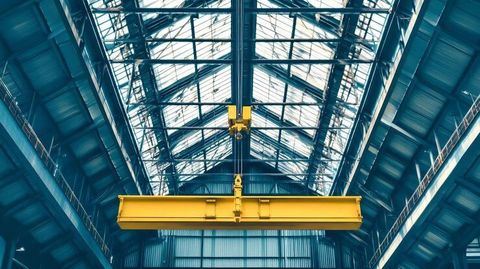
- Cranes provide lifting combined with horizontal movement.
- Slings connect loads to hooks or other lifting points.
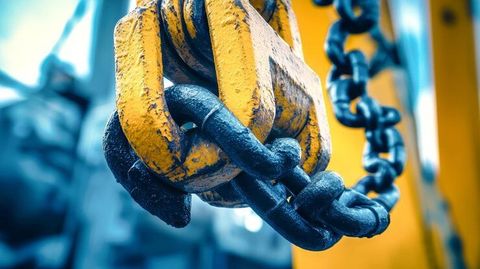
- Shackles provide connecting points between slings, loads, and lifting equipment.
- Hooks connect the load-handling arrangement to the hoist or crane.
- Lifting beams and spreader beams help distribute loads or maintain a particular lifting configuration.
- Accessories such as lifting points, clamps, eyebolts, blocks, and wire-rope assemblies can support specific applications.
Importance
Heavy lifting equipment is important because many industrial and construction loads cannot be handled safely or efficiently by manual methods. Steel structures, machinery, concrete components, pipes, fabricated assemblies, and other heavy objects may require controlled mechanical movement.
The equipment also affects how a load behaves during movement. A load that is unevenly distributed can tilt, rotate, or shift when lifted. The choice and arrangement of slings, shackles, hooks, and other accessories therefore influence how the load is connected and supported.
Where Heavy Lifting Equipment Is Used
Heavy lifting systems can be found in many environments, including:
- Construction sites for structural components and building materials
- Manufacturing facilities for machinery and production equipment
- Warehouses for large components and industrial materials
- Shipyards and ports for containers, machinery, and marine components
- Power and energy facilities for large equipment
- Infrastructure projects involving bridges, tunnels, and structural assemblies
- Maintenance areas where heavy machinery or components must be repositioned
For general readers, one important distinction is between the lifting machine and the lifting accessory. A crane or hoist generates and controls lifting movement, while a sling, shackle, or hook normally forms part of the connection between the machine and the load.
Understanding Safe Working Load
Safe working load, often abbreviated as SWL, refers to the load that equipment or an accessory is designated to handle under specified conditions. Rated capacity should not be treated as a single number that applies to every configuration.
For example, the capacity of a sling can vary according to its material, configuration, angle, connection method, and condition. Similarly, a crane's rated capacity can depend on factors such as boom configuration, load radius, lifting arrangement, and operating conditions.
| Equipment or accessory | Main function | Important considerations |
|---|---|---|
| Hoist | Raises and lowers loads | Rated capacity, lifting height, controls |
| Crane | Lifts and moves loads | Load radius, configuration, travel path |
| Wire-rope sling | Connects and supports loads | Rope condition, configuration, angle |
| Web sling | Connects loads using synthetic material | Material condition, edges, configuration |
| Chain sling | Supports heavy loads | Chain grade, condition, attachment method |
| Shackle | Connects lifting components | Rated capacity, pin condition, alignment |
| Hook | Connects the lifting arrangement | Latch, deformation, rated capacity |
| Spreader beam | Distributes lifting forces | Beam capacity and lifting configuration |
Recent Updates
The general direction of heavy lifting equipment from 2024 through 2026 has involved greater attention to inspection, documentation, equipment condition, operator awareness, and standardized design. Digital monitoring and modern control systems are also increasingly associated with cranes and lifting machinery, particularly in larger industrial environments.
Indian standards continue to be reviewed and maintained through the Bureau of Indian Standards. BIS records show that IS 807:2006, covering design, erection, and testing of the structural portion of cranes and hoists, was reviewed in 2026. IS 3938:1983, covering electric wire-rope hoists, was also reviewed in 2026.
BIS also maintains a dedicated area covering cranes, lifting chains, and related equipment. Its program includes areas such as cranes, hoists, winches, lifting chains, sheaves, hooks, shackles, mobile cranes, tower cranes, jib cranes, and bridge and gantry cranes.
Technology and Monitoring Trends
Modern lifting systems may incorporate electronic controls, load monitoring, limit switches, remote controls, condition monitoring, and digital records. These technologies can help operators and maintenance teams understand equipment status and operating conditions.
The emphasis is not only on larger lifting capacity. Equipment design increasingly considers control, visibility, inspection, ergonomics, and the ability to identify abnormal conditions before lifting operations continue.
Recent Indian occupational safety rules also place attention on crane and hoist controls, warning signals, automatic braking, operator protection, inspection of hooks and attachments, and checks at the beginning of shifts.
Laws or Policies
In India, heavy lifting equipment is affected by occupational safety legislation, applicable rules, and technical standards. The Occupational Safety, Health and Working Conditions Code, 2020 consolidates several workplace safety provisions and includes matters concerning hoists and lifts as well as lifting machines, chains, ropes, and lifting tackles. The Code was brought into force through a government notification in 2025.
The Code's Second Schedule specifically includes the erection, installation, use, and maintenance of hoists, lifting appliances, and lifting gear, including requirements relating to periodic testing and examination and the appointment of competent persons for relevant equipment.
Earlier provisions under the Factories Act, 1948 also provide useful background for understanding Indian lifting-equipment requirements. Section 29 addressed lifting machines, chains, ropes, and lifting tackles, including requirements concerning construction, adequate strength, maintenance, examination, and safe working loads.
Current Regulatory Framework
The Occupational Safety, Health and Working Conditions Central Rules have also been developed as part of the newer framework. The Central Rules, 2025 were issued under the Occupational Safety, Health and Working Conditions Code, while the Central Rules, 2026 subsequently provided a further regulatory framework.
BIS standards provide another important technical reference. BIS's current standards information includes crane-related standards such as IS 807 and other standards covering hooks, wire ropes, and crane terminology. The BIS "Know Your Standard" portal allows users to search Indian Standards by IS number or product-related keyword and review associated standard information.
Requirements can vary according to the workplace, equipment type, industry, state rules, and applicable legislation. Specific lifting operations should therefore be assessed against the rules and technical standards that apply to the particular establishment.
Tools and Resources
Several official and technical resources can help readers understand heavy lifting equipment and its regulatory background.
Standards and Regulatory Resources
The Bureau of Indian Standards provides information about Indian Standards through its standards portal. Searching for terms such as "cranes," "hoists," "lifting chains," "hooks," or specific IS numbers can help identify relevant standards.
India Code provides access to central legislation, including the Occupational Safety, Health and Working Conditions Code, 2020. It can be used to review the wording and scope of applicable legislation.
The Ministry of Labour and Employment publishes occupational safety notifications, rules, and related government documents. These resources are useful when checking the current regulatory framework rather than relying only on older workplace references.
Practical Lifting Resources
Common resources used in lifting planning include:
- Load-weight calculations for determining the approximate mass of an object
- Sling-angle references for understanding how configuration affects lifting forces
- Crane load charts for reviewing capacity under specific operating conditions
- Inspection checklists for hooks, ropes, chains, slings, shackles, and other accessories
- Equipment registers for recording examinations and maintenance information
- Manufacturer manuals for equipment-specific operating limits
- Lifting plans for documenting the intended lifting arrangement and sequence
Calculations should use the actual equipment specifications and applicable technical requirements. General online calculators can explain concepts, but they should not replace equipment-specific documentation or qualified assessment for an actual lifting operation.
FAQs
What is heavy lifting equipment?
Heavy lifting equipment refers to machines and accessories used to raise, lower, move, or position heavy loads. Common examples include cranes, hoists, slings, shackles, hooks, lifting beams, and related lifting accessories.
What is the difference between a hoist and a crane?
A hoist is primarily designed to raise and lower a load. A crane combines lifting with movement in one or more directions, depending on its design. A crane may use a hoist as part of its lifting mechanism.
How are slings and shackles used in heavy lifting equipment?
Slings are flexible or semi-flexible components used to connect and support a load. Shackles are connecting devices that can join slings, lifting points, and other components. Their rated capacities, configurations, condition, and alignment need to be considered for the intended lifting arrangement.
What should be checked before using a lifting sling?
A basic inspection can look for visible cuts, broken or damaged components, excessive wear, deformation, corrosion, damaged stitching, heat damage, or other conditions identified by the applicable equipment documentation. The required inspection process depends on the sling type and governing requirements.
Are cranes and hoists regulated in India?
Yes. Crane and hoist activities can be subject to Indian occupational safety legislation, rules, and technical standards. The current framework includes the Occupational Safety, Health and Working Conditions Code and related rules, while BIS publishes relevant technical standards for cranes and lifting equipment.
Conclusion
Heavy lifting equipment consists of interconnected machines and accessories, including hoists, cranes, slings, shackles, hooks, and lifting beams. Each component has a specific function, and rated capacity depends on the equipment, configuration, and operating conditions. In India, lifting activities are shaped by occupational safety legislation, government rules, and BIS standards. Understanding these basic principles helps readers recognize how heavy loads are controlled and why inspection, documentation, equipment condition, and appropriate lifting arrangements are important.