Industrial Automation Systems Guide: Controls, Sensors, Equipment, Applications and Key Features
Industrial automation systems are combinations of machines, control equipment, sensors, software, and communication networks that allow industrial processes to operate with limited manual intervention. They are used in factories, warehouses, energy facilities, water treatment plants, food processing facilities, automotive production, and many other industrial environments.
The development of industrial automation began with mechanical control methods and gradually moved toward electrical systems, programmable controllers, digital computers, robotics, and networked equipment. Today, automation systems can connect physical machines with software platforms that monitor operations and provide information about production conditions.
An industrial automation system generally follows a simple cycle. Sensors collect information from equipment or the surrounding environment, controllers process that information, and actuators or machines respond according to programmed instructions. Communication networks allow different parts of the system to exchange information.
Main parts of an automation system
Several components commonly work together:
- Sensors detect conditions such as temperature, pressure, position, speed, level, vibration, or proximity.
- Programmable logic controllers, commonly called PLCs, process input signals and execute programmed control instructions.
- Human-machine interfaces, or HMIs, provide screens through which operators can view conditions and interact with equipment.
- Actuators convert control signals into physical movement or other actions.
- Motors, drives, valves, cylinders, robots, and other equipment perform physical operations.
- Industrial networks connect controllers, sensors, machines, computers, and monitoring platforms.
- Supervisory control and data acquisition, or SCADA, systems can collect and display operational information across larger installations.
These parts can be combined in different ways depending on the process, physical environment, safety requirements, and level of automation.
Importance
Industrial automation systems matter because many industrial processes involve repetitive actions, continuous monitoring, precise movement, or conditions that can be difficult for people to observe continuously. Automation can help organize these activities through programmed controls and sensor-based feedback.
For everyday users, the effects can appear indirectly. Automated production is involved in manufacturing household products, vehicles, electronic equipment, packaged foods, building materials, medical equipment, and many other goods.
Automation also addresses several practical industrial challenges. A system can continuously monitor a machine parameter, identify an unusual reading, stop equipment under defined conditions, or adjust a process according to programmed instructions.
Where industrial automation is used
Applications vary considerably between industries. Common examples include:
- Automotive assembly and robotic handling
- Food and beverage processing
- Packaging and filling systems
- Pharmaceutical manufacturing
- Chemical processing
- Water and wastewater treatment
- Power generation and distribution
- Warehousing and material handling
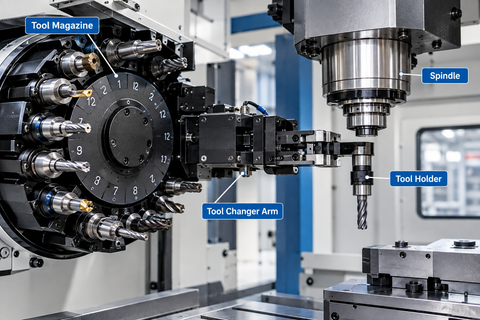
- Metalworking and machining
- Building and HVAC control
- Semiconductor manufacturing
- Renewable-energy equipment
The level of automation can range from a single automated machine to a connected production environment containing hundreds of controllers and sensors.
Automation and human involvement
Automation does not necessarily mean that people are removed from an industrial process. Operators, engineers, technicians, safety personnel, and other workers can remain involved in supervision, programming, inspection, troubleshooting, maintenance, and decision-making.
The division between people and automated equipment depends on the design of the system. Safety functions, emergency controls, physical safeguards, and operating procedures are particularly important where machines can create physical hazards.
Recent Updates
Industrial automation has increasingly moved toward connected equipment, data analysis, robotics, artificial intelligence, and cybersecurity. Modern systems can combine traditional PLC-based control with industrial Ethernet, cloud-connected applications, edge computing, machine vision, and analytical software.
One notable development is the increasing attention given to cybersecurity in operational technology. CERT-In has published guidance concerning cyber defense, security audits, vulnerabilities, and protection of digital infrastructure. Its guidance and advisories also address threats affecting industrial control environments.
Artificial intelligence is also becoming part of industrial automation research and implementation. AI-based systems can analyze large amounts of sensor information, identify patterns, support predictive analysis, and assist with quality inspection. These applications still depend on suitable data, system design, cybersecurity controls, and human oversight.
Connected automation
Industrial Internet of Things, often called IIoT, connects sensors, controllers, machines, and software platforms. This allows operational information to move between different levels of an industrial environment.
Another trend is edge computing. Instead of sending every piece of data to a distant computing platform, some processing can occur closer to the equipment. This can reduce unnecessary data transmission and support applications that require rapid local responses.
Robotics and machine vision
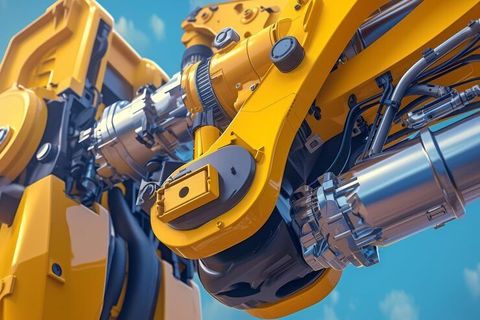
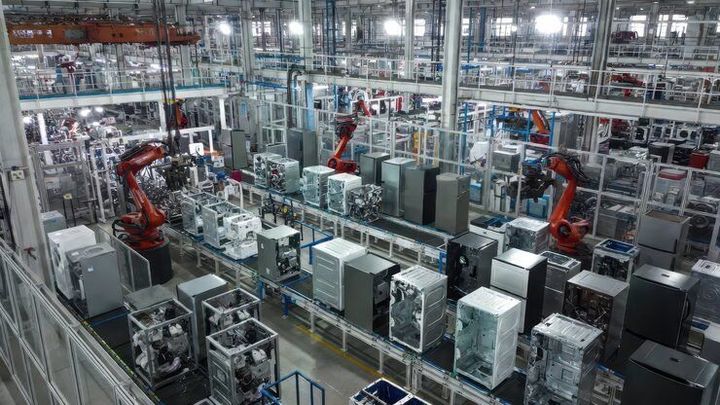
Robotic systems are being used for material movement, assembly, welding, packaging, inspection, and other repetitive activities. Machine vision systems use cameras and image-processing software to identify objects, inspect surfaces, measure dimensions, or determine whether an item meets programmed criteria.
Digital twins are another developing area. A digital twin represents a physical machine, production line, or process in software and can combine operational data with models for monitoring or analysis.
Laws or Policies
In India, industrial automation equipment can be affected by machinery safety requirements, electrical equipment standards, workplace safety rules, and cybersecurity requirements. The exact requirements depend on the equipment, industry, installation, and applicable notification or standard.
The Bureau of Indian Standards maintains standards covering machinery safety and electrical equipment. BIS materials include requirements and guidance related to machinery risk assessment, electrical equipment of machines, protective equipment, switchgear, and other industrial components.
Recent BIS material also shows continuing development of machinery safety standards. A 2025 draft of IS 15296, aligned with ISO 11161:2025, addresses the safety of machinery integration into systems and includes subjects such as risk assessment, design measures, and risk reduction.
Workplace safety is another important area. India's Occupational Safety, Health and Working Conditions Code includes provisions concerning machinery safeguards, plant and equipment safety, electrical hazards, lifting equipment, and other workplace risks. The practical requirements applicable to a particular workplace can depend on the relevant rules and implementation framework.
Cybersecurity is increasingly relevant when automation equipment is connected to networks. CERT-In operates under the Ministry of Electronics and Information Technology and maintains directions and guidance concerning information security and cyber incidents. Its published material includes guidance on security audits and cyber defense practices.
Organizations using industrial control systems may therefore need to consider both physical safety and cybersecurity. Applicable standards and legal requirements should be checked against the specific equipment and facility rather than treated as identical for every automation project.
Tools and Resources
Several types of tools help people understand, design, monitor, and maintain industrial automation systems.
Engineering and programming tools
PLC programming environments allow engineers to create control logic using programming methods such as ladder diagrams, function block diagrams, and structured text. HMI development platforms can be used to create operator screens for displaying machine conditions and control information.
SCADA platforms provide another layer for monitoring larger systems. They can collect information from multiple controllers and present values, alarms, trends, and system status through centralized interfaces.
Measurement and diagnostic tools
Common diagnostic equipment includes:
- Multimeters for electrical measurements
- Clamp meters for current measurements
- Oscilloscopes for electrical signal analysis
- Thermal cameras for identifying temperature patterns
- Vibration meters for rotating equipment
- Pressure and flow instruments
- Network monitoring tools
- PLC diagnostic software
The appropriate tool depends on the equipment and the type of measurement being investigated.
Standards and information resources
BIS publications are useful for understanding applicable Indian standards. CERT-In publications provide information related to cybersecurity practices, advisories, vulnerabilities, and security guidance.
Manufacturers' technical manuals, PLC documentation, wiring diagrams, equipment specifications, safety documentation, and training materials can also help readers understand individual automation components.
Basic automation system comparison
| System element | Main purpose | Common examples |
|---|---|---|
| Sensor | Detect physical conditions | Temperature, pressure, proximity |
| PLC | Execute control logic | Machine controller |
| HMI | Display and control information | Operator touchscreen |
| Actuator | Produce physical action | Valve, cylinder, motor |
| Drive | Control motor operation | Variable-frequency drive |
| SCADA | Monitor larger processes | Plant monitoring platform |
| Industrial network | Exchange data | Ethernet-based networks |
| Safety controller | Manage defined safety functions | Safety PLC |
Understanding how these elements interact makes it easier to understand the structure of an industrial automation system without needing advanced engineering knowledge.
FAQs
What are industrial automation systems?
Industrial automation systems combine controls, sensors, software, networks, and equipment to control or monitor industrial processes. A system may be as simple as an automated machine or as extensive as a connected production facility.
What equipment is used in industrial automation systems?
Common equipment includes PLCs, sensors, HMIs, motors, drives, valves, actuators, robots, safety controllers, industrial networks, and SCADA platforms. The equipment used depends on the process and operating environment.
How do sensors work in industrial automation systems?
Sensors measure physical conditions such as temperature, pressure, position, speed, level, or vibration. They send signals to a controller, which can use the information to perform a programmed action or display the condition to an operator.
What is the difference between PLC and SCADA?
A PLC primarily executes control logic and interacts directly with industrial equipment. SCADA generally operates at a higher monitoring level, collecting information from controllers and presenting system status, alarms, and trends to operators.
Why is cybersecurity important for industrial automation systems?
Connected automation equipment can communicate with computers and networks, creating additional digital access points. Security measures such as access controls, network segmentation, software updates, monitoring, and appropriate incident procedures can help reduce cybersecurity risks.
Conclusion
Industrial automation systems combine controls, sensors, software, communication networks, and physical equipment to monitor and control industrial processes. PLCs, HMIs, SCADA platforms, sensors, drives, robots, and safety equipment each perform different functions within an automation environment. Recent developments have increased the use of connected equipment, industrial data analysis, robotics, AI, and cybersecurity practices. In India, machinery safety, electrical standards, workplace safety provisions, and cybersecurity guidance can all be relevant depending on the system and application.