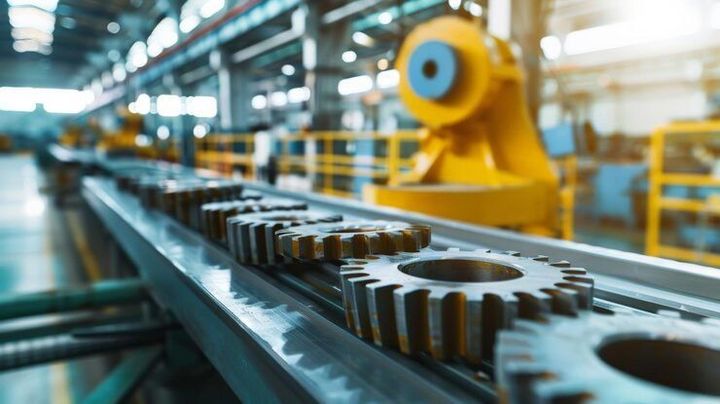
Industrial Gear Manufacturing Guide: Gear Types, Production Methods, Materials and Applications
Gears are toothed mechanical components used to transfer rotational motion and power from one shaft to another. Industrial gear manufacturing combines design, material selection, machining, heat treatment, finishing, and inspection to produce gears for vehicles, pumps, conveyors, machine tools, turbines, and factory systems. Understanding gear types, production methods, materials, and applications helps explain how machines control speed, torque, and direction.
Context
What Industrial Gears Are
A gear is a wheel or cylindrical component with teeth arranged around its surface. When two or more gears mesh, the teeth transmit movement between rotating parts. Different tooth shapes and arrangements allow gears to handle different loads, speeds, shaft positions, and operating conditions.
Industrial gear manufacturing developed alongside mechanical engineering as industries needed reliable methods for transmitting rotary motion. Early gear systems used wood and basic metals, while modern production uses engineered steels, alloys, polymers, computer-controlled machining, and precise inspection methods.
Common Gear Types
Gear selection depends on the position of the shafts and the movement required. Common types include:
- Spur gears, which have straight teeth and are used with parallel shafts.
- Helical gears, which have angled teeth that engage gradually for smoother motion.
- Bevel gears, which transfer motion between intersecting shafts, often at an angle.
- Worm gears, which combine a worm and gear to provide substantial speed reduction in a compact arrangement.
- Rack and pinion systems, which convert rotary motion into linear movement.
- Planetary gears, which use several gears around a central gear in compact transmission systems.
How Gear Manufacturing Works
A typical production sequence begins with engineering drawings or digital models. The selected material is cut or formed into a suitable blank, followed by tooth generation, heat treatment when required, finishing, cleaning, and inspection.
Tooth generation can involve hobbing, shaping, milling, broaching, or specialized processes. Finishing may include grinding or honing when particular surface conditions and dimensional accuracy are required.
Importance
Why Gears Matter in Modern Equipment
Gears influence how machinery starts, moves, changes speed, and handles rotational loads. A suitable gear arrangement can allow a motor to operate at one rotational speed while connected equipment operates at another.
Gears are present in many systems that people encounter indirectly every day. Examples include:
- Automotive transmissions and drive systems
- Industrial robots and automated machinery
- Conveyors and material-handling equipment
- Pumps, compressors, and process equipment
- Wind turbines and power-generation machinery
- Machine tools and production equipment
- Agricultural and construction machinery
Design and Production Challenges
Gear manufacturing requires attention to tooth geometry, alignment, material properties, lubrication, heat treatment, and surface finish. Small dimensional differences can affect tooth contact and load distribution.
Noise, vibration, wear, overheating, and tooth damage can occur when a gear system is poorly designed, incorrectly assembled, inadequately lubricated, or operated outside its intended conditions. Inspection and controlled production processes are therefore important parts of industrial gear production.
Materials Used for Gears
Material selection depends on load, speed, temperature, environment, and expected operating conditions. Common choices include alloy steels, carbon steels, stainless steels, cast iron, bronze, brass, and engineering plastics.
Steel gears are widely used where strength and durability are important. Bronze and brass can be used in particular gear combinations, including some worm-drive arrangements. Engineering plastics can be useful where lower mass, reduced noise, or resistance to particular environments is relevant.
| Material | Typical characteristics | Example applications |
|---|---|---|
| Alloy steel | High strength and heat-treatment potential | Industrial transmissions |
| Carbon steel | General mechanical applications | Moderate-load gear systems |
| Stainless steel | Corrosion resistance | Selected processing environments |
| Cast iron | Rigidity and vibration damping | Large machinery |
| Bronze | Sliding and wear characteristics | Worm gear systems |
| Engineering plastics | Low mass and lower operating noise | Light-duty mechanisms |
Recent Updates
Digital and Automated Manufacturing
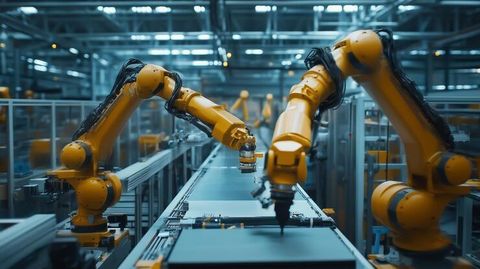
From 2024 through 2026, industrial manufacturing has continued moving toward CNC machining, automated inspection, digital production records, robotics, and connected equipment. These technologies can improve process monitoring and make dimensional information available throughout production.
India's manufacturing policy direction has placed greater emphasis on technology, quality, workforce development, and advanced manufacturing. The National Manufacturing Mission announced in the 2025–26 Union Budget identified technology availability and quality products among its focus areas.
Advanced Manufacturing Technologies
Recent manufacturing programs increasingly include artificial intelligence, machine learning, digital twins, robotics, advanced materials, and additive manufacturing. A NITI Aayog roadmap released in 2025 identified these technologies as important manufacturing enablers. A government consultation in 2026 also examined CNC machine tools, robotics, testing and metrology, and additive manufacturing.
For gear production, these technologies can support digital inspection, process monitoring, automated material handling, predictive analysis, and connected production planning. Traditional gear-cutting methods remain important while operating alongside digital manufacturing systems.
Precision and Quality Control
Gear standards and inspection practices also continue to develop. BIS records show recent reviews of standards covering cylindrical gear accuracy, spur and helical gear load capacity, and cylindrical gear inspection methods.
Laws or Policies
Indian Standards and Machinery Rules
In India, gear manufacturing can be affected by product standards, machinery safety requirements, environmental rules, workplace safety requirements, and sector-specific regulations. The applicable requirement depends on the product, machinery category, manufacturing activity, and intended use.
BIS provides access to Indian Standards and related technical information. Its Scheme-X information lists gears and gearing, toothed wheels, gearboxes, speed changers, and related assemblies among machinery and equipment categories covered by the machinery safety framework.
Manufacturers can use the BIS “Know Your Standard” platform to search standards by product name or IS number and review related documents, amendments, testing information, laboratories, and certification details.
Workplace and Environmental Requirements
Gear production can involve cutting fluids, heat treatment, grinding, metal waste, noise, electrical equipment, and moving machinery. Facilities therefore need to consider applicable occupational safety, pollution-control, waste-management, fire-safety, and factory regulations.
India's labour framework includes the Occupational Safety, Health and Working Conditions Code, with central rules and implementation requirements developing through the government process. Businesses should check the current central and state requirements that apply to their operations.
Manufacturing Policy
Government manufacturing programs also influence the wider environment in which gear manufacturers operate. The National Manufacturing Mission covers small, medium, and large industries and emphasizes technology availability, quality, workforce readiness, and a stronger manufacturing ecosystem.
Tools and Resources
Design and Engineering Tools
Engineers commonly use CAD software to create gear geometry and assemblies. Gear-design calculators can help estimate relationships involving module, pitch diameter, tooth count, speed ratio, and center distance. More advanced engineering software can analyze tooth contact, load distribution, stresses, and motion.
Manufacturing and Inspection Tools
Common production and inspection equipment includes:
- CNC lathes and machining centers for preparing gear blanks and related components
- Gear hobbing and shaping machines for generating teeth
- Gear grinding and honing equipment for finishing
- Coordinate measuring machines for dimensional inspection
- Gear measurement systems for checking tooth geometry
- Hardness testers for evaluating heat-treated materials
- Surface-finish instruments for measuring finished surfaces
BIS's standards database is a useful reference for identifying relevant Indian Standards. The Ministry of Heavy Industries also provides information on India's machine-tool and capital-goods ecosystem, including CNC and gear-cutting equipment.
Basic Gear Data to Understand
Readers researching gear systems may encounter terms such as module, diametral pitch, pressure angle, pitch diameter, backlash, gear ratio, face width, hardness, and accuracy grade. Understanding these terms makes technical documents and equipment specifications easier to interpret.
FAQs
What is industrial gear manufacturing?
Industrial gear manufacturing is the controlled process of designing, forming or machining, heat treating when required, finishing, and inspecting gears used in mechanical equipment. The process varies according to gear type, material, size, accuracy, and operating requirements.
What are the main gear types used in industry?
Common industrial gear types include spur, helical, bevel, worm, rack and pinion, and planetary gears. Each type is suited to different shaft arrangements, motion requirements, speed relationships, and load conditions.
What materials are used in gear manufacturing?
Gear materials include alloy steel, carbon steel, stainless steel, cast iron, bronze, brass, and engineering plastics. The selected material depends on load, temperature, environment, lubrication, and required mechanical properties.
Which production methods are used for industrial gear manufacturing?
Common methods include hobbing, shaping, milling, broaching, grinding, and honing. Some gears begin with forged, cast, or machined blanks before tooth production and finishing.
How are industrial gears inspected?
Inspection can include dimensional measurement, tooth-profile checks, runout measurement, hardness testing, surface inspection, and functional testing. The selected inspection method depends on the gear design, accuracy requirement, material, and intended application.
Conclusion
Industrial gear manufacturing combines mechanical design, material selection, tooth generation, heat treatment, finishing, and inspection. Spur, helical, bevel, worm, rack and pinion, and planetary gears serve different mechanical purposes. Current manufacturing trends are bringing CNC equipment, robotics, digital inspection, advanced materials, and connected production methods into wider use. In India, manufacturers also operate within a framework of standards, machinery safety requirements, workplace rules, and environmental regulations.

You May Also Like