Industrial Motors Explanation: Construction, Working Principles, Drive Systems and Applications
Industrial motors are electrical machines that convert electrical energy into mechanical motion for equipment used in factories, processing plants, infrastructure, agriculture, transportation, and other industrial environments. An industrial motor may drive a pump, fan, conveyor, compressor, machine tool, mixer, crane, or automated production system. Understanding motor construction, working principles, drive systems, and applications helps explain how modern machinery converts electrical power into controlled movement.
What Are Industrial Motors?
An industrial motor is designed to produce rotational mechanical power from an electrical supply. Although motors are used in many everyday devices, industrial motors are commonly designed for longer operating periods, varying loads, controlled speeds, and demanding environmental conditions.
The basic idea comes from the interaction between electricity and magnetism. When electric current flows through conductors inside a magnetic field, electromagnetic forces are produced. These forces can create rotation, which is transferred through a shaft to the machine being driven.
Industrial motors can use alternating current (AC), direct current (DC), or electronically controlled electrical systems. AC induction motors are widely used in industrial environments because their construction is relatively straightforward and they can operate across many applications.
Main Parts of an Industrial Motor
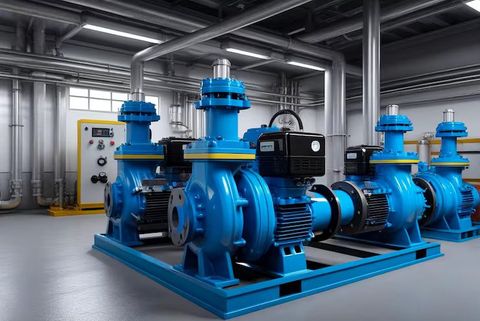
The construction of an industrial motor depends on its type, rating, and intended application. A typical rotating motor contains several important components:
- Stator: The stationary part containing windings or magnetic structures.
- Rotor: The rotating part positioned inside the stator.
- Shaft: Transfers mechanical rotation from the rotor to connected equipment.
- Bearings: Support the rotating shaft and help maintain alignment.
- Housing or frame: Protects internal components and provides mechanical support.
- Cooling system: Removes heat generated during operation.
- Terminal box: Provides electrical connections between the motor and its power supply.
- Insulation system: Separates electrical conductors and helps withstand operating temperatures and voltage.
The relationship between these components determines how efficiently and reliably a motor can convert electrical input into mechanical output.
Importance
Why Industrial Motors Matter
Industrial motors are fundamental to many production and infrastructure systems. They provide the rotational movement required by pumps, fans, compressors, conveyors, machine tools, mixers, material-handling equipment, and automated machinery.
A motor that operates outside its intended conditions can experience excessive heat, vibration, electrical stress, or mechanical wear. Understanding motor characteristics therefore helps operators and engineers interpret issues such as abnormal temperature, unusual noise, speed changes, and changes in electrical consumption.
Energy and Operating Considerations
Motor efficiency has become increasingly important because motors can operate for long periods in industrial environments. Even a relatively small difference in efficiency can influence the electrical energy used over extended operating periods.
Important operating factors include:
- Motor efficiency
- Load level
- Operating hours
- Voltage and frequency
- Power factor
- Starting current
- Speed requirements
- Ambient temperature
- Cooling conditions
- Mechanical alignment
Correct motor sizing is also important. An oversized motor may operate inefficiently under light loads, while an undersized motor can experience excessive loading and heating.
Where Industrial Motors Are Used
Industrial motors are found across many sectors. Common applications include:
| Application | Typical Motor Role | Common Control Requirement |
|---|---|---|
| Pumps | Drives impellers | Flow and pressure control |
| Fans and blowers | Rotates fan assemblies | Speed adjustment |
| Conveyors | Moves materials | Start, stop, and speed control |
| Compressors | Drives compression equipment | Load and pressure control |
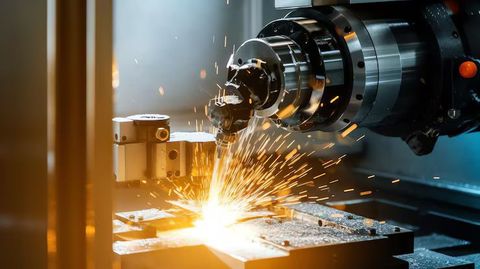
| Machine tools | Drives cutting mechanisms | Speed and torque control |
| Cranes | Provides lifting movement | Torque and braking control |
| Mixers | Rotates mixing equipment | Speed and torque control |
| HVAC equipment | Drives fans and pumps | Variable-speed operation |
Recent Updates
Higher Motor Efficiency
Recent developments in industrial motors have focused on energy efficiency, electronic control, monitoring, and integration with automated production systems. In India, the Bureau of Energy Efficiency has continued to maintain motor efficiency labeling approaches using efficiency classes such as IE2 and IE3, with higher efficiency bands incorporated into its labeling framework.
The Bureau of Indian Standards also lists a 2026 revision of IS 12615 covering line-operated three-phase AC motors, reflecting continuing development of efficiency and performance requirements for electric motors in India.
Variable-Speed Operation
Variable frequency drives, commonly called VFDs, have become an important part of modern motor systems. A VFD changes the frequency and voltage supplied to an AC motor, allowing its rotational speed to be controlled.
Variable-speed operation can be useful where equipment does not need to operate continuously at one fixed speed. Pumps, fans, conveyors, and processing machinery are examples where motor speed may need to change according to operating conditions.
Smart Monitoring and Automation
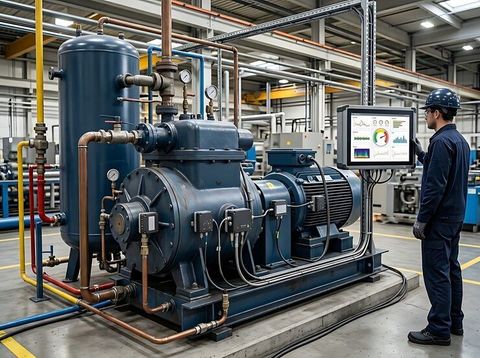
Industrial motor systems are increasingly connected to automation and monitoring platforms. Sensors can measure variables such as temperature, vibration, current, voltage, speed, and operating status.
These measurements can help identify changes in motor behavior before they develop into more significant equipment problems. Integration with industrial automation, condition monitoring, and predictive maintenance systems is therefore becoming more common.
Electrification and Efficiency
Industrial energy management has also placed greater attention on efficient electrical equipment. BEE's industrial energy-efficiency programs include initiatives covering large industries and small and medium enterprises, while current policy resources address energy consumption and equipment efficiency.
Laws or Policies
Indian Motor Standards
In India, industrial motors are influenced by standards and energy-efficiency requirements administered through organizations such as the Bureau of Indian Standards and the Bureau of Energy Efficiency.
IS 12615 is an important Indian standard associated with energy-efficient three-phase squirrel-cage induction motors. BIS currently lists electrical motors under its compulsory certification framework associated with this standard.
The 2026 revision of IS 12615 addresses line-operated three-phase AC motors and their efficiency classes and performance requirements.
Energy Conservation Requirements
The Energy Conservation Act provides a broader framework for regulating energy efficiency in India. BEE explains that the Act enables regulation of energy consumption standards for industrial equipment and appliances, including motors, and provides mechanisms for inspection and enforcement.
For buildings, applicable energy-conservation codes can also establish requirements for motor efficiency in specified applications. BEE documentation describes efficiency requirements for certain permanently wired polyphase motors based on operating hours and motor rating.
The exact requirements applicable to a particular motor depend on its type, rating, installation, industry, and the regulations or standards applicable to that installation.
Tools and Resources
Motor Selection and Calculation Tools
Several technical tools can help users understand motor performance. Motor calculators can estimate relationships between power, torque, speed, current, and efficiency.
Useful calculations include:
- Mechanical power: approximately related to torque and rotational speed.
- Electrical input power: determined by voltage, current, power factor, and electrical configuration.
- Efficiency: mechanical output power divided by electrical input power.
- Energy consumption: electrical power multiplied by operating time.
- Motor speed: influenced by supply frequency and motor design.
These calculations provide useful background information, but actual industrial equipment should be evaluated using its nameplate data and applicable technical documentation.
Motor Nameplate Information
A motor nameplate provides important information about the machine. Typical details include rated voltage, current, frequency, power, speed, efficiency, power factor, insulation class, enclosure type, and duty rating.
Reading the nameplate is often the first step in understanding whether a motor is appropriate for a particular electrical and mechanical system.
Online Technical Resources
Useful reference resources include the Bureau of Indian Standards for Indian standards and certification information and the Bureau of Energy Efficiency for energy-efficiency programs, motor labeling information, technical publications, and energy-conservation resources.
Manufacturer technical manuals, motor calculators, electrical measurement instruments, vibration monitoring equipment, and drive configuration software can also help explain or evaluate motor systems.
FAQs
What are industrial motors used for?
Industrial motors convert electrical energy into mechanical motion for equipment such as pumps, fans, conveyors, compressors, cranes, mixers, machine tools, and automated production systems.
How do industrial motors work?
Most industrial motors use electromagnetic forces to create rotation. In an AC induction motor, the stator creates a rotating magnetic field that induces current in the rotor, producing torque and shaft rotation.
What is the role of a motor drive system?
A motor drive system controls how electrical power reaches and operates a motor. A VFD, for example, can adjust the frequency and voltage supplied to an AC motor to control its speed and operating behavior.
What is motor efficiency?
Motor efficiency describes how effectively a motor converts electrical input power into mechanical output power. Efficiency is normally expressed as a percentage, with some energy lost as heat, sound, magnetic losses, and mechanical losses.
Why are IE efficiency classes important for industrial motors?
IE efficiency classes provide a standardized way to describe motor energy efficiency. In India, IS 12615 and related BEE labeling frameworks address efficiency classes for applicable motors, including IE2 and IE3 categories.
Conclusion
Industrial motors convert electrical energy into mechanical movement and support a wide range of equipment used in manufacturing, infrastructure, processing, and material handling. Their construction generally includes a stator, rotor, shaft, bearings, housing, insulation, and cooling arrangements. Modern motor systems increasingly incorporate higher efficiency classes, variable-speed drives, sensors, automation, and monitoring technologies. In India, motor efficiency and performance are shaped by BIS standards, BEE programs, and energy-conservation regulations applicable to particular equipment and installations.