Metal Polishing Machines Basics: Working Principles, Types, Uses and Maintenance Practices
Metal polishing machines are industrial and workshop machines used to improve the surface condition of metal components. They remove surface marks, oxidation, rough areas, burrs, and other imperfections through controlled mechanical action. Understanding metal polishing machines basics, including their working principles, types, uses, and maintenance practices, helps readers understand how different metals can be processed for appearance, smoothness, cleanliness, or functional requirements.
What Are Metal Polishing Machines?
Metal polishing machines are mechanical systems designed to process the surface of metal parts. Depending on the machine design, a rotating wheel, abrasive belt, polishing disc, brush, or other finishing medium makes controlled contact with the workpiece.
Polishing is related to several surface-finishing processes, including grinding, buffing, deburring, and burnishing. These processes can have different purposes, so a machine selected for heavy material removal may not be suitable for producing a fine reflective surface.
How Metal Polishing Developed
Traditional metal finishing was often performed manually using files, abrasive materials, cloths, and hand-operated tools. As manufacturing expanded, machines were developed to provide more consistent movement, pressure, and rotational speed.
Modern equipment ranges from compact bench machines to automated production systems. Some machines are designed for individual components, while others can process multiple parts with limited manual handling.
Basic Working Principle
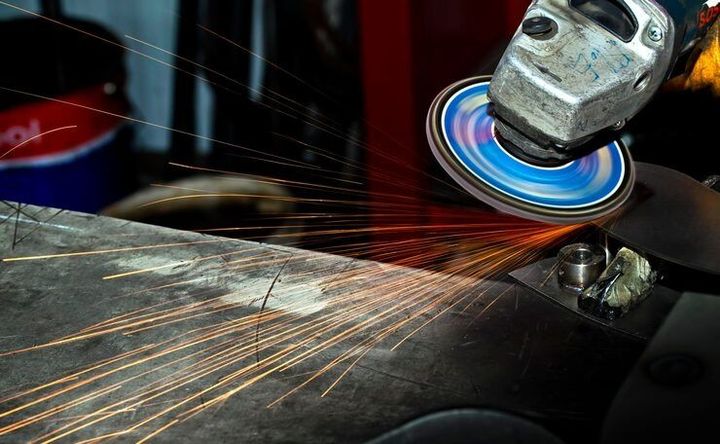
Most metal polishing machines use controlled friction between an abrasive or polishing medium and the metal surface. The machine supplies movement while the selected medium interacts with the workpiece.
The general process may include:
- Surface preparation to remove dirt, oil, rust, or loose material.
- Abrasive processing to reduce scratches, burrs, or uneven areas.
- Intermediate polishing to refine the surface.
- Fine polishing or buffing to create the required finish.
- Cleaning and inspection to check the processed surface.
The result depends on factors such as metal type, abrasive grade, machine speed, pressure, processing time, and the condition of the workpiece.
Importance
Why Metal Surface Finishing Matters
Metal surfaces can develop scratches, oxidation, burrs, machining marks, and uneven textures during manufacturing or handling. Surface treatment can help create a more consistent appearance and, depending on the application, improve cleanliness and reduce surface irregularities.
The appropriate finishing process also depends on the intended use of the component. Decorative parts may require a different surface treatment from machinery components, cookware, medical equipment, architectural elements, or automotive parts.
Industries That Use Polishing Machines
Metal polishing equipment is used across many manufacturing and fabrication environments. Common applications include:
- Automotive component manufacturing
- Aerospace component processing
- Metal fabrication
- Stainless-steel production
- Machinery manufacturing
- Architectural metalwork
- Kitchen and household equipment
- Medical and laboratory equipment
- Hardware production
- Precision component manufacturing
Different industries can have different surface-finish requirements. For example, a component intended for visual presentation may require a smooth and uniform appearance, while an engineering component may require controlled surface characteristics for functional reasons.
Common Metals Processed
Metal polishing machines can be configured for various materials. Stainless steel, aluminum, brass, copper, carbon steel, and other alloys may be processed using appropriate abrasive and polishing materials.
The choice of equipment and consumables should consider the hardness, shape, heat sensitivity, and surface condition of the metal. Excessive pressure or inappropriate abrasive selection can damage a component rather than improve it.
Comparison of Common Machine Types
| Machine Type | Typical Medium | Common Application | Level of Automation |
|---|---|---|---|
| Bench Polisher | Wheel or buffing pad | Small components | Low |
| Belt Polisher | Abrasive belt | Flat and shaped surfaces | Low to medium |
| Rotary Polisher | Rotating disc or wheel | General finishing | Low to medium |
| Vibratory Finishing Machine | Media and vibration | Multiple small parts | Medium |
| Barrel Finishing Machine | Abrasive media | Batch processing | Medium |
| Automated Polishing System | Robotic or controlled tooling | Repetitive production | High |
Recent Updates
Automation and Process Control
A significant current trend in metal polishing is greater use of automation. Automated systems can control movement, pressure, speed, and processing sequences more consistently than purely manual processes.
Robotic polishing is particularly relevant when components have repeated shapes or when the same finishing sequence is performed many times. Sensors and programmable controls can also help monitor operating conditions.
Dust and Workplace Monitoring
Modern manufacturing environments increasingly pay attention to airborne particles generated during grinding and polishing. Extraction systems, enclosed processing areas, protective equipment, and workplace monitoring can help manage exposure to dust and abrasive particles.
Equipment design is also moving toward better containment of polishing residues. These developments reflect wider attention to workplace safety and environmental management.
Energy and Material Efficiency
Manufacturers are also examining how machine settings, abrasive selection, and process duration affect energy use and material consumption. Efficient process planning can reduce unnecessary processing and help maintain consistent results.
Digital monitoring is becoming more common in industrial equipment. Depending on the system, operators may be able to record operating parameters, identify process variations, and schedule maintenance based on machine condition.
Laws or Policies
Workplace Safety in India
In India, metal polishing activities can fall under workplace safety and occupational health requirements depending on the facility, industry, machinery, and applicable state and central regulations. The Occupational Safety, Health and Working Conditions Code, 2020 provides a broad legislative framework concerning occupational safety, health, and working conditions.
Factories may also need to consider requirements concerning machinery safeguards, ventilation, workplace conditions, protective equipment, and worker safety. The exact requirements can vary according to the type of establishment and applicable implementation rules.
Environmental Considerations
Metal polishing can generate dust, used abrasive materials, wastewater in some wet-processing operations, and other residues. Facilities may therefore need to follow applicable environmental requirements relating to emissions, waste handling, water discharge, and hazardous materials.
The relevant authority and requirements depend on the process and location. In India, state pollution control boards can have an important role in environmental compliance for industrial facilities.
Tools and Resources
Machine Selection Tools
Manufacturers and engineering teams can use equipment specifications, abrasive selection guides, process charts, and machine manuals when evaluating polishing systems. Important specifications can include motor power, spindle speed, belt dimensions, working area, permissible component size, and automation features.
A simple comparison worksheet can help organize information before selecting equipment. Useful comparison fields include:
- Metal type
- Component dimensions
- Desired surface condition
- Initial surface roughness
- Abrasive type
- Processing method
- Machine capacity
- Operating speed
- Safety features
- Maintenance requirements
Measurement and Inspection Tools
Surface-finish inspection may involve visual inspection, surface roughness measurement, dimensional measurement, and cleanliness checks. A surface roughness tester can provide numerical measurements when a specified roughness value is required.
Digital calipers, micrometers, inspection lights, and magnification tools may also be used depending on the component. Machine manuals and abrasive manufacturer documentation can provide additional information about appropriate operating parameters.
Maintenance Resources
Maintenance records are useful for tracking inspection dates, abrasive changes, lubrication, belt or wheel replacement, electrical checks, and unusual machine behavior. Manufacturer manuals should be consulted for machine-specific maintenance intervals and operating limitations.
A basic maintenance checklist can include:
- Inspecting belts, wheels, pads, and guards
- Checking fasteners and moving parts
- Cleaning accumulated polishing residue
- Inspecting electrical connections
- Checking ventilation and extraction systems
- Monitoring unusual vibration or noise
- Recording component or abrasive changes
FAQs
What are metal polishing machines used for?
Metal polishing machines are used to process metal surfaces by reducing scratches, burrs, oxidation, machining marks, and surface irregularities. The specific result depends on the machine, abrasive, metal, and processing method.
What are the main types of metal polishing machines?
Common types include bench polishers, belt polishing machines, rotary polishers, vibratory finishing machines, barrel finishing systems, and automated polishing equipment. Each type is suited to different component shapes and finishing requirements.
How do metal polishing machines work?
Most metal polishing machines work by moving an abrasive or polishing medium against a metal surface at a controlled speed and pressure. Material is gradually removed or refined until the required surface condition is reached.
How often should metal polishing machines be maintained?
Maintenance frequency depends on machine design, operating hours, abrasive use, environmental conditions, and manufacturer specifications. Routine inspection and cleaning can help identify worn components, unusual vibration, residue buildup, or other operating problems.
Can metal polishing machines process stainless steel and aluminum?
Yes, many machines can process stainless steel and aluminum when suitable abrasives, polishing compounds, speeds, and process settings are used. Because different metals respond differently to heat and abrasion, process parameters should be matched to the material.
Conclusion
Metal polishing machines use controlled mechanical action to improve and refine metal surfaces for different manufacturing and finishing requirements. The main equipment categories include bench, belt, rotary, vibratory, barrel, and automated polishing systems, with each suited to particular applications. Current developments emphasize automation, process monitoring, workplace safety, dust management, and more controlled material use. Proper machine operation, inspection, and maintenance are important parts of maintaining consistent processing conditions.