Parcel Sorting Machines Guide: Types, Working Principles, Applications and Selection Factors
Parcel sorting machines are automated systems used to identify, organize, and direct packages toward different destinations. They are commonly found in parcel hubs, warehouses, postal facilities, distribution centers, and e-commerce logistics networks where large numbers of packages must be processed in an organized sequence.
The basic idea behind parcel sorting is not new. Manual sorting has long been used in postal and warehouse operations, with workers reading addresses, checking labels, and placing packages into destination groups. As parcel volumes increased, automated equipment became more important for handling repetitive sorting activities.
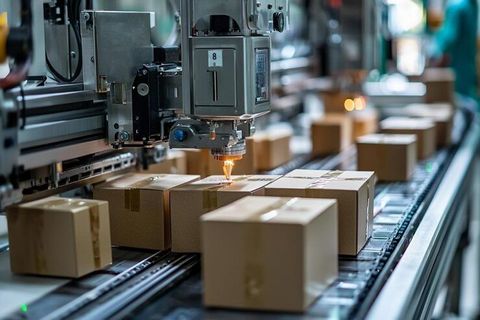
Modern parcel sorting machines combine conveyors, barcode scanners, cameras, sensors, software, and mechanical or robotic components. Depending on the system, a package may be identified by a barcode, QR code, address image, RFID tag, or other digital information. The machine then determines where the parcel should go and directs it to an appropriate chute, conveyor, container, or processing area.
Parcel sorting machines can vary considerably in size and design. Some systems handle small packages at moderate volumes, while larger installations are designed for distribution hubs processing thousands of parcels through multiple destinations.
Importance
Why parcel sorting matters
The growth of online shopping, direct-to-consumer distribution, postal activity, and regional warehousing has increased the need for organized parcel handling. A sorting center may receive packages intended for different cities, delivery zones, transportation routes, or downstream facilities.
Without organized sorting, parcels may require extensive manual handling. This can create challenges such as misplaced packages, repeated handling, congestion, inconsistent routing, and difficulty maintaining accurate tracking information.
Parcel sorting machines help organize these activities by connecting physical package movement with digital identification. A typical process may involve:
- Identification: A barcode, label, image, or RFID tag is detected.
- Data processing: Software matches the identification information with routing data.
- Direction: The machine determines the appropriate destination.
- Sorting: Mechanical equipment moves the parcel toward the selected location.
- Tracking: System records can be updated as the parcel passes through processing stages.
Who uses parcel sorting machines?
These systems are relevant to postal organizations, e-commerce distribution centers, courier networks, third-party logistics operators, manufacturers, wholesalers, and large warehouses. They are particularly useful where parcels have many different destinations and need to be processed repeatedly throughout the day.
For general consumers, the technology is mostly invisible. However, it can influence how parcels move through distribution networks and how tracking information is generated during transportation.
Types of Parcel Sorting Machines
Cross-belt sorters
Cross-belt sorters use a series of carriers fitted with moving belts. When a parcel reaches its assigned destination, the belt moves sideways and transfers the parcel onto a designated chute or conveyor.
These systems can handle parcels with different destinations in a continuous flow. Their design makes them suitable for facilities where many destination points must be managed.
Sliding-shoe sorters
Sliding-shoe sorters use small sliding mechanisms attached to a conveyor. When a parcel reaches its assigned position, a shoe moves across the conveyor and guides the parcel toward the required lane.
This design is commonly associated with high-volume parcel and distribution environments because packages can be diverted without stopping the entire conveyor.
Tilt-tray sorters
Tilt-tray systems use trays mounted along a moving track. A tray tilts at the assigned location, allowing the parcel to slide into a chute or container.
They can be useful when many destinations must be arranged along a sorting line. Their configuration can also support automated routing based on parcel identification data.
Wheel and roller sorters
Wheel or roller-based machines use controlled wheels or rollers to change the direction of packages. They are often integrated with conveyor systems and can be used for applications involving different package dimensions.
Robotic sorting systems
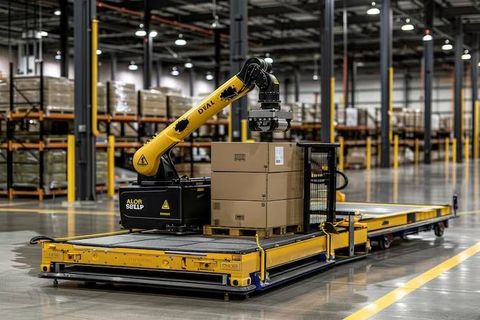
Robotic systems use robotic arms, autonomous equipment, cameras, sensors, and software to move packages between locations. These systems can be designed around specific warehouse layouts and package-handling requirements.
Robotic sorting is increasingly associated with facilities that require flexible handling and greater integration between physical equipment and warehouse software.
Working Principles of Parcel Sorting Machines
Package induction
The process generally begins when a parcel enters the sorting line. Operators or automated equipment place the package onto an induction conveyor while maintaining enough spacing between parcels for accurate identification.
Scanning and identification
Barcode scanners and cameras capture information from the package. Optical character recognition can sometimes be used to interpret printed address information when a machine-readable barcode is unavailable or insufficient.
The identification system sends information to sorting software, which compares the package data with routing instructions.
Routing decision
The software determines the intended destination based on information such as postal code, delivery zone, transportation route, facility code, or another routing identifier.
The routing decision is then communicated to the sorting equipment. The exact process depends on the machine architecture and software integration.
Physical sorting
After the destination is determined, the package reaches a mechanical sorting point. A cross-belt, sliding shoe, tilt tray, roller, wheel, robotic arm, or another mechanism redirects it toward the appropriate destination.
Monitoring and exception handling
Not every package can be processed automatically. Damaged labels, unusual dimensions, unreadable barcodes, excessive weight, or irregular shapes can cause an exception.
Such parcels may be directed to a manual inspection area. This allows the main sorting process to continue while unusual packages are handled separately.
Applications of Parcel Sorting Machines
Parcel sorting machines are used in several areas of logistics and distribution.
| Application | Typical Purpose | Common Sorting Information |
|---|---|---|
| E-commerce warehouses | Organizing outbound parcels | Delivery zone, route, order data |
| Postal facilities | Grouping mail and parcels | Postal code, destination |
| Courier hubs | Routing shipments | Hub, route, destination |
| Distribution centers | Moving goods between areas | Store, region, shipment code |
| Manufacturing logistics | Organizing internal shipments | Production area, destination |
| Returns processing | Separating returned packages | Return location, category |
The systems can also be integrated with warehouse management systems, transportation management platforms, barcode databases, weighing equipment, dimensioning systems, and tracking platforms.
Recent Updates
Greater automation and digital integration
From 2024 through 2026, logistics development in India has continued to emphasize digital integration, automation, standardized processes, and improved visibility across supply chains. Government initiatives connected with the National Logistics Policy have supported digital logistics infrastructure and technology adoption.
The Department of Posts has also described modernization of parcel processing, including automation, standardized workflows, real-time tracking, and the use of parcel sorting technologies. These developments indicate a broader movement toward digitally connected parcel-processing networks.
Smarter logistics infrastructure
Recent logistics programs have placed greater attention on multimodal transportation, standardized warehousing, digitalization, and smart logistics systems. These changes can influence how parcel sorting equipment is connected with warehouse software, transportation systems, and tracking platforms.
Artificial intelligence, machine vision, improved sensors, and data-driven routing are also becoming more relevant to automated sorting. Their practical use depends on package characteristics, facility design, data quality, and system integration.
Laws or Policies
National logistics framework
In India, parcel sorting operates within a broader logistics environment shaped by the National Logistics Policy and related digital infrastructure initiatives. The policy promotes technology adoption, digitization, standardization, and improved tracking across the logistics value chain.
The Unified Logistics Interface Platform has also been developed to support API-based integration and greater digital connectivity across logistics activities.
GST and e-way bill requirements
Movement of goods in India can be subject to GST documentation requirements. Under the e-way bill framework, specified movement of goods above the applicable threshold requires electronic information to be furnished before transportation begins.
Sorting equipment itself does not determine tax compliance. Instead, the information processed by logistics systems may form part of broader shipment records maintained by businesses and transport operators.
Legal Metrology requirements
India's Legal Metrology framework regulates specified weighing and measuring instruments and packaged-commodity declarations. The government has also issued amendments to the Packaged Commodities Rules during 2025 and 2026.
Where parcel operations use weighing or dimensioning equipment for regulated purposes, applicable measurement requirements should be considered. The exact obligations depend on the equipment, activity, and type of goods involved.
Tools and Resources
Several tools can help organizations understand or plan parcel sorting operations. Barcode and QR-code readers can be used to test identification processes, while dimensioning equipment can record parcel length, width, and height.
Warehouse management systems and transportation management platforms can provide routing and inventory information to sorting equipment. Simulation software can also be used to study conveyor layouts, parcel flows, bottlenecks, and destination requirements before physical changes are made.
For Indian logistics information, readers can refer to government resources such as the Department for Promotion of Industry and Internal Trade, the Central Board of Indirect Taxes and Customs, the Department of Consumer Affairs, and India Post. These sources provide information about logistics policy, GST procedures, measurement rules, and postal parcel operations.
Selection Factors
Parcel characteristics
The size, weight, shape, surface material, and packaging condition of parcels affect equipment selection. A system designed primarily for small cartons may not be appropriate for unusually large, flexible, cylindrical, or irregular packages.
Required throughput
Throughput describes how many parcels a system can process within a given period. The required figure depends on incoming parcel volume, operating hours, peak periods, and the number of destinations.
Identification method
A facility may rely on barcodes, QR codes, cameras, RFID, or combinations of these technologies. Identification requirements should match the quality and location of labels used on parcels.
Destination structure
The number of destinations and physical layout of the facility are important factors. A system with many chutes or lanes may be appropriate for a large number of routing points, while a simpler configuration may suit fewer destinations.
Integration requirements
Sorting equipment may need to exchange information with warehouse management software, conveyor controls, weighing systems, tracking databases, and other platforms. Compatibility and data communication should therefore be considered alongside the physical machine.
Safety and maintenance
Moving conveyors, belts, rollers, and mechanical diverters require appropriate guarding, inspection, and operating procedures. Facilities should consider emergency stops, access controls, maintenance areas, noise, and operator safety when planning a sorting installation.
FAQs
What is a parcel sorting machine?
A parcel sorting machine is an automated system that identifies packages and directs them toward different destinations. It can use scanners, cameras, software, conveyors, and mechanical sorting mechanisms.
How do parcel sorting machines work?
A parcel sorting machine generally scans or identifies a package, matches its information with routing data, and then directs the package to a designated conveyor, chute, container, or processing area.
What types of parcel sorting machines are available?
Common types include cross-belt sorters, sliding-shoe sorters, tilt-tray sorters, wheel or roller sorters, and robotic sorting systems. The appropriate design depends on parcel characteristics, throughput, layout, and routing requirements.
Where are parcel sorting machines used?
They are used in postal facilities, e-commerce warehouses, courier hubs, distribution centers, manufacturing logistics areas, and returns-processing operations.
What factors affect parcel sorting machine selection?
Important factors include parcel size and weight, expected throughput, destination count, identification technology, facility layout, software integration, safety requirements, and maintenance needs.
Conclusion
Parcel sorting machines combine identification technology, software, conveyors, sensors, and mechanical equipment to organize parcels according to their destinations. Different designs, including cross-belt, sliding-shoe, tilt-tray, roller, and robotic systems, are suited to different operating conditions. In India, logistics policies and digital initiatives are encouraging greater integration, automation, and visibility across parcel and supply-chain operations.