Smart Water Treatment Guide: Systems, Sensors, Automation and Water Quality Management
A Smart Water Treatment Guide explains how water treatment systems use sensors, automation, digital monitoring, and data analysis to manage water quality. Traditional water treatment relies on physical processes, chemical treatment, and biological methods to remove unwanted substances from water. Smart water treatment builds on these methods by adding connected instruments and control systems that help operators observe conditions and adjust treatment processes.
Context
A Smart Water Treatment Guide explains how water treatment systems use sensors, automation, digital monitoring, and data analysis to manage water quality. Traditional water treatment relies on physical processes, chemical treatment, and biological methods to remove unwanted substances from water. Smart water treatment builds on these methods by adding connected instruments and control systems that help operators observe conditions and adjust treatment processes.
Smart water treatment can be used in municipal water plants, industrial facilities, commercial buildings, wastewater treatment plants, and some residential systems. These systems combine water quality measurements with automated equipment, allowing operators to identify changes in operating conditions and respond more consistently. Their purpose is to support effective treatment, reduce avoidable operating problems, and maintain suitable water quality for the intended use.
Understanding Smart Water Treatment Systems
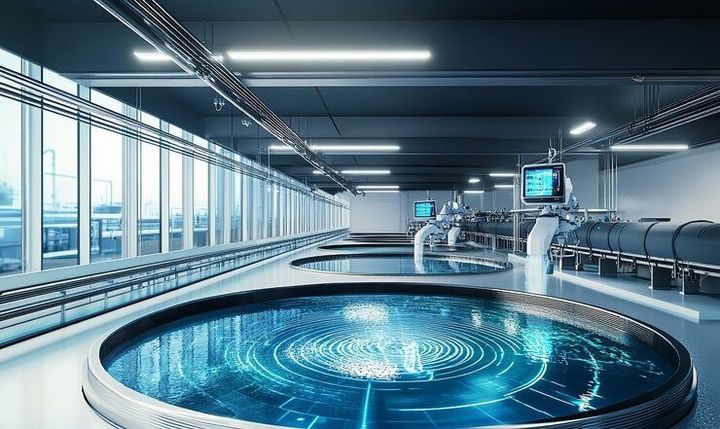
A smart water treatment system generally contains several connected components. Sensors measure selected water characteristics, controllers process measurements, and automated equipment adjusts operations according to defined settings. Supervisory software can display readings, operating trends, and alerts for human review.
Common components include:
Water quality sensors: Instruments that measure characteristics such as pH, turbidity, temperature, electrical conductivity, or dissolved oxygen.
Programmable logic controllers: Industrial computers that operate pumps, valves, dosing equipment, and other machinery according to programmed rules.
Supervisory control and data acquisition systems: Platforms used to monitor industrial processes, record measurements, and display alarms.
Communication networks: Wired or wireless connections that transfer information between instruments, controllers, and monitoring platforms.
Treatment equipment: Filters, membranes, settling tanks, disinfection equipment, and other devices used to improve water quality.
The precise configuration depends on the source water, the substances that need to be removed, the required output quality, and the scale of the facility.
Importance
Smart water treatment matters because communities and industries depend on reliable access to water that meets the requirements of its intended use. Changes in source water, equipment performance, or treatment conditions can affect water quality. Monitoring systems help operators identify these changes and investigate them before they develop into larger operating problems.
Municipal water authorities use treatment systems to prepare water for distribution, while industrial facilities may require water with specific characteristics for manufacturing, cooling, cleaning, or other processes. Wastewater facilities use different treatment stages to reduce pollutants before discharge or reuse. The required treatment level depends on the application and applicable regulations.
Water Quality Management and Monitoring
Water quality management involves measuring relevant characteristics, interpreting the results, and checking whether treatment processes are working as intended. Sensors can provide frequent measurements, while laboratory testing helps verify parameters that cannot be measured continuously or require more precise analysis.
Important water quality indicators include:
pH: Indicates how acidic or alkaline water is and influences many treatment processes.
Turbidity: Measures how cloudy water is because of suspended particles.
Electrical conductivity: Indicates how readily water conducts electricity, which can help assess dissolved ionic substances.
Dissolved oxygen: Measures oxygen present in water and is particularly relevant to biological treatment and aquatic environments.
Residual disinfectant: Measures the remaining concentration of a disinfectant where such monitoring is required.
Total dissolved solids: Represents the combined concentration of dissolved substances, commonly assessed using appropriate analytical methods.
No single measurement establishes that water is safe for every purpose. Drinking water assessment, for example, may require microbiological testing and chemical analysis in addition to routine sensor readings.
Comparing Traditional and Smart Treatment
| Feature | Traditional monitoring | Smart monitoring |
|---|---|---|
| Measurement frequency | Periodic sampling or manual readings | Frequent or continuous readings for selected parameters |
| Data recording | Paper records or separate instruments | Electronic records and trend displays |
| Process adjustment | Operator-directed adjustments | Automated control within configured limits |
| Fault identification | Inspection and scheduled checks | Alerts based on measurements and equipment status |
| Human involvement | Required for operation and interpretation | Still required for oversight, maintenance, and verification |
Smart systems do not eliminate the need for trained operators or laboratory testing. Their effectiveness depends on sensor accuracy, suitable control settings, maintenance, and the quality of the underlying treatment process.
Recent Updates
From 2024 through 2026, smart water treatment has continued to develop alongside wider adoption of industrial digitalization, connected sensors, advanced process controls, and data-based maintenance. The specific technologies adopted vary across regions and facilities, depending on infrastructure, regulatory requirements, technical capacity, and available funding.
Artificial Intelligence and Predictive Monitoring
Some water treatment facilities are exploring artificial intelligence and machine learning to analyze operating data, identify unusual patterns, and estimate when equipment may need attention. These methods can help detect changes in pump performance, filter operation, energy use, or water quality measurements.
However, a software alert is not proof of contamination or equipment failure. Predictive models depend on reliable data and appropriate testing, and unusual readings may result from sensor faults, calibration problems, or changes in operating conditions. Operators must assess alerts and confirm important findings through suitable checks.
Connected Sensors and Automation
Industrial Internet of Things technology connects sensors, controllers, and monitoring software so that measurements can be reviewed across different parts of a treatment plant. Remote monitoring can help authorized staff observe plant conditions without being physically present at every instrument.
Automation can regulate pumping, filtration cycles, chemical dosing, and other operations when suitable control logic is in place. Systems also increasingly emphasize data security, equipment compatibility, and dependable communication networks. Facilities need procedures for responding to network interruptions, instrument failures, and inaccurate readings.
Water Reuse and Resource Efficiency
Water reuse has gained attention as communities and industries address water scarcity, changing rainfall patterns, and increasing demand. Treatment technologies such as membrane filtration, biological treatment, and advanced disinfection can support different reuse applications when designed for the required quality.
Smart monitoring can help track treatment performance, water consumption, and equipment operation. Nevertheless, reclaimed water is not automatically suitable for drinking, agriculture, industrial processes, or environmental discharge. Its permitted use depends on treatment quality, health considerations, and applicable standards.
Laws or Policies
Smart water treatment systems must comply with the rules that apply to their location and intended purpose. Requirements may cover drinking water quality, wastewater discharge, industrial pollution, worker safety, environmental protection, and the handling of monitoring data. The applicable standards differ according to the type of facility and the water being treated.
Water Treatment Regulations in India
In India, water treatment and pollution control are shaped by national legislation, state authorities, and technical standards. The Water (Prevention and Control of Pollution) Act, 1974, provides a framework for preventing and controlling water pollution. The Central Pollution Control Board and State Pollution Control Boards perform functions under the relevant environmental laws and regulatory arrangements.
The Environment (Protection) Act, 1986, also supports environmental regulation, including rules and standards applicable to specified activities. Industrial facilities may need permissions or consent from the relevant pollution control authority and must follow applicable discharge requirements. Requirements depend on the facility, industry, location, and receiving environment.
Drinking Water Quality and Public Programs
The Bureau of Indian Standards publishes drinking water specifications, including IS 10500, which addresses drinking water quality. Relevant public authorities use applicable standards, testing procedures, and monitoring arrangements to assess drinking water. Requirements and implementation should be checked against current official guidance.
The Jal Jeevan Mission has focused on providing rural households with access to tap water in India, including attention to water quality and monitoring. Smart sensors may support monitoring in certain settings, but technology alone does not establish compliance with drinking water requirements. Sampling, laboratory analysis, maintenance, and oversight remain important.
Automation, Safety, and Data Protection
Automated treatment equipment must be designed and operated with appropriate safety controls. Incorrect chemical dosing, faulty instruments, or unauthorized changes to control settings can create risks for workers, equipment, and water quality.
Connected treatment facilities also need to protect operational networks against unauthorized access and disruption. Access controls, software updates, backups, incident procedures, and secure remote connections can help reduce cyber risks. Applicable legal duties depend on the organization, the system, and the information being processed.
Tools and Resources
Several technical resources can help operators, students, engineers, and facility managers understand smart water treatment. The appropriate tool depends on whether the task involves checking water quality, monitoring plant equipment, studying regulations, or planning an automated process.
Water Quality Testing and Monitoring Tools
Portable meters can measure pH, conductivity, temperature, and other selected parameters. Turbidity meters and dissolved oxygen instruments are used for specific monitoring needs, while laboratory methods can assess microbiological and chemical characteristics that require more detailed analysis.
Online sensors can transmit selected measurements to monitoring platforms. Before results are used for operational decisions, instruments need suitable installation, calibration, cleaning, and maintenance. Readings should also be compared with reference methods when required.
Automation and Process Monitoring Platforms
Supervisory control and data acquisition platforms display plant readings, equipment status, alarms, and historical trends. Programmable logic controllers manage defined equipment operations, while historians and reporting software store process information for later analysis.
Digital models and process simulation tools can help engineers examine treatment stages and evaluate possible operating changes. Simulation results depend on the accuracy of assumptions and data, so they do not replace actual performance testing or regulatory verification.
Official Information and Reference Resources
Useful sources in India include the Central Pollution Control Board, State Pollution Control Boards, the Bureau of Indian Standards, and the Ministry of Jal Shakti. Their publications can provide information about applicable environmental rules, drinking water specifications, public programs, and monitoring guidance.
A water quality log can also help organize routine observations. Typical fields include the sampling location, date and time, measured parameter, instrument identification, calibration status, result, applicable limit, and corrective action. Keeping consistent records supports trend review and helps document how unusual readings were handled.
FAQs
What is a smart water treatment system?
A smart water treatment system combines conventional treatment equipment with sensors, automated controls, and digital monitoring. It helps operators track process conditions and adjust selected operations according to defined settings.
Which sensors are used in smart water treatment?
Common instruments measure pH, turbidity, temperature, conductivity, dissolved oxygen, and residual disinfectant. The sensors selected depend on the water source, treatment method, and required quality standards.
How does automation improve water quality management?
Automation can maintain defined operating conditions, record measurements, and alert operators when readings move outside configured limits. Its effectiveness depends on sensor reliability, appropriate control settings, maintenance, and human oversight.
What are the main challenges of smart water treatment systems?
Common challenges include sensor calibration, equipment maintenance, data quality, network reliability, cybersecurity, and the skills needed to operate connected systems. Facilities must also verify that treatment outcomes meet applicable requirements.
Which Indian regulations apply to smart water treatment?
Relevant frameworks may include the Water (Prevention and Control of Pollution) Act, 1974, the Environment (Protection) Act, 1986, and applicable drinking water specifications such as BIS IS 10500. Exact obligations depend on the facility and the intended use of the treated water.
Conclusion
Smart water treatment combines conventional treatment processes with sensors, automation, and digital monitoring to support water quality management. These technologies can improve visibility into operating conditions, but they depend on accurate measurements, appropriate maintenance, and qualified oversight. In India, environmental laws, drinking water specifications, and relevant public programs shape how water treatment systems are managed. Reliable water quality assessment continues to require suitable testing, documented procedures, and compliance with applicable standards.