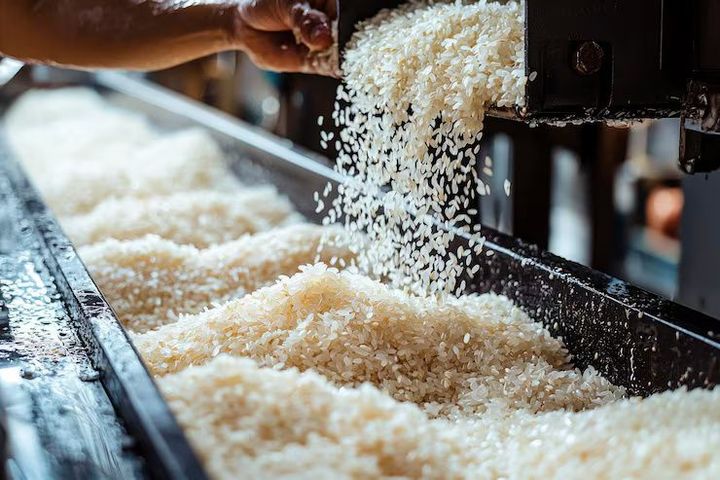
Rice Machines Details: Types, Processing Equipment, Operating Methods and Maintenance Factors
Rice machines are used to transform harvested paddy into edible rice through a sequence of cleaning, dehusking, separation, milling, grading, and handling operations. Understanding rice machines details, including their types, processing equipment, operating methods, and maintenance factors, helps explain how modern rice processing systems work. These machines are used in small rice mills, commercial processing facilities, agricultural operations, and large-scale grain handling systems.
Understanding Rice Processing
Rice begins as paddy, which consists of the rice grain enclosed within an outer husk. After harvesting, the paddy contains materials such as dust, stones, straw fragments, immature grains, and other foreign matter. Rice processing equipment is designed to remove these materials and separate the edible grain from the husk.
Traditional rice processing relied heavily on manual labor and simple mechanical tools. Modern rice machines use a connected sequence of mechanical operations to improve consistency and reduce the amount of manual handling required. The exact arrangement depends on the type of rice, desired output, processing capacity, and whether the process includes parboiling or additional treatment.
Main Stages of Rice Processing
A typical rice processing line can include the following stages:
- Cleaning removes dust, straw, stones, and other foreign materials.
- Destoning separates small stones and dense particles from paddy.
- Dehusking removes the outer husk from the paddy grain.
- Paddy separation separates unhusked paddy from brown rice.
- Whitening removes the bran layers from brown rice.
- Polishing improves the surface appearance of milled rice through controlled surface treatment.
- Grading separates grains according to size and quality characteristics.
- Sorting separates discolored or unwanted grains using optical or mechanical methods.
- Weighing and packaging prepare processed rice for storage or distribution.
The process can be arranged as individual machines or as an integrated rice milling line.
Importance
Why Rice Machines Matter
Rice is a major staple food in many countries, and processing quality affects the amount of usable grain obtained from harvested paddy. Poorly controlled milling can increase broken grains, reduce recovery, or leave unwanted material in the finished product.
Rice machines also address practical challenges associated with handling large quantities of paddy. Mechanical processing provides controlled movement through different stages and can reduce repetitive manual operations.
Problems Addressed by Rice Processing Equipment
Rice processing equipment helps address several common processing challenges:
- Foreign material removal before milling
- Efficient separation of husk and grain
- Control of grain breakage during milling
- Separation of whole and broken grains
- Removal of discolored grains
- Consistent grain sizing
- Reduction of dust within processing areas
- Controlled movement of paddy between processing stages
The requirements differ between small mills and larger processing plants. A small operation may use a compact rice mill, while a larger facility may use separate machines connected through conveyors, elevators, aspiration systems, and control equipment.
Common Rice Machine Types
| Rice machine | Main function | Typical processing stage |
|---|---|---|
| Paddy cleaner | Removes foreign materials | Initial cleaning |
| Destoner | Separates stones and dense particles | Cleaning |
| Paddy husker | Removes rice husk | Dehusking |
| Paddy separator | Separates paddy from brown rice | Separation |
| Rice whitener | Removes bran layers | Milling |
| Rice polisher | Smooths the grain surface | Finishing |
| Rice grader | Separates grains by size | Grading |
| Optical sorter | Detects and removes discolored grains | Sorting |
| Rice elevator | Moves grain between stages | Material handling |
| Packing machine | Measures and packs processed rice | Final handling |
Recent Updates
Automation and Process Monitoring
From 2024 through 2026, rice processing has continued moving toward greater automation and process monitoring. Modern systems can combine sensors, programmable controls, automated material handling, and optical sorting to monitor different stages of processing.
Optical sorting is particularly useful for identifying grains with visible color differences. Automated controls can also help operators monitor machine conditions, grain movement, and processing parameters rather than relying entirely on manual observation.
Rice Fortification Equipment
Rice fortification has also influenced rice processing equipment in India. Fortified rice kernels can be blended with regular milled rice using dedicated blending equipment. Government information indicates that rice fortification infrastructure expanded substantially, with many rice mills installing blending equipment during the national rollout.
However, the policy environment changed in 2026. The Government of India announced a temporary discontinuation of rice fortification under PMGKAY and related welfare schemes while a different nutrient-delivery mechanism is evaluated. Storage conditions, moisture, temperature, humidity, and packaging were identified as factors affecting the stability of fortified rice kernels and fortified rice.
Quality-Focused Processing
Rice quality specifications have also received attention. In 2026, the Government approved revised quality specifications for rice supplied through PMGKAY and other welfare schemes, including lower permitted broken-grain content for specified categories. The phased change is intended to improve the quality of rice supplied through these programs.
These developments demonstrate why rice machines increasingly need to support controlled milling, grading, sorting, and quality monitoring.
Laws or Policies
Food Safety Requirements in India
In India, rice processing is part of the regulated food sector. Food businesses handling food products are subject to requirements administered by the Food Safety and Standards Authority of India (FSSAI). Licensing, registration, hygiene, food handling, and related compliance requirements can apply depending on the nature and scale of the operation.
FSSAI regulations continue to be updated. During 2026, amendments and notifications concerning food-business licensing, laboratories, food safety officers, and related areas were published through the authority's regulatory system.
Rice Quality and Public Distribution
Rice supplied through government food programs can be subject to specifications concerning characteristics such as broken grains, moisture, foreign matter, and other quality parameters. Rice mills participating in government procurement or custom-milling arrangements may therefore need to follow applicable specifications issued by the relevant government departments.
Rice fortification has been another important policy area. The national initiative was expanded across government welfare programs, and its continuation was approved through December 2028 before the temporary 2026 policy change concerning fortification.
Environmental and Workplace Considerations
Rice mills may also be subject to state and local requirements covering emissions, dust, waste handling, noise, electricity, fire safety, building use, and workplace conditions. Specific requirements can vary according to the location, plant capacity, equipment, and applicable approvals.
Tools and Resources
Rice Processing Tools
Several tools help operators understand, monitor, and maintain rice processing systems:
- Moisture meters help measure grain moisture before and during processing.
- Grain sampling tools help collect representative samples for inspection.
- Digital weighing systems help monitor quantities entering and leaving processing stages.
- Paddy cleaners and aspiration systems help control foreign material and lighter particles.
- Laboratory sieves help assess grain size and broken-grain fractions.
- Optical sorting systems identify selected visual defects.
- Vibration and temperature monitoring tools can help identify unusual machine conditions.
- Maintenance checklists help record inspections, lubrication, cleaning, and component replacement.
Operating Methods
A rice milling system generally operates through a controlled sequence rather than treating all paddy in a single machine. Operators first inspect and clean the incoming paddy, then adjust the equipment according to grain condition and processing requirements.
Machine settings can influence husk removal, whitening intensity, grain breakage, and final appearance. Operators therefore monitor the material moving through the system and make adjustments according to equipment instructions and the characteristics of the paddy.
Maintenance Factors
Maintenance is important because rice-processing machinery contains moving parts that can accumulate dust, bran, husk, and other material. A maintenance program commonly includes:
- Cleaning machine surfaces and internal areas according to equipment instructions.
- Inspecting belts, bearings, rollers, screens, fans, and conveyors.
- Checking unusual vibration, heat, noise, or changes in material flow.
- Lubricating components where the machine manufacturer specifies lubrication.
- Inspecting electrical connections and control systems.
- Checking screens, sieves, rubber components, and abrasive surfaces for wear.
- Recording inspections and maintenance activities.
Preventive maintenance can help identify mechanical problems before they interfere with normal processing. Maintenance intervals should be based on machine specifications, operating hours, environmental conditions, and actual equipment condition.
FAQs
What are the main types of rice machines?
Common types include paddy cleaners, destoners, paddy huskers, paddy separators, rice whiteners, polishers, graders, optical sorters, elevators, and packing equipment. Each rice machine performs a specific stage of the processing sequence.
How does rice processing equipment work?
Rice processing equipment works by moving paddy through several controlled stages. Cleaning removes foreign materials, dehusking removes the outer husk, milling removes bran layers, and grading and sorting separate grains according to physical or visual characteristics.
What factors affect rice machine maintenance?
Important factors include operating hours, dust accumulation, grain throughput, component wear, lubrication requirements, vibration, temperature, and electrical condition. Regular inspection helps identify changes that may indicate equipment problems.
What is the purpose of a rice milling machine?
A rice milling machine processes paddy into edible milled rice by removing the husk and, depending on the equipment configuration, removing bran layers and separating different grain fractions.
Are rice machines used for fortified rice processing?
Rice mills can use dedicated blending equipment to combine fortified rice kernels with milled rice. However, government policies concerning fortified rice can change, so equipment requirements depend on the applicable program and current regulatory framework.
Conclusion
Rice machines form a processing chain that converts paddy into cleaned, milled, graded, and sorted rice. Different types of rice processing equipment perform specific tasks, including cleaning, dehusking, whitening, polishing, grading, sorting, and material handling. Recent developments have increased the use of automation, optical sorting, process monitoring, and specialized blending systems, while government quality and food-safety requirements continue to influence processing practices. Proper operation, inspection, cleaning, and maintenance are important factors in maintaining consistent processing performance.