UV Water Purifier Guide: Technology, Components, Filtration Stages and Maintenance Considerations
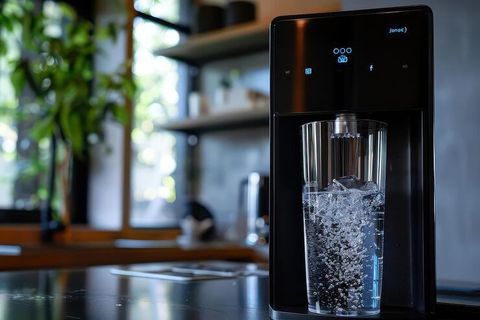
A UV water purifier is a point-of-use water treatment system that uses ultraviolet radiation to reduce microorganisms in water. UV technology has been used in water treatment for many years because ultraviolet light can affect microorganisms without adding a chemical disinfectant to the water. Modern household systems may combine UV treatment with sediment, carbon, or other filtration stages.
The basic principle is relatively simple. Water passes through a chamber containing a UV lamp or UV light source. As microorganisms pass through the chamber, ultraviolet energy can damage their genetic material, reducing their ability to reproduce. The effectiveness of the process depends on factors such as UV intensity, exposure time, water clarity, lamp condition, and system design.
In India, UV-based point-of-use water treatment has a specific Indian Standard. BIS lists IS 14724:2025 as the specification for ultraviolet-based point-of-use water disinfection systems for drinking purposes. This represents a more recent standards framework for UV-based drinking-water systems.
Importance
Why UV water purification matters
Water can contain suspended particles, microorganisms, dissolved minerals, and other substances depending on its source. Municipal supplies, borewells, wells, storage tanks, and other sources can have different water-quality characteristics. A UV water purifier addresses one particular part of water treatment: microbial disinfection.
UV treatment is particularly relevant when the main concern involves microorganisms and when the incoming water has already received suitable physical filtration. UV light itself does not function like a conventional filter that physically traps particles. It also does not generally remove dissolved salts, hardness, or many dissolved chemical contaminants.
For this reason, understanding the complete filtration arrangement is important. A system may contain several stages, each performing a different function.
Common filtration stages
A household UV water purification system may contain stages such as:
- Sediment filtration: Helps reduce suspended particles such as sand, dust, and other visible matter.
- Activated carbon filtration: Can reduce certain organic compounds, chlorine-related substances, and compounds that affect taste or odor, depending on the filter design.
- Fine filtration: Provides additional physical filtration before UV treatment.
- UV disinfection: Uses ultraviolet radiation to reduce viable microorganisms.
- Post-treatment storage: Some systems store treated water in a tank for later use.
Not every UV purifier contains all these stages. The actual arrangement depends on the water source and system design.
UV treatment and water quality
Clear water is generally more suitable for UV treatment because suspended particles can interfere with the passage of ultraviolet radiation. Turbidity and other physical characteristics therefore matter when considering a UV water purifier.
The chemical composition of the incoming water also matters. If water contains elevated dissolved solids, fluoride, arsenic, nitrate, or other chemical contaminants, UV treatment alone is not designed to address those substances. India's drinking-water specification, IS 10500:2012, establishes requirements and testing methods for drinking water quality.
Main components
The principal components can include:
- UV lamp or UV light source
- UV chamber
- Quartz sleeve or equivalent lamp protection
- Electronic ballast or control circuit
- Sediment filter
- Activated carbon filter
- Water-flow control components
- Electrical safety components
- Indicators or monitoring features
- Storage tank, where applicable
The UV chamber is particularly important because it controls how water moves around the ultraviolet source. The chamber needs to provide suitable exposure conditions for the intended treatment performance.
Recent Updates
Developments in UV water purification
Recent developments in India show increasing attention to dedicated standards for point-of-use water treatment technologies. BIS lists IS 14724:2025 specifically for ultraviolet-based point-of-use water disinfection systems for drinking purposes. BIS documentation also lists separate standards for technologies such as RO and ultrafiltration, indicating a more technology-specific approach to household water treatment.
Another relevant development is the continued expansion of drinking-water quality monitoring and household water access programs. The Jal Jeevan Mission has published functionality assessments and updated operational guidelines, including Jal Jeevan Mission 2.0 guidelines. These programs focus on drinking-water availability, functionality, and quality at the public-supply level rather than prescribing one household purification technology.
UV systems are also increasingly designed with electronic monitoring features. Depending on the model, these may indicate lamp operation, operating hours, water flow, or maintenance status. Such features can help users understand the operating condition of the treatment system, although their capabilities vary between systems.
UV LED technology
Ultraviolet light-emitting diodes, commonly called UV LEDs, are another area of technological development. Traditional systems frequently use mercury-based UV lamps, while UV LED systems use semiconductor light sources. UV LEDs can provide compact designs and allow greater flexibility in equipment design.
The suitability of a UV LED system depends on its wavelength, optical design, delivered UV dose, water flow, and overall engineering. Therefore, the presence of a UV LED alone does not determine treatment performance.
Laws or Policies
Indian drinking-water standards
In India, IS 10500:2012 is the principal BIS specification for drinking water quality. It establishes requirements and test methods for water intended for human consumption. The standard includes physical, chemical, and microbiological parameters.
A household UV water purifier is different from the drinking-water quality standard itself. IS 10500 describes water-quality requirements, while a product standard addresses characteristics and testing associated with a particular treatment system.
UV purifier standards
BIS documentation identifies IS 14724:2025 as the Indian Standard titled “Ultraviolet Based Point of Use Water Disinfection System for Drinking Purposes — Specification.” This provides a specific standards reference for UV-based point-of-use drinking-water disinfection systems.
Electrical safety can also be relevant because household purification equipment contains electrical components. BIS references IS 302 (Part 1):2024 for general safety requirements for household and similar electrical appliances in relevant water-treatment standards.
Government drinking-water programs also address source quality, household connections, testing, and monitoring. Jal Jeevan Mission materials provide guidelines and functionality assessments related to drinking-water systems across India.
Tools and Resources
Water-quality testing
Water testing can help identify the characteristics of incoming water before selecting or assessing a treatment approach. Relevant parameters may include turbidity, pH, total dissolved solids, hardness, fluoride, nitrate, arsenic, iron, and microbiological indicators, depending on the source and local conditions.
BIS also references IS 18283:2023 for portable field testing kits for onsite testing of drinking water. Such kits can be useful for preliminary checks, while laboratory testing may be appropriate when detailed analysis is required.
Maintenance records
A simple maintenance record can help track:
| Component or check | What to record | Why it matters |
|---|---|---|
| Sediment filter | Replacement date | Helps monitor particle filtration |
| Carbon filter | Replacement date | Tracks filter usage |
| UV lamp | Operating hours or replacement date | Helps monitor lamp condition |
| UV chamber | Cleaning inspection | Helps maintain light transmission |
| Water quality | Test results | Shows changes in incoming water |
| Flow rate | Periodic observation | Helps identify unusual operation |
Manufacturer documentation should be consulted for the specific replacement interval, cleaning procedure, electrical requirements, and operating conditions of a particular system. UV lamps can gradually lose useful output over their operating life even when the lamp still appears to produce light.
The quartz sleeve or protective surface around a conventional UV lamp also needs attention because deposits or clouding can reduce the amount of UV radiation reaching the water. Maintenance procedures should follow the equipment documentation and appropriate electrical-safety practices.
FAQs
What does a UV water purifier do?
A UV water purifier uses ultraviolet radiation to reduce microorganisms in water. It is primarily a disinfection technology rather than a method for removing dissolved minerals or salts.
Does a UV water purifier remove dissolved solids?
Generally, no. UV treatment is designed for microbial disinfection and does not function as a dissolved-solids removal process. Technologies such as reverse osmosis use different treatment principles for reducing many dissolved substances.
What are the main UV water purifier filtration stages?
Typical stages can include sediment filtration, activated carbon filtration, fine filtration, and UV disinfection. The exact filtration stages vary according to the system design and incoming water characteristics.
How often does a UV lamp need maintenance?
The appropriate replacement or inspection interval depends on the lamp type, operating hours, system design, and manufacturer specifications. A lamp can continue producing visible light while its useful UV output has declined, so visual operation alone is not a reliable indicator of treatment performance.
Is UV purification suitable for every water source?
Not necessarily. UV treatment depends on suitable water clarity and adequate system operation. Water containing significant chemical contaminants, high turbidity, or other quality concerns may require additional treatment technologies.
Conclusion
A UV water purifier uses ultraviolet radiation as a microbial disinfection stage within a point-of-use water treatment system. Sediment and carbon filtration may be used alongside UV treatment to address physical particles and certain taste, odor, or chemical characteristics. Indian drinking-water quality is addressed through standards such as IS 10500:2012, while IS 14724:2025 provides a dedicated standard for ultraviolet-based point-of-use drinking-water disinfection systems. Regular inspection of filters, UV components, water quality, and operating conditions helps maintain awareness of system performance.