Water Pumps Information: Types, Components, Flow Capacity, Pressure and Maintenance
Water pumps are mechanical devices used to move water from one location to another. They are found in homes, farms, buildings, factories, water-supply systems, drainage networks, and irrigation applications. Understanding water pumps, including their types, components, flow capacity, pressure, and maintenance requirements, helps explain how water moves through different systems and why pump selection depends on the characteristics of the application.
What Are Water Pumps?
A water pump converts mechanical energy into hydraulic energy to move water through pipes, tanks, wells, or other systems. Depending on the design, a pump may draw water from a lower level and move it upward, circulate water through a closed system, or transfer water between storage areas.
Water pumps have been used for centuries in different forms. Early systems relied on manual mechanisms, water wheels, and simple lifting devices. Modern pumps use electric motors, engines, solar power systems, and automated controls to provide controlled water movement.
How Water Pumps Work
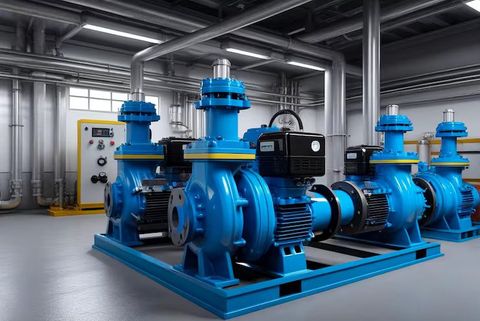
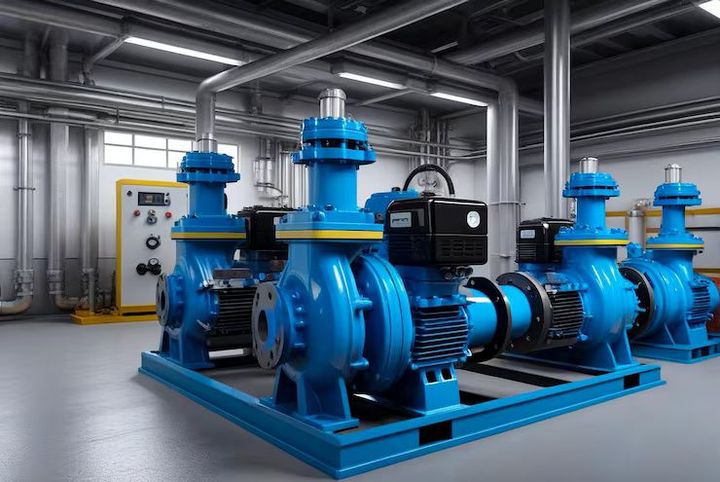
Most modern water pumps use an impeller, diaphragm, piston, or another moving component to create pressure differences that move water. Centrifugal pumps, for example, use a rotating impeller to accelerate water outward and direct it into a discharge pipe.
The basic process generally involves three stages: water enters through the suction side, mechanical energy moves the water inside the pump, and the water leaves through the discharge side. The actual operating process varies according to pump design.
Main Types of Water Pumps
Different water pumps are designed for different water sources, flow requirements, and pressure conditions. Common categories include:
- Centrifugal pumps, commonly used for general water transfer and circulation.
- Submersible pumps, designed to operate while immersed in water.
- Diaphragm pumps, which use a flexible diaphragm to move fluid.
- Reciprocating pumps, which use piston or plunger movement to create flow.
- Jet pumps, commonly associated with shallow or deep water-well applications.
- Solar water pumps, which use electricity generated from photovoltaic systems.
- Axial-flow and mixed-flow pumps, which are used when large volumes of water need to be moved under particular pressure conditions.
The appropriate design depends on factors such as water depth, required flow, pressure, pipe arrangement, and the characteristics of the water.
Importance
Why Water Pumps Matter
Water pumps support many everyday activities and infrastructure systems. Residential buildings may use pumps to move water to elevated tanks, while agricultural systems use them for irrigation. Municipal and community systems can use pumps to transport treated water through distribution networks.
Pumps also play a role in drainage, wastewater handling, industrial processes, cooling systems, construction activities, and groundwater applications. A pump that does not match the operating requirements can experience inefficient operation, excessive wear, unstable flow, or repeated interruptions.
Flow Capacity and Pressure
Two important measurements for understanding water pumps are flow capacity and pressure. Flow capacity describes how much water a pump can move over a particular period, commonly expressed in litres per minute, litres per second, or cubic metres per hour.
Pressure describes the force available to move water through the system. Pump pressure is influenced by factors such as elevation, pipe length, pipe diameter, bends, valves, and resistance within the system.
| Pump factor | What it describes | Common units |
|---|---|---|
| Flow rate | Amount of water moved | L/min, L/s, m³/h |
| Pressure | Force available for water movement | bar, kPa, psi |
| Head | Vertical or equivalent pressure requirement | metres |
| Motor power | Mechanical or electrical input | kW, HP |
| Efficiency | Relationship between useful output and input | Percentage |
Flow and pressure are connected. Increasing the required pressure can reduce the flow a particular pump can deliver, depending on its design and operating conditions. Pump performance is therefore normally evaluated using a pump curve rather than by looking at one specification alone.
Where Water Pumps Are Used
Water pumps can address different water-movement requirements, including:
- Moving water from wells to storage tanks.
- Supplying water to buildings.
- Supporting agricultural irrigation.
- Circulating water in heating and cooling systems.
- Removing accumulated water from low areas.
- Transferring water between tanks.
- Moving wastewater or drainage water.
- Supporting industrial water circulation and processing.
These applications can have significantly different flow and pressure requirements.
Recent Updates
Energy Efficiency and Pump Technology
Recent developments have placed greater attention on energy efficiency, automated controls, variable-speed operation, and improved monitoring. Modern pump systems may use sensors and electronic controllers to adjust operation according to changing water demand.
Variable-frequency drives can regulate motor speed in compatible systems. Instead of operating continuously at one speed, the pump can adjust its operation when system requirements change. This approach can help reduce unnecessary energy use in suitable applications.
Solar and Smart Pumping Systems
Solar-powered water pumping has also become more relevant, particularly for agricultural and remote water applications. Solar pumping systems can combine photovoltaic panels, controllers, motors, pumps, and water storage.
Digital monitoring is another developing area. Sensors can monitor pressure, flow, vibration, temperature, and electrical conditions. When connected to control systems, this information can help identify unusual operating conditions before they develop into larger equipment problems.
Water Conservation
Water conservation has increasingly influenced pumping-system design. Modern water infrastructure places greater emphasis on reducing leakage, improving distribution efficiency, managing groundwater, reusing suitable water, and maintaining reliable supply systems.
In India, national water programmes have continued to emphasize household water connections, source sustainability, water conservation, and local management of water infrastructure.
Laws or Policies
Indian Standards for Water Pumps
In India, the Bureau of Indian Standards provides technical standards covering different types of pumps and pumping equipment. Examples include standards for submersible pumpsets, monoset pumps for clear cold water, openwell submersible pumpsets, solar photovoltaic water pumping systems, sewage and drainage pumps, and hydraulic performance testing.
Relevant standards include IS 8034 for submersible pumpsets and IS 9079 for monoset pumps used for clear, cold water in agricultural and water-supply applications. The applicable standard depends on the pump type and intended use.
Energy-Efficiency Policies
Energy efficiency is another policy consideration for pumping systems. India's Bureau of Energy Efficiency operates standards and labelling programmes for applicable equipment and provides information on energy-performance requirements and labels. Pump efficiency can also be considered within building energy-efficiency frameworks.
Groundwater Regulation
Groundwater extraction is subject to regulatory requirements in India. The Central Ground Water Authority has consolidated guidelines concerning the regulation and control of groundwater extraction, including requirements that can vary according to the type of user and groundwater conditions.
Therefore, installing a pump for groundwater extraction may involve requirements beyond the pump itself. Local groundwater rules, permissions, and applicable state or national requirements should be considered for relevant installations.
Water-Supply Programmes
Government water programmes also influence pumping infrastructure. The Jal Jeevan Mission includes rural water-supply infrastructure and source-sustainability measures such as water conservation, recharge, rainwater harvesting, and greywater management.
Tools and Resources
Pump Performance Information
Pump curves are useful for understanding how a pump behaves at different flow rates and pressure or head conditions. A pump curve can show whether the equipment is likely to operate within the required range.
Flow-rate calculators can help estimate how long a pump may take to move a particular volume of water. Head calculations can also help account for elevation and hydraulic resistance within a piping system.
Maintenance Checklists
A basic water pump maintenance checklist can include:
- Inspecting electrical connections.
- Checking for unusual vibration or noise.
- Examining seals and joints for leakage.
- Cleaning intake screens and filters where applicable.
- Checking valves and pipe connections.
- Monitoring changes in flow or pressure.
- Inspecting the motor and control equipment.
- Keeping records of operating conditions and maintenance activities.
The exact maintenance procedure depends on the pump design and manufacturer instructions.
Standards and Government Resources
The BIS “Know Your Standard” platform allows users to search Indian Standards by standard number or product-related keyword and review associated standard information.
Government water resources such as the Jal Jeevan Mission portal provide information about rural water infrastructure, water conservation, and water-supply programmes. These resources can help readers understand the broader policy environment surrounding water pumping and distribution.
FAQs
What are the main types of water pumps?
Common water pump types include centrifugal, submersible, diaphragm, reciprocating, jet, axial-flow, mixed-flow, and solar-powered pumps. Each design operates differently and is intended for particular flow, pressure, depth, or water-handling conditions.
How is water pump flow capacity measured?
Water pump flow capacity is commonly measured in litres per minute, litres per second, or cubic metres per hour. The actual flow depends on the pump design, operating pressure, system resistance, and installation conditions.
What is the difference between pump pressure and head?
Pressure describes the force exerted by water, while head represents the energy required to move water through a system and is often expressed as a height in metres. Pump specifications may use either measurement or provide information that allows them to be related.
What components are found in a water pump?
Common components include the motor or power source, impeller or pumping mechanism, casing, suction inlet, discharge outlet, shaft, seals, bearings, and control components. The exact components vary according to pump type.
How can water pump maintenance help equipment operation?
Routine maintenance can help identify leakage, blockage, unusual vibration, electrical problems, and changes in flow or pressure. Regular inspection also provides information about changing operating conditions and potential mechanical wear.
Conclusion
Water pumps are used to move water through residential, agricultural, industrial, drainage, and public water systems. Their performance depends on factors such as pump type, components, flow capacity, pressure, head, power requirements, and system design. Recent developments increasingly involve energy efficiency, solar pumping, variable-speed controls, digital monitoring, and water conservation. Indian standards and groundwater regulations also provide an important framework for different pumping applications.