Drill Machines Guide: Types, Designs, Drilling Methods, Uses and Selection Considerations
Drill machines are mechanical tools designed to create circular holes in materials such as metal, wood, plastic, masonry, and composites. A typical drilling machine uses a rotating drill bit that moves into a workpiece, while different machine designs provide different levels of control, speed, and accuracy. Understanding drill machine types, designs, drilling methods, uses, and selection considerations helps readers understand how these machines fit into workshops, construction activities, manufacturing, maintenance, and fabrication.
What Is a Drill Machine?
A drill machine is equipment used to produce holes by rotating a cutting tool against a stationary or positioned workpiece. Depending on the design, the machine may be operated by hand, mounted on a bench, fixed to a floor, or integrated into an automated production system.
The basic principle has remained consistent for a long time: rotational motion is transferred to a drill bit, which removes material as it penetrates the workpiece. Modern machines add features such as variable speed control, adjustable tables, digital displays, automatic feeds, and computer-controlled positioning.
Main Parts and Design
Although designs vary, many drill machines contain several common components:
- Motor: Provides rotational power to the spindle.
- Spindle: Transfers rotation to the drill bit or tool holder.
- Chuck: Holds compatible drill bits and cutting tools.
- Column: Supports the head and other moving components on many stationary machines.
- Table: Supports the workpiece and may allow height or angle adjustment.
- Base: Provides structural support and stability.
- Feed mechanism: Controls how the drill moves into the material.
- Speed controls: Adjust rotational speed according to the material and drilling operation.
Portable drill machines generally emphasize mobility and flexibility, while stationary machines provide greater control over positioning and repeated operations.
Importance
Why Drill Machines Matter
Drilling is a common manufacturing and maintenance operation. Holes may be required for bolts, fasteners, shafts, wiring, pipe connections, assembly components, and other mechanical purposes.
The appropriate drill machine can influence hole position, diameter, depth, surface condition, and repeatability. Using an unsuitable machine or drilling method can lead to problems such as excessive vibration, tool wear, inaccurate holes, damaged workpieces, or unsafe operating conditions.
Common Applications
Drill machines are used across several areas, including:
- Metal fabrication and machining
- Woodworking
- Construction and installation work
- Automotive component production
- General maintenance
- Electrical and mechanical assembly
- Furniture manufacturing
- Industrial equipment production
- Workshop and educational applications
The machine design generally depends on the material, hole dimensions, production volume, required accuracy, and available workspace.
Types and Designs of Drill Machines
Hand and Portable Drill Machines
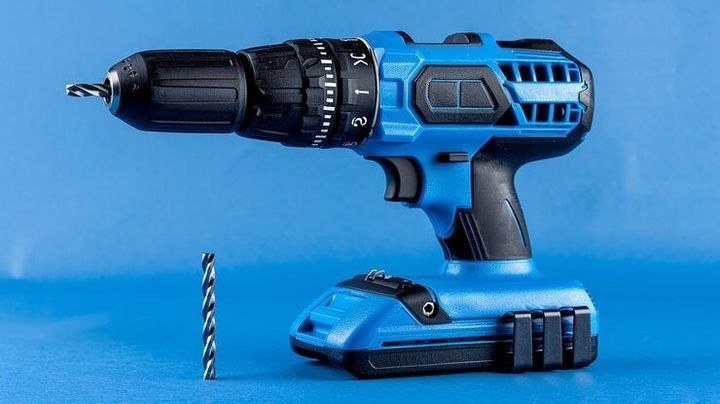
Portable drills are compact machines that allow the operator to move the tool to the workpiece. They are commonly used for maintenance, assembly, woodworking, and construction-related drilling.
Corded and battery-powered versions are available. Battery-powered designs provide greater mobility, while corded models can provide continuous operation where an electrical supply is available.
Bench Drill Machines
A bench drill machine, also called a bench-mounted drill press, is fixed to a workbench or suitable support. It normally provides more controlled drilling than a handheld drill because the spindle follows a defined path.
These machines are frequently used for small workshops and applications involving repeated holes in relatively small workpieces.
Pillar and Floor Drill Machines
Pillar drill machines use a vertical column to support the drilling head and table. Larger floor-mounted versions can accommodate bigger workpieces and provide greater working clearance.
They are commonly used in fabrication and general machining environments where controlled vertical drilling is required.
Radial Arm Drill Machines
Radial arm drill machines have a movable arm that allows the spindle to be positioned over different areas of a large workpiece. This arrangement can reduce the need to reposition heavy components.
They are particularly suited to larger workpieces where drilling locations are spread across a relatively wide area.
CNC Drilling Machines
CNC drilling machines use computer-controlled movements to position the tool and workpiece according to programmed instructions. They can perform repeated drilling patterns with controlled positioning.
In modern manufacturing environments, CNC equipment is increasingly associated with automation and digital production processes. India's machine-tool sector has been experiencing increased adoption of automation and digitalisation as manufacturers seek more process-controlled production.
Drilling Methods
Standard Drilling
Standard drilling uses a rotating drill bit to create a new hole in a solid material. The drill diameter and cutting conditions are selected according to the material and required hole dimensions.
Pilot Drilling
Pilot drilling creates a smaller initial hole before a larger drill is used. This method can help guide the larger tool and may be useful when creating larger holes or working with particular materials.
Step Drilling
Step drilling uses a tool with multiple diameters or several drilling stages. Each stage gradually increases the hole diameter.
Deep-Hole Drilling
Deep-hole drilling involves creating holes where the depth is relatively large compared with the diameter. Special tooling, controlled feed, chip removal, and cooling arrangements may be required depending on the material and depth.
Countersinking and Counterboring
Countersinking creates a conical recess around a hole, while counterboring creates a cylindrical recess. These processes allow certain fasteners to sit below or level with the surrounding surface.
Recent Updates
Automation and Digital Controls
From 2024 through 2026, the broader machine-tool sector has continued moving toward automation, digitalisation, computer-controlled equipment, and process monitoring. Industry reporting indicates that automation is an important factor in the development of India's machine-tools market.
For drilling operations, this trend can include CNC positioning, digital readouts, automated tool changes, programmable drilling cycles, and integration with wider manufacturing systems.
Updated Standards and Machine Safety
BIS continues to maintain and update standards related to machinery and machine tools. Its standards portal allows users to search standards by product or keyword and provides information about standards, amendments, and related documentation.
BIS also lists safety certification guidance for machine categories, including metal-cutting machines, while the machinery safety framework has developed through recent regulatory updates.
Laws or Policies
Workplace Safety in India
For readers in India, machinery use in workplaces is affected by occupational safety requirements. The Occupational Safety, Health and Working Conditions Code, 2020 includes provisions concerning workplace safety, information, instruction, training, supervision, and safeguarding of machinery.
The related framework also places responsibilities on manufacturers, designers, importers, and suppliers concerning the safe design and construction of articles intended for workplace use.
BIS Standards
BIS standards may apply to particular machinery categories or products depending on applicable government notifications and certification requirements. BIS explains that certification is generally voluntary unless the Central Government makes compliance compulsory through the applicable legal mechanism.
Because requirements can vary by machine category and intended application, users should check the current BIS database and applicable notifications rather than assuming that every drill machine has the same certification requirement.
Tools and Resources
Several resources can help readers understand drilling operations and machine specifications.
Drill Size and Speed References
Drill-size charts can help relate drill diameters to common applications. Speed and feed reference tables are also commonly used in machining to determine appropriate operating conditions based on tool diameter, material, and tooling characteristics.
BIS Standards Database
The BIS standards portal provides a searchable database for Indian Standards. Users can search by standard number or product-related keywords and review relevant standards and revisions.
Manufacturer Manuals and Machine Documentation
Machine manuals provide information about spindle speeds, operating controls, permissible tooling, workholding arrangements, maintenance procedures, and safety precautions. Technical documentation should be interpreted according to the specific machine model.
Basic Drill Machine Comparison
| Drill machine type | Typical setting | Main characteristic | Common applications |
|---|---|---|---|
| Portable drill | Mobile work | Flexible positioning | Maintenance, assembly |
| Bench drill | Workshop | Controlled vertical drilling | Small components |
| Floor drill | Workshop/industry | Larger working capacity | Fabrication |
| Radial arm drill | Industrial | Adjustable spindle position | Large workpieces |
| CNC drill | Manufacturing | Programmed positioning | Repeated production |
| Deep-hole system | Specialized machining | Controlled deep drilling | Long internal holes |
FAQs
What are the main types of drill machines?
Common drill machine types include portable drills, bench drill machines, pillar or floor drills, radial arm drills, and CNC drilling machines. Specialized machines may also be designed for deep-hole drilling or particular industrial operations.
How does a drill machine work?
A drill machine rotates a cutting tool while the tool is moved into a workpiece. The cutting edges remove material and form a hole, with machine design controlling factors such as movement, speed, and positioning.
What factors are considered when selecting a drill machine?
Important selection considerations include material type, hole diameter, drilling depth, workpiece dimensions, required accuracy, operating environment, production volume, available space, and the type of drilling method required.
What is the difference between a bench drill and a CNC drill machine?
A bench drill generally requires manual positioning and operation, while a CNC drill machine uses programmed computer-controlled movements. CNC equipment is commonly used when repeated and controlled hole patterns are required.
What safety considerations apply to drill machines?
Operators should follow the machine manufacturer's instructions, secure the workpiece appropriately, use suitable tooling, keep moving components guarded where required, and follow applicable workplace safety procedures. Indian workplace safety legislation includes requirements concerning machinery safeguarding, training, and safe working conditions.
Conclusion
Drill machines range from portable tools and bench-mounted equipment to radial arm and CNC systems designed for controlled industrial production. Their designs and drilling methods differ according to workpiece material, hole dimensions, depth, accuracy, and operating requirements. Recent developments have increased the use of automation, digital controls, and process-oriented manufacturing within the broader machine-tool sector. Understanding machine types, drilling methods, safety requirements, and relevant standards provides a practical foundation for evaluating drilling equipment and operations.