Petroleum Blending Systems Resources: Technologies, Equipment, Automation and Process Management
Petroleum blending systems are used to combine different liquid hydrocarbon streams and blending components in controlled proportions to produce fuels with specific physical and chemical characteristics. The process can involve petrol, diesel, refinery streams, ethanol, additives, and other approved components, depending on the intended fuel and applicable specifications.
Blending has existed as part of petroleum processing for many decades. Refineries and fuel terminals use it because crude oil produces multiple streams with different properties, while finished fuels need to meet defined specifications for characteristics such as density, volatility, octane quality, sulphur content, and stability.
Modern petroleum blending systems combine storage tanks, pumps, valves, flow meters, sampling equipment, control systems, and analytical instruments. Automation allows operators to monitor quantities and process conditions while maintaining controlled blending ratios.
The basic blending sequence generally includes receiving components, checking their quality, transferring measured quantities, mixing them according to a defined recipe, testing the resulting blend, and transferring the finished material to storage or distribution facilities. The exact arrangement varies according to fuel type, plant design, production volume, and regulatory requirements.
Importance
Petroleum blending systems matter because fuel quality can be affected by the proportions and properties of its individual components. A controlled process helps facilities maintain consistency between batches and monitor characteristics that influence fuel performance and handling.
For everyday users, the effects are mostly indirect. Petrol and diesel used in vehicles, generators, industrial equipment, and other applications must conform to applicable specifications. Consistent fuel characteristics support the operating requirements established for engines and fuel systems.
Blending also has an important role in the integration of renewable components. In India, ethanol blending with petrol has expanded substantially under the Ethanol Blended Petrol programme. Government information reported average ethanol blending of 19.05% during the 2024–25 Ethanol Supply Year through July 2025.
Several technical challenges need to be managed during blending:
- Accurate measurement of each component
- Prevention of contamination between different products
- Control of temperature and pressure
- Management of water and impurities
- Verification of finished-fuel specifications
- Safe handling of flammable liquids
- Accurate recording of batch information
- Coordination between storage, blending, testing, and transfer operations
A petroleum blending system therefore involves more than simply mixing two liquids. It is a combination of equipment, measurement, software, process controls, laboratory testing, and operating procedures.
Recent Updates
Greater use of automated blending
Automation has become increasingly important in petroleum blending. Modern systems can connect flow meters, control valves, tank measurements, programmable logic controllers, distributed control systems, and supervisory software.
Recipe-based control can allow a defined blend to be prepared using measured quantities from individual component streams. Automated data recording can also create a process history containing information such as component quantities, batch identification, temperatures, and operating conditions.
Expansion of ethanol blending
Ethanol blending has been a significant development in India's petroleum sector. The National Policy on Biofuels, as amended in 2022, advanced the target of 20% ethanol blending in petrol to the 2025–26 Ethanol Supply Year. Government information indicated that average blending had reached 17.98% during the 2024–25 supply year through February 2025 and 19.05% through July 2025.
In 2026, India also introduced BIS standards for higher ethanol blends including E22, E25, E27, and E30. These standards provide technical specifications for such blends, although their existence does not by itself mean that nationwide use of higher blends has been introduced.
The government stated in 2026 that no decision had been taken to increase the nationwide base ethanol blending level beyond 20%. E85 has also been introduced for appropriately designed and certified flex-fuel vehicles, which is distinct from increasing the standard nationwide petrol blend.
Updated fuel specifications
Fuel specifications continue to evolve through revisions to Indian Standards. BIS currently lists revised standards covering automotive diesel and motor gasoline, including IS 1460:2025 for automotive diesel fuel and reviewed specifications concerning motor gasoline and ethanol-blended petrol.
This development increases the importance of laboratory testing and accurate process control. Parameters such as density, sulphur, distillation characteristics, octane-related properties, ethanol content, water tolerance, and other fuel characteristics can form part of specification testing depending on the product.
Laws or Policies
Petroleum safety rules
Petroleum handling and storage in India are governed by a regulatory framework that includes the Petroleum Rules, 2002, administered through the Petroleum and Explosives Safety Organisation. These rules address aspects of petroleum storage, handling, licensing, and safety.
Facilities dealing with petroleum products need to consider requirements related to tanks, transfer arrangements, hazardous areas, fire protection, operating procedures, and other safety measures. The exact requirements depend on the petroleum product, quantity, facility type, and activity.
Fuel quality standards
Indian Standards play an important role in defining the characteristics of petroleum products. BIS identifies petroleum standards referenced through government regulations and petroleum-sector control measures.
For blending operations, relevant specifications may define limits or requirements for properties such as:
| Parameter | Why it matters in blending |
|---|---|
| Density | Helps identify and monitor fuel composition |
| Sulphur | Important for fuel quality and emissions control |
| Ethanol content | Defines the proportion of ethanol in applicable blends |
| Octane properties | Relates to petrol combustion characteristics |
| Distillation characteristics | Describes evaporation behavior across temperatures |
| Water tolerance | Important for alcohol-containing petrol blends |
| Oxidation stability | Indicates resistance to degradation under specified conditions |
The applicable specification should always be checked against the particular fuel grade and current BIS requirements rather than relying on a generic blending recipe. BIS laboratory information shows that testing for petrol-related specifications can include ethanol content, sulphur, density, distillation, oxidation stability, and other characteristics.
Environmental and operational requirements
Petroleum facilities may also be subject to environmental, fire-safety, occupational-safety, and hazardous-material requirements administered by relevant authorities. Requirements can vary according to location, facility capacity, product type, and process configuration.
Because regulations and technical standards can be revised, current government notifications and applicable Indian Standards should be checked when designing, modifying, or operating a petroleum blending facility.
Tools and Resources
Blending control equipment
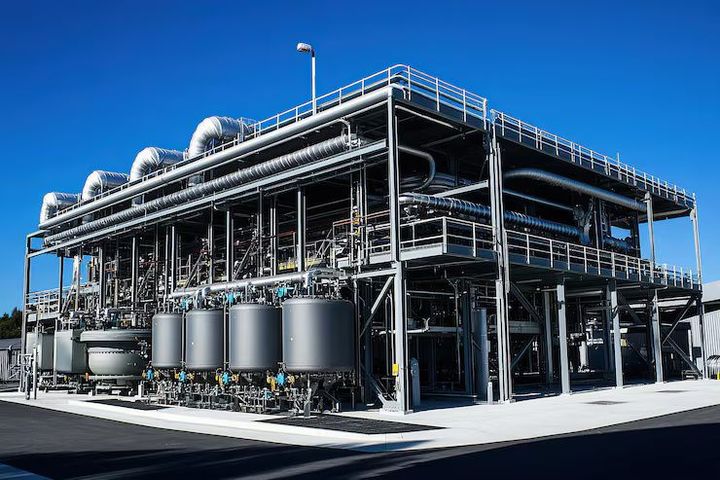
A petroleum blending system can include several equipment categories. Typical components include storage tanks, transfer pumps, flow meters, control valves, strainers, filters, mixers, sampling points, and pipelines.
Flow meters measure the quantity of individual components entering the blending process. Control valves regulate flow, while pumps provide the pressure required for movement between tanks and process areas.
Automation and monitoring platforms
Programmable logic controllers can manage equipment sequences and interlocks, while distributed control systems can provide broader plant monitoring and process management. Supervisory control and data acquisition platforms can display operating information and maintain process records.
Some systems also integrate laboratory information with production records. This can help connect a batch identification number with its component measurements and laboratory results.
Laboratory testing resources
Laboratory analysis is an important part of petroleum blending because calculated component ratios alone do not establish whether a finished product meets every applicable specification.
Useful resources include:
- Bureau of Indian Standards publications and standards databases
- BIS laboratory testing information
- Petroleum Planning and Analysis Cell information
- Petroleum and Explosives Safety Organisation resources
- Ministry of Petroleum and Natural Gas publications
- Internal fuel-quality specifications and laboratory procedures
BIS provides information on standards and testing parameters relevant to petroleum products, including automotive diesel and ethanol-containing petrol.
Process documentation
A blending operation commonly relies on batch records, component certificates, calibration records, laboratory reports, tank measurements, equipment maintenance records, and operating procedures. These documents help establish traceability and provide evidence of how a particular batch was prepared and tested.
FAQs
What is a petroleum blending system?
A petroleum blending system is a combination of equipment and controls used to combine petroleum streams or approved blending components in specified proportions. It may include tanks, pumps, meters, valves, mixers, sensors, laboratory testing, and automation software.
How does automation work in petroleum blending systems?
Automation uses instruments such as flow meters and tank sensors together with controllers, valves, and software. A defined blending recipe can be monitored through measured component flows, while alarms and interlocks can help manage abnormal process conditions.
What equipment is used in petroleum blending?
Common petroleum blending equipment includes storage tanks, pumps, pipelines, flow meters, control valves, filters, mixers, sampling points, instrumentation, and control systems. Laboratory equipment is also used to examine the finished blend against applicable specifications.
Why is ethanol blending important in petroleum processing?
Ethanol blending is part of India's fuel policy and involves incorporating specified amounts of ethanol into petrol. India's policy framework has targeted 20% ethanol blending in petrol for the 2025–26 Ethanol Supply Year, while technical standards define characteristics for applicable ethanol-blended fuels.
What standards apply to petroleum blending in India?
Requirements depend on the fuel and blending activity. Relevant frameworks include the Petroleum Rules, 2002, applicable BIS fuel specifications, and government policies concerning petroleum products and ethanol blending.
Conclusion
Petroleum blending systems combine measured fuel components through coordinated equipment, automation, testing, and process management. Their role has become increasingly connected with changing fuel specifications and the expansion of ethanol blending in India. Current systems commonly use digital measurement, automated controls, laboratory verification, and detailed process records. Regulatory requirements and Indian Standards remain important references for maintaining appropriate safety, quality, and operational controls.